

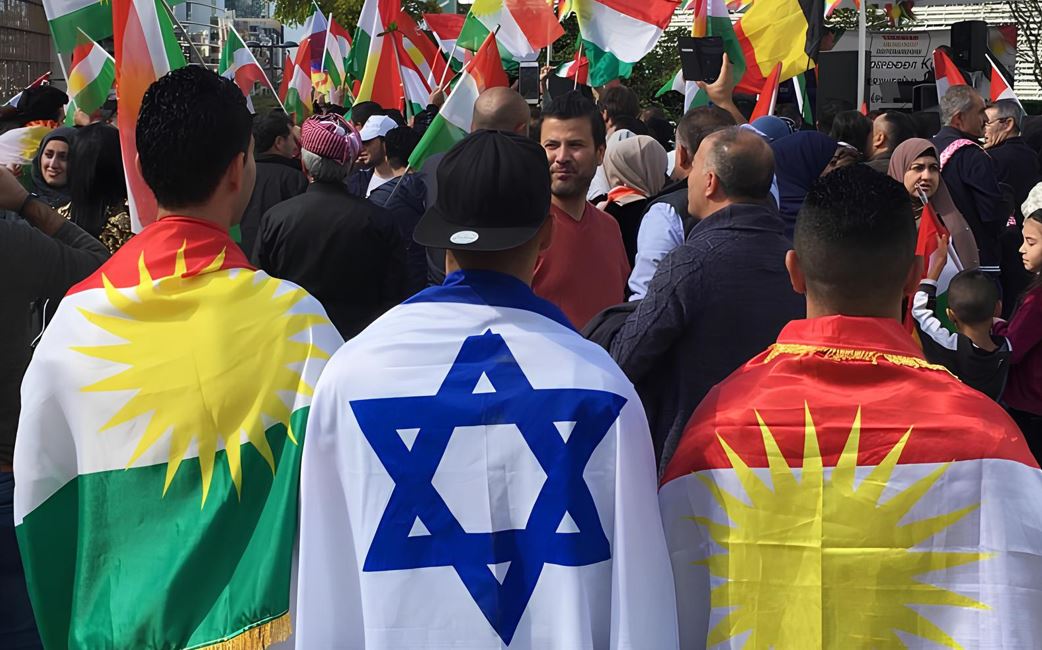
Among the Eastern Jews who emigrated to Israel from the Middle East, the Kurdish Jews were a small community with a large influence. The regional knowledge they brought from the mountains left a lasting mark on Israel’s security thinking and its relationship with the Kurds.
Kurdish Jews were an important part of the great waves of immigration in the founding years of the State of Israel. Although few in number among the hundreds of thousands of Eastern Jews (Mizrahim) who came from the Middle East, those of Kurdish origin left an indelible mark on the state’s security thinking. While Arab Jews gave the state identity, language and intelligence capacity from within, Kurdish Jews brought an instinct for reading the Middle East from the inside, a wisdom shaped by the harsh reality of the mountains.
The Memory of a Quiet Migration
The largest wave of Kurdish Jewish immigration to Israel came with Operation Ezra and Nehemiah from Iraq (1950–51), in which about 18,000 Kurdish Jews reached Israel. Emigration from the Kurdish regions of Iran and Turkey was spread over different periods. Most came from ancient settlements around Zakho, Dohuk, Erbil, Amadiya, Hakkari and Urmia.
When they arrived in Israel, although the dominant European Ashkenazi elite of the time saw them as mountain folk and mystics, they soon became valuable people on the ground in agricultural settlements, border communities and the security services. Their ability to speak Kurdish and Arabic alongside Jewish Neo-Aramaic, the mother tongue of most of them, and their far better understanding than their Western colleagues of tribal relations and the psychology of the region, made them a strategic resource.
Kurdish Memory in Security Thinking
When the “periphery doctrine”, which took shape in the late 1950s and intensified in the 1960s, became Israel’s regional policy, Kurdish Jews emerged not just as an immigrant community but as a strategic cultural and political resource. Israel aimed to build alliances with non-Arab peoples on the periphery of Arab nationalism. Relations with Iran (under the Shah), Turkey and the Kurds were the core links of this strategy.
In this period Kurdish Jews played a key role in Mossad’s operations in Northern Iraq. Their language skills and local contacts formed the basis of Israel’s aid to the Barzani movement. Some prominent figures connected with Kurdish Jews and with the emigration of Iraqi Jews left deep marks on the state’s security and politics:
Mordechai Ben-Porat: Born in Baghdad; as one of the central figures who organised the emigration of Iraqi Jews, including Kurdish Jews, he was influential in both intelligence and politics.
Yitzhak Mordechai: As one of the first generals of Kurdish origin, he rose to prominence in the Israeli army on the Lebanon front and later served as Minister of Defence.
Eli Amir: An Iraqi Jew born in Baghdad, he became an important writer who, through literature and the media, represented the Eastern Jews’ search for identity.
Moshe Barazani: A heroic figure from a Kurdish Jewish family who, sentenced to death during the British Mandate, took his own life before his execution in 1947 and became a symbol of the Kurdish Jews’ early memory of resistance.
Syria, the Kurds and the Politics of Trust
The most lasting legacy Kurdish Jews left in Israel’s political thinking was strategic trust in the Kurds. Israel saw Kurdish society as distant from Arab nationalism, with a strong tribal structure and open to external alliances. The relations developed with the Barzani movement from the 1960s meant the institutionalisation of this mutual trust.
Today the basic assessment frequently voiced in strategy circles in Tel Aviv, which shapes policies on Syria’s future, is this:
“A Syria in which the Kurds are strong and autonomous limits Iran’s Mediterranean corridor but does not directly threaten Israel’s security.”
This analysis is not merely a dry geopolitical calculation but the product of the historical experience and regional wisdom carried by the Kurdish Jews. Even today, some figures of Kurdish origin in Israeli politics quietly carry this file and advise on it.
The Strategic Legacy of Eastern Identity and the Equation of the Future
Arab Jews brought the state its internal cultural richness by embedding Eastern culture and language in the identity fabric of Israeli society. Kurdish Jews took this identity a step further and became the deep memory of regional strategy and one of the key elements of the geopolitical equation. Their experience did more than provide a theoretical framework for Israel’s “periphery doctrine”: it instilled a principle of trust that came from the field.
Today, in the context of instability in Syria and Iraq and Iran’s quest for influence in the region, this historical legacy is turning into concrete security policy. Ultimately, Israel’s strategic thinking is no longer just a memory of past immigrants.
Concrete Assessments for the Future
Israel will continue to see the autonomy tendencies of the Kurdish regions as a vital buffer in limiting Iran’s dream of a Shia corridor running through Iraq and Syria to Lebanon and the Mediterranean. This means continued covert economic and intelligence relations not only for north-eastern Syria but also with the Kurdistan Regional Government in Iraq (KRG). Indeed, the political stability of the Kurds is perceived as the weakest but most reliable link of Israel’s security ring in the East.
The language, cultural knowledge and familiarity with tribal structures of the Kurdish Jews have left an invaluable legacy for the intelligence services. In the future, training a new generation of analysts and field personnel to sustain this cultural-intelligence synthesis in Israel’s regional operations will be institutionalised as the Strategic Education of Eastern Identity.
While politicians and military figures of Kurdish origin continue to be quiet carriers, this group’s emphasis on historical “loyalty” and “reliability” will remain a point of reference in right-wing and security-focused politics. Even if this does not create an emotional effect on Syria and Iraq policy, it will reinforce the strategic consensus that cooperation with the Kurds is a natural and risk-free choice.
Monthly · free
Compass of the Month
PUGAT’s monthly newsletter.
Read next



What is PUGAT? A non-profit community publishing independent analysis from Europe on security, migration and society in Turkish, German and English.
Go to the homepage
