

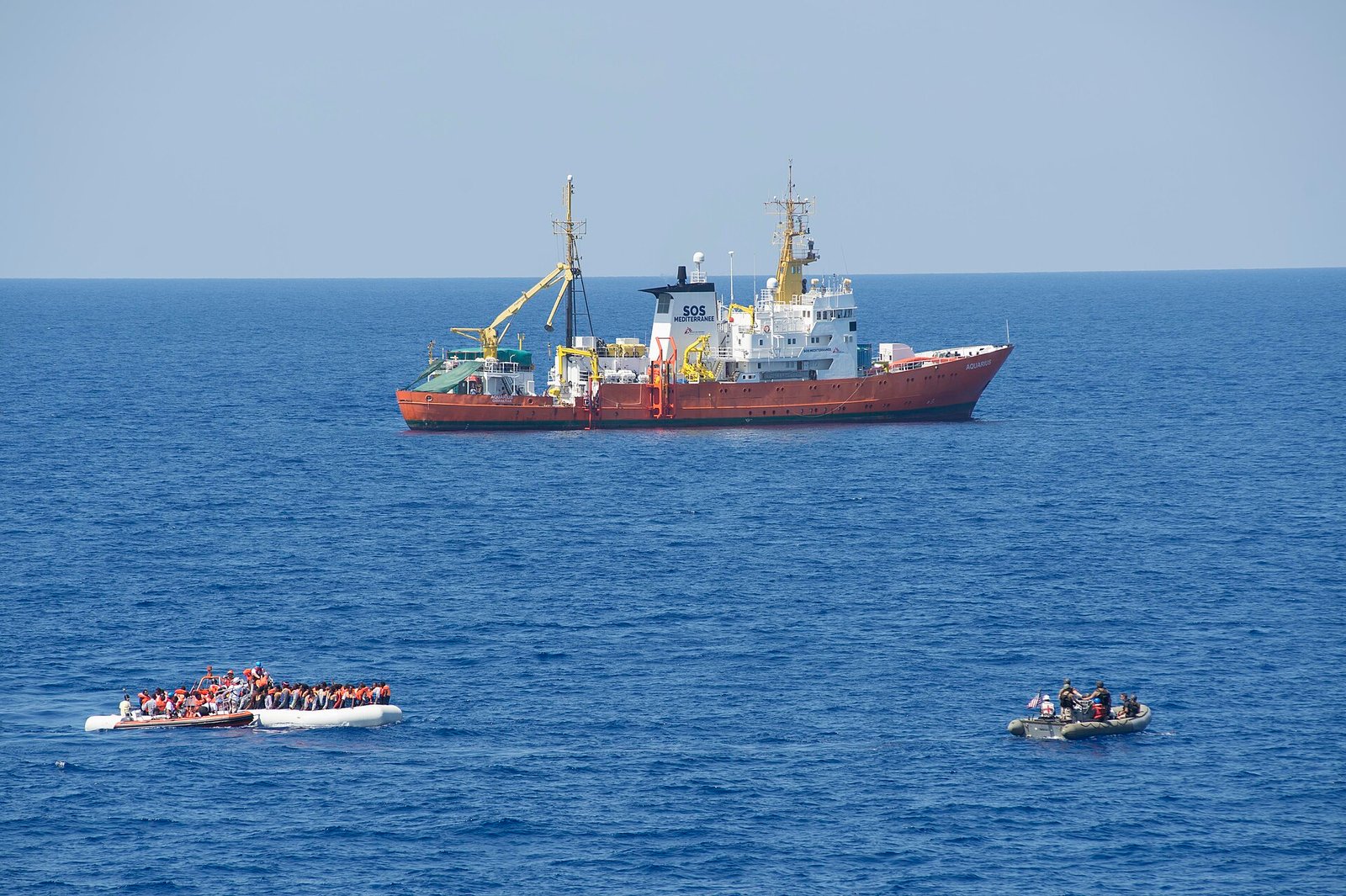
To reduce the number of asylum seekers, Greece resorts not only to legal means but also to pushbacks based on violence and coercion. A PUGAT exclusive documents what is happening at the border.
PUGAT – Exclusive
Greece’s current border security policy: Pushing back asylum seekers with violence and coercion.
To reduce the number of asylum seekers and refugees at its borders, Greece keeps trying every means, legal or illegal. Greece, which calls on the EU for support in applying legal means and has laid a legal foundation for strict refugee policies through the agreements it has signed, is at the same time using violence against asylum seekers, ignoring international human rights law. In recent days, many asylum seekers held in detention at border posts have been pushed back to Turkey in breach of international law (push-back).
As is known, under Greece’s joint ministerial decision of 7 June 2021, Turkey was designated a safe third country for asylum seekers from Syria, Afghanistan, Pakistan, Bangladesh and Somalia. We can thus say that the routes to asylum in Greece and the EU countries have all but closed for asylum seekers from these five countries. As soon as asylum seekers from these countries start the asylum procedure in Greece, Greece considers itself entitled to return these countries’ nationals to Turkey.
Human rights defenders condemn this decision and stress that Turkey is not a safe country for nationals of these countries. As grounds they point to Turkey’s anti-democratic form of government and its untrustworthy asylum system. Besides the fact that the right to apply for asylum and obtain protection in Turkey is limited and almost impossible, the arrest of asylum seekers in operations carried out in Turkey as part of counter-terrorism is regarded as an unsurprising scenario.
Worse still, it is also reported that these people, who set out to escape persecution and violence in their own countries and reach freedom, are subjected to violence and coercion in Turkey to “voluntarily” return to their countries. In other words, the agreement the EU made with Turkey in March 2016 on the return to Turkey of irregular migrants arriving in Greece, the financial support given to Turkey in this framework, and even the 3-billion-euro aid package that came back onto the agenda on 25 June, do not meet the needs of these people in need of protection.
Meanwhile, the European Union is seeking ways to reach agreement with the current government of the Republic of Turkey in order to reduce the number of refugees within its borders. The picture that emerges from this search is well known to the world public and has been experienced since early 2020. Erdoğan continues to hold this situation in his hand as a card with which to threaten the EU.
On the other hand, as emphasised once again in the report Amnesty International published on 22 June, Greece’s current border policy consists of pushing asylum seekers back with violence and coercion. Besides pushbacks at sea, Greek security forces send asylum seekers they catch on the Evros river border between Turkey and Greece back to Turkey without starting any legal procedure, using violence and leaving them again on the riverbanks.
Amnesty International’s report states that, besides asylum seekers caught while crossing the border, migrants in settlements up to 700 km inland are also brought to this area by people in uniform or in plain clothes and pushed back. While this pushes all asylum seekers into uncertainty and insecurity at Turkey’s borders, it has even more tragic consequences for Turkish citizens fleeing Erdoğan’s policies of violence and persecution and seeking freedom and protection in European countries.
Sadly, the struggles between Greece and the EU, which apply strict rules with the intention of protecting their own citizens, and the asylum seekers, who want to save their lives, live freely and build new lives, continue both at the geographical borders and at the social borders formed within society.
For detailed information on the subject:
https://www.amnesty.eu/news/greece-pushbacks-and-violence-against-refugees-and-migrants-are-de-facto-border-policy/
https://www.proasyl.de/news/aus-bruessel-und-athen-angriffe-auf-die-fluechtlingskonvention/
https://www.thejournal.ie/eu-turkey-billions-syrian-refugees-5477453-Jun2021/
https://ec.europa.eu/commission/presscorner/detail/en/IP_15_6162
Monthly · free
Compass of the Month
PUGAT’s monthly newsletter.
Read next


What is PUGAT? A non-profit community publishing independent analysis from Europe on security, migration and society in Turkish, German and English.
Go to the homepage
