

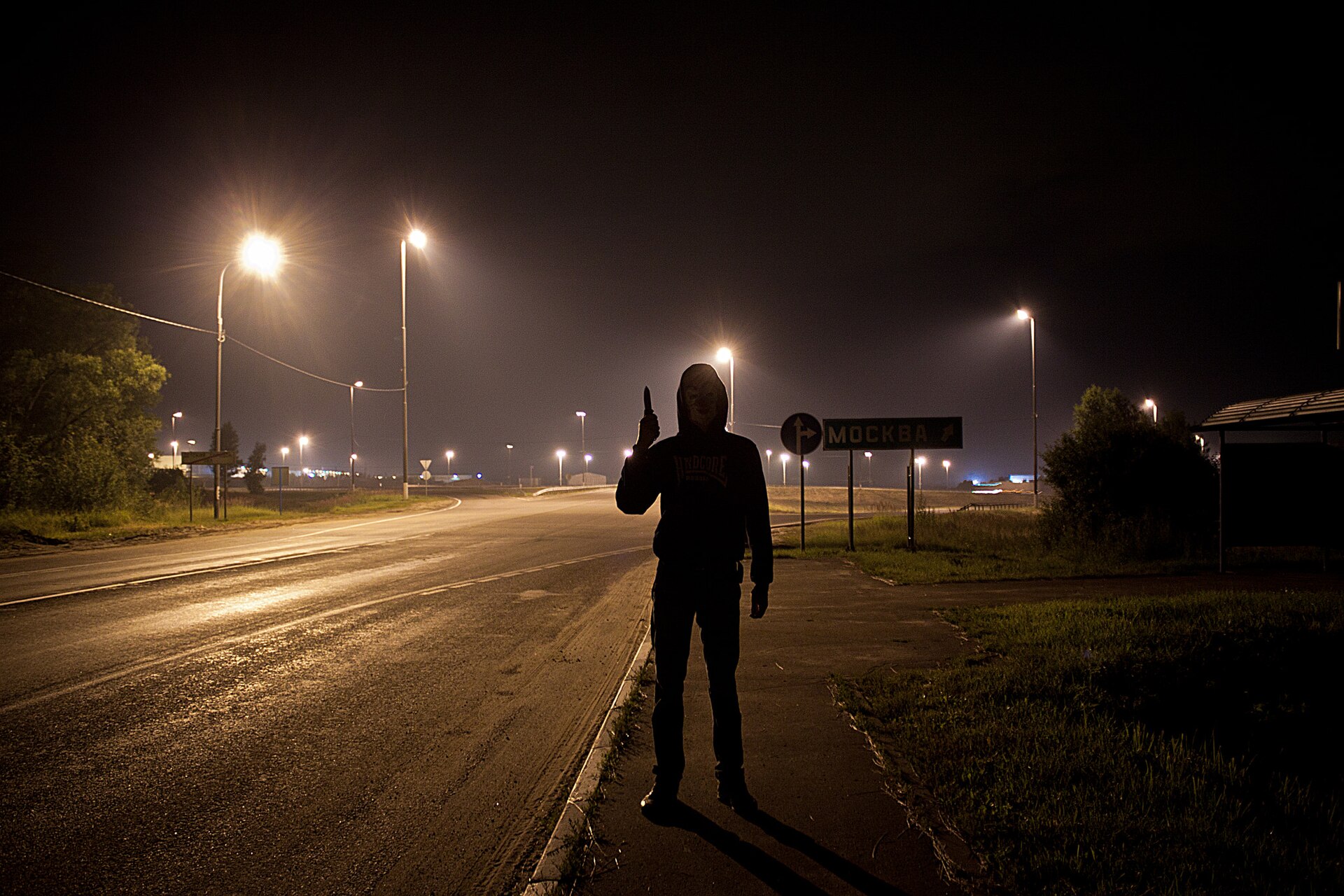
Fear wounds the heart of the individual and breeds submission in society. The author questions how the culture of fear has become banal and the damage it does to individuals.
Lately a debate over the concept of fear has taken on a life of its own.
Most of the time we cannot carry our fears beyond our individual worries. It is unrealistic to expect everyone to have a practice of thinking about social problems that cannot be stopped, and examining the subject at the frontiers of psychology or philosophy is not something everyone can manage. But everyone who holds a pen should put on the agenda the wound that fear opens in people’s hearts, the damage it does to minds and the submission it produces in society. Because this subject deserves to be talked about a great deal.
The greatest damage the culture of fear does to the individual is that it prevents or delays the desire for freedom from taking concrete form. Here the Norwegian philosopher Lars Svendsen’s approach to the relationship between fear and freedom is highly meaningful: “A state that legitimises itself through fear and secures its citizens’ obedience by it is not fundamentally creating a democracy, because the strategy of fear digs the grave of freedom, the very essence of democracy.” (A Philosophy of Fear; quoted from the Turkish edition, Korkunun Felsefesi, p. 163, Redingot, 3rd ed.)
Society is living on the edge of a cliff. Rulers are eager to use this state, which threatens emotional and mental health and social security, as a political instrument. For fear to be kept merely as an abstract, inner feeling, by a ruling class content with this state and by crowds that consent to it, is quite a luxurious response. Worse, it is no response at all.
I am not going to list theories of the “unresponsive society” here. I want to say that unresponsiveness does not stem from fearlessness; on the contrary, it arises as a direct result of fear. In an atmosphere of fear created by a rigid, lawless and self-centred understanding of government, the unresponsiveness of individuals who display no direct or indirect reaction stems largely from fear. For those sections of the public unaware of what is going on, there is no problem anyway. And for those who live by a formula of happiness indexed to a full stomach, no attitude or stance of the rulers deserves criticism. Until, that is, they begin to worry about falling into hardship.
Fears and Anxieties
So what is the relationship between our anxieties and our fears?
While our anxieties provide a motivation that at times guides us in putting our thoughts and actions in order, our fears make us live our emotions at the extremes. While our anxieties teach us to live with stress or to overcome it, our fears give rise to motivations at different frequencies, between a fight to the death and accepting defeat. It does not follow that anxieties are good and fears are bad. For a person more or less knows what will befall him because of what he fears, but anxiety is not like that. That is why anxiety, once it has become chronic, is a symptom of illness and requires medical treatment.
While bringing our anxieties under control makes us more balanced, failing to control them pushes us into a pathological process of stress. While bringing our fears under control makes us courageous, failing to do so compels us to bow to the oppressor, to worship the powerful, to keep silent in the face of injustice or to run and hide.
In fact, much evidence about our being human is hidden in the ebb and flow of our anxieties and fears. Through this evidence we can find in ourselves a strength that will wear smooth the paths of the good, the true and, ultimately, the virtuous. In short, we can turn our anxieties in positive directions with our will, and our fears with our courage.
For now, let the longing for a “fearless society” remain hidden among our options as a utopia. By fearless I mean a society that cannot be frightened by those in power, and masses that do not derive individual or social fears from their individual anxieties.
If we can become individuals who feel a measured anxiety at the corruption or loss of ethical values and who, beyond anxiety, seek ways out within the spiral of fear, I suspect we can also find a functional way of summoning our courage against attacks on our sphere of freedom and our choices.
What Does a Person Fear?
Investigating the causes of fear is the job of scientists. True. But to identify its consequences, a little power of observation is enough. All of us can string together at least a few sentences about the “justified” reasons for our fears. We fear bees, flies, snakes, scorpions, heights or lifts. We have many individual fears, each innocent at heart. Today’s widespread wave of fear feeds on the coronavirus pandemic and on terrorism. But the sources of our fears are not limited to these.
Not being able to feel safe from the malice of “the other” is a serious source of fear.
There are also fears that drag us from one dead end to another in the labyrinths of our personality. The fear of being misunderstood, for instance. It is a state of mind that stifles our inclination to do good or our eagerness to say something kind.
The fear of death. The noblest, oldest and strongest of fears, and the one that never grows old. What is the source of the fear of death? Imagining the agony of the moment of death, or the contradictions a person lives through between his beliefs, thoughts and expectations about what he will face after death?
The intersection of our fears draws us into a spiral, and in this way our social fears come to light. Every nation, every social stratum and every individual has fears of its own. If these fears become what determines our daily lives and our political choices, it would no longer be sincere to say that we are independent individuals.
On the other hand, it is not these phenomena that really harm people, it is the state of submission that fear feeds.
In this state of submission, in which, like evil, fear too has become banal, everyone who can preserve their physical and mental health must never forget that they have to take on very important tasks in order to dispel the atmosphere of fear that has formed in society. What these tasks are is the subject of another article.
Monthly · free
Compass of the Month
PUGAT’s monthly newsletter.
Read next


What is PUGAT? A non-profit community publishing independent analysis from Europe on security, migration and society in Turkish, German and English.
Go to the homepage
