

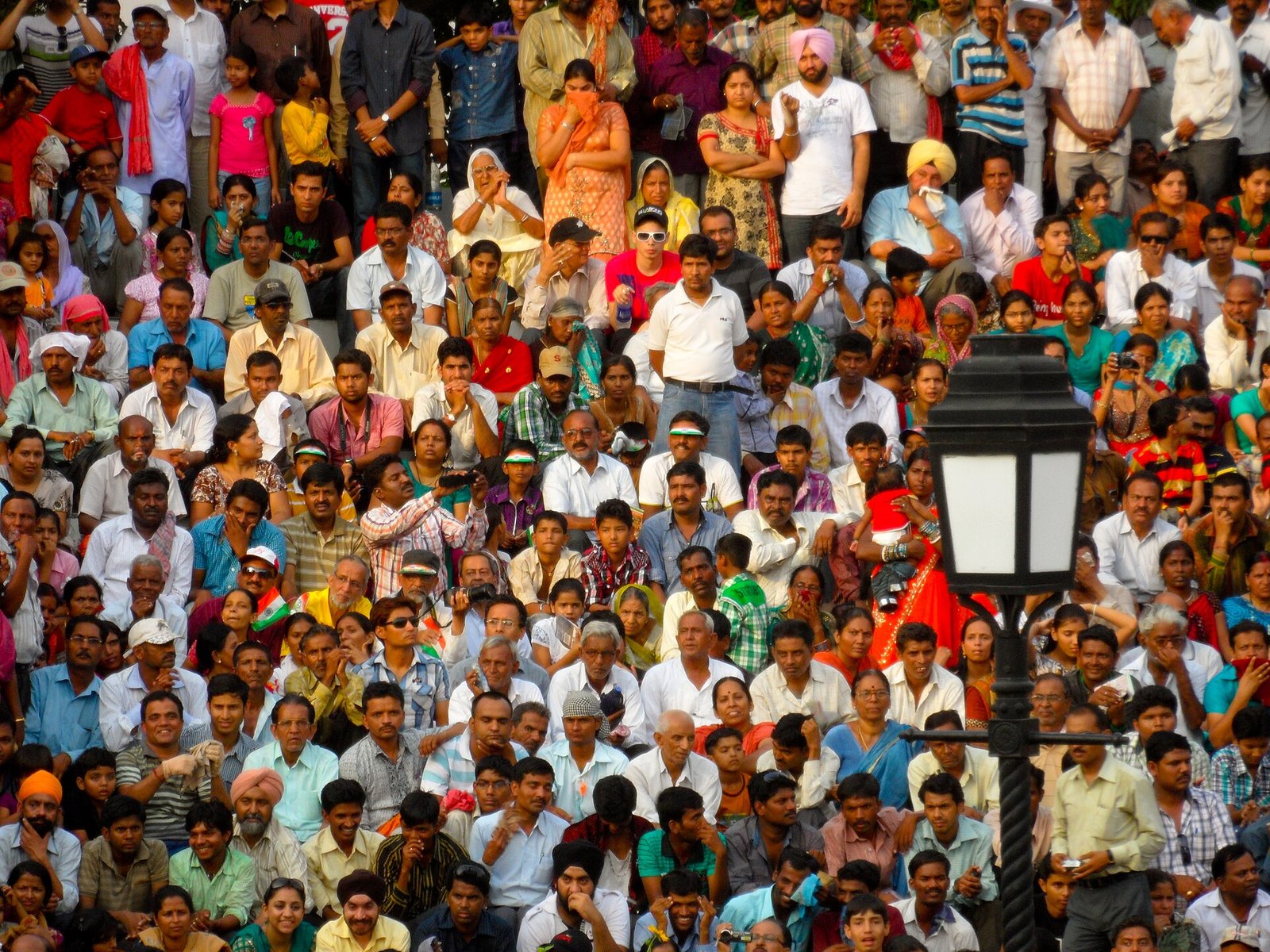
Like the lymph nodes in our immune system, society has defence mechanisms that stop problems before they spread. The third part of the Collective Consciousness series describes this “bulletproof armour”.
Collective consciousness has mechanisms similar to the immune system in our bodies. The lymph nodes, for example, are an important part of the body’s defence system against infection and disease. These nodes contain groups of cells, normally called lymphocytes, that form a barrier against infections. Lymphocytes produce antibodies that destroy or immobilise the cells or toxins causing infection. The lymph nodes are the outposts of the immune system. They intervene on the spot against the precursors of disease that begin anywhere in the body and try to solve the problem before it spreads to the whole body. If they prove insufficient, the central immune system steps in and a body-wide mobilisation is decided. The patient, confined to bed, saves the energy he would spend on daily activities by resting and concentrates his forces on the points causing the illness.
Since we have drawn such an analogy between collective consciousness and the immune system, what should be the sociological counterpart of the lymph nodes? Setting up outposts and acquiring the capacity to intervene on the spot are of critical importance. Here we can regard civil society organisations as institutions able to perform this function. Indeed, civil society organisations are bodies that stand outside official institutions, work independently of them and act through persuasion and action in line with their political, social, cultural, legal and environmental aims.
Civil society organisations are, as it were, the tissues of collective consciousness. They are the first platforms on which individuals, the cells of society, experience collective thinking. Through them people gradually set aside thinking focused on individual interest and learn to focus on the same goal together with other members of society. Consensus is reached on common values, the necessary division of labour is made and steps in line with the agreed road map begin to be taken. Organised work and coordinated action result in gains greater than the sum of what members would normally achieve on their own.
Civil society organisations successfully perform the task of “early detection and warning”, one of the three pillars of collective consciousness. For example, when a legal regulation that could threaten women’s rights comes onto the agenda, the relevant civil society organisations mobilise and begin raising awareness through various activities. To draw society’s attention to the issue, they organise peaceful demonstrations and demand that the mistake be reversed before it is too late. For this reason they are not much loved, because of “the disturbance they cause(!)”. Because they block the hands reaching for the body to administer anaesthesia, they may be put in the crosshairs of those in power. When it is possible to operate comfortably on a society in deep sleep, a sociological structure that is mobilised by the pain of what is being done and tries to get up off the operating table is the last thing anyone wants. Virtuous people devoted to civil society movements, who place society’s interests above their own, should never forget that at times oligarchic gangs disguised in the robes of the state, or various centres of power, may try to intimidate, discredit and subdue them through unimaginable methods and intrigues.
******
Another of the pillars of collective consciousness is freedom of the press. Many constitutions, international declarations and conventions address it together with freedom of expression. Article 12 of the 1776 Virginia Declaration of Rights declared freedom of the press to be one of the greatest bulwarks of liberty. The 1789 French Declaration of the Rights of Man and of the Citizen, containing provisions on publishing ideas alongside freedom of thought, became one of the first documents to point to freedom of the press.
The first lasting provision on freedom of the press came in 1791 with the addition to the American Constitution of the First Amendment, which states that “Congress shall make no law… abridging the freedom of speech, or of the press”. From the point of view of constitutional provision, the United States is the first state to give constitutional guarantees to freedom of the press together with freedom of speech and thought.
Freedom of thought and of the press was set out in clear terms in Article 19 of the Universal Declaration of Human Rights, proclaimed by the United Nations General Assembly in Paris on 10 December 1948 after the Second World War.
A media culture with a diversity of news, in which every kind of opinion can be freely defended and whose principle is not provocation and propaganda but only accurate reporting, is one of the greatest safeguards of democracy. Freedom of the press does not only ensure that news reaches the masses accurately. It also fulfils a mission of continuing education in addition to the formal education individuals receive. It works like a locomotive in building and preserving the common values in the database of collective consciousness. As is well known, the propaganda machine works like destructive, irresistible weapons of mass destruction dropped on people indiscriminately.
That is why protecting collective consciousness from disinformation and perception management is also a critical duty. Because where freedom of the press cannot be secured, the centres with the greatest power will create a media monopoly and a single-voiced press will be activated. In an atmosphere where the same headline is run in the same way by dozens of newspapers, and where you feel you are watching the same channel even as you change channels, collective destruction will begin to show itself in people’s mental worlds.
It must not be forgotten that collective consciousness necessarily requires collective defence.
*****
Without a Change in Behaviour There Is No Education
Now to the basic source of oxygen of collective consciousness. We all often hear the sentence “The education and teaching year has begun in schools.” Note that two different things are being spoken of. One is education, the other teaching. In fact the sentence would be more accurate like this: “The teaching year has partly begun; the education year remains closed indefinitely.” Unfortunately, reality shows this sentence to be right.
Education is the process of deliberately bringing about a desired change in an individual’s behaviour through his own experience. In short, education is the process of enculturating the individual. Education begins the moment a person is born and continues throughout life through the interaction of family, school and environment. Education prepares the individual for life on the one hand and ensures his development on the other. Education should produce a certain change in behaviour, and this change should be in the desired direction and fit its purpose.
Teaching is the part of education carried out in schools in a planned and programmed way. Teaching refers to learning a set curriculum and, after this stage, acquiring expertise. Given this, how right is it to reduce the whole vast process of education and teaching to fill-and-empty sessions in which students forget after the exam the information they memorised before it?
Boasting of “quality education” with three memorised formulas and five paragraphs is, in a word, ridiculous. Education offers unique opportunities to embroider collective consciousness into minds stitch by stitch. Everything done in the name of teaching also falls within the scope of education. This is where common ground is to be created and widened.
A place where drugs roam freely, where fights and noise never stop and where teachers are not taken seriously cannot possibly have anything to do with education. Just as the minimum grades a student entering school must obtain in each subject are set, it must be clearly determined what behaviours and values he should acquire by the time he graduates. Without a change in behaviour there is no education. Individuals who cannot integrate into society and show no ability to do their part within shared ideals bring no benefit to society, even if they have the knowledge to win Nobel Prizes.
(To be continued)
Monthly · free
Compass of the Month
PUGAT’s monthly newsletter.
Read next


What is PUGAT? A non-profit community publishing independent analysis from Europe on security, migration and society in Turkish, German and English.
Go to the homepage
