

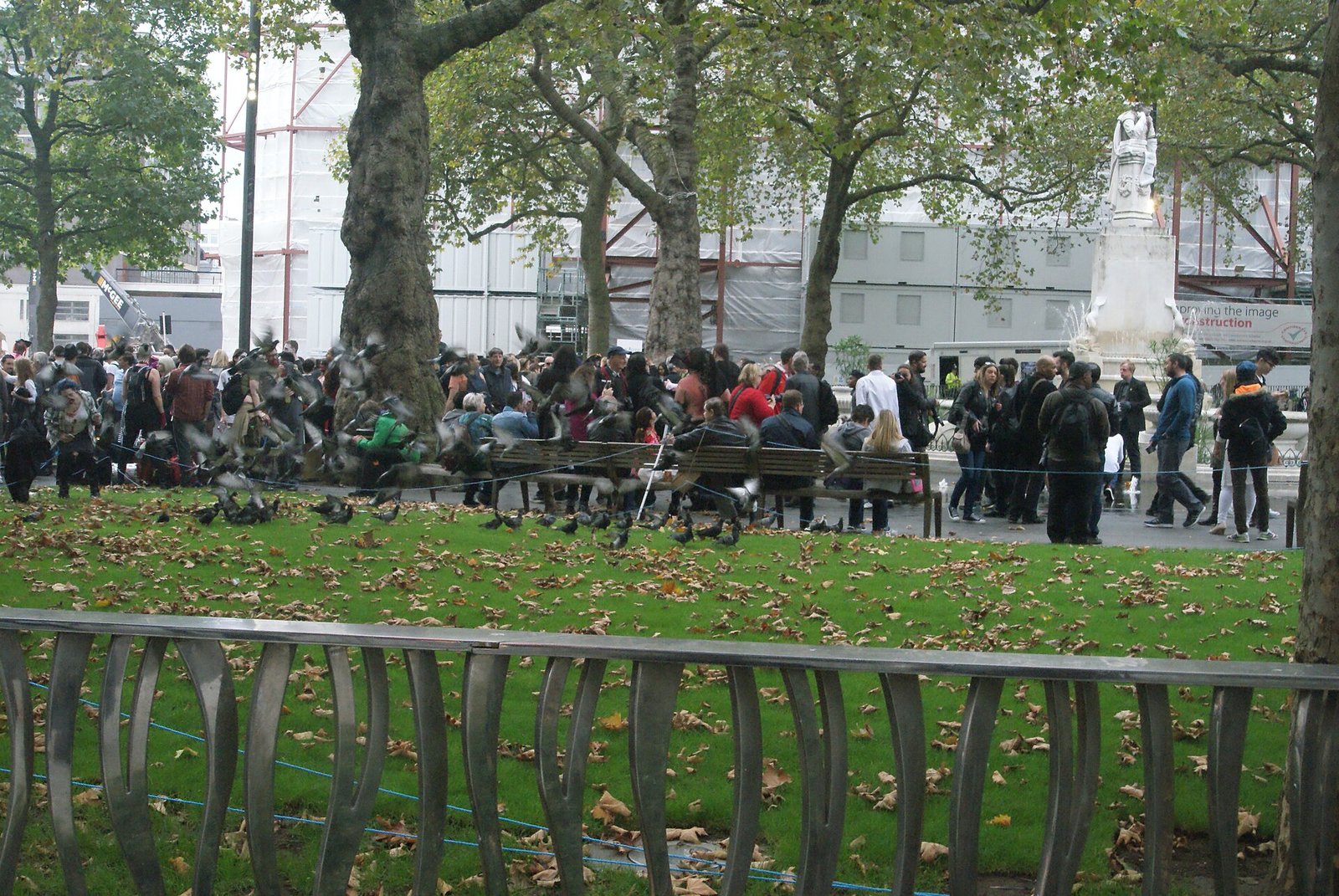
Love of the homeland is more than attending martyrs' funerals or competing over crowd size at rallies. The fourth part of the Collective Consciousness series looks at how values are wrongly coded into minds.
We have often mentioned how important a shared value system is in building collective consciousness. This part touches on a few sensitive points to be careful about in forming this set of values. Giving values real substance and coding them correctly into minds is an important matter. Let us take, for example, the concept of love of the homeland.
If, across society, love of the homeland is understood merely as marching at martyrs’ funerals, competing at rallies with flags to claim “we were the biggest crowd”, and mistaking the fruit knife in one’s hand for a sword while defying the whole world in front of TV series, we need to question ourselves. Judging by the coding here, these actions have remained limited to emotional and reactive responses aimed only at satisfying the need for love of the homeland in human nature.
In our culture and our faith, martyrdom has a place apart and is the highest station; the flag is the crown on our heads for which we have given our lives. What is wrong is that what is done today in the name of love of the homeland is mostly reaction rather than action. Faulty coding of this kind carries deadly viruses that can rob collective consciousness of its insight.
What do you think would happen if, instead, the motto “the one who loves the homeland most is the one who does his job best” were properly instilled in minds? For example, counter-terrorism operations are carried out only by soldiers and law enforcement. The fight against terrorism, however, has many dimensions: Social, economic, political and educational. From those in power governing the country well to the performance of all public servants, teachers and doctors above all, the number of actions that must be carried out across a wide spectrum is very large.
In short, through a total struggle waged by the nation with all its elements, we can in the end reduce the number of martyrdom reports and make our flag wave proudly in every corner of the land. Instead of spewing anger at those who do not think like us at rallies, driven by love of the homeland, and chanting “Down with them!”, might we not be doing something more useful if we set aside, say, not much, just 30 minutes a day for reading?
Of course, in this second option you get no chance to show off to friends and family with “selfies” taken against a backdrop of flags, or to certify with a photograph how patriotic you are. The efforts at personal development in the second option involve patience, determination, contributing to the elements of national power as potential overflows, the understanding that knowledge is power, and bringing more to one’s own country’s economy with a single company, through a single innovation (Google, Apple and the like), than the gross national product of many countries.
At this point the question may of course arise whether there is a blood incompatibility between individual development and collective consciousness. To put it more plainly, does acting in coordination for the sake of integration with society, pursuing common goals and not thinking individually dissolve our own selves and make us ordinary? Let us say at the outset what we would say at the end: NO. Because collective consciousness is not a place where individual traits are melted down in one crucible and people lose their selves. On the contrary, it is a platform where individual talents develop and scattered energy is transformed into a meaningful and effective force. Specialisation and professionalisation matter here more than anywhere else. Collective consciousness is the sum of different missions that share the same vision but must be carried out to reach the goal.
There is, of course, no question of setting aside personal abilities and traits in the crowd. Quite the opposite: The basic aim is to polish personal abilities and to find the most suitable place for each person in the overall picture.
Collective consciousness is the exquisite music that emerges in an orchestra from the union of sounds that very different instruments produce, each in its own way, but from the same score. It is the name for instruments that mean little on their own coming to life within a collective understanding.
In Conclusion
The first two stages of collective consciousness are “individual intellectual development” and “situational awareness”. First the necessary base of knowledge is built through learning; then, through the process we call reasoning, meaningful connections and conclusions begin to be drawn from this knowledge. Syntheses follow analyses, and new analyses follow syntheses. After a while we easily begin to notice events that fall outside what is and what ought to be. This acquired faculty gives us the ability to act proactively and react quickly.
In the grand finale comes the formation of collective consciousness. Such a society takes on the appearance of bulletproof armour. Even if aggressive elements coming from inside and outside pass one line of defence, they are caught on the next.
If collective consciousness, the backbone of society’s immune system, is not strong enough, it makes no difference whether it is the 2000s or the 3000s; even a weak sociological infection left unchecked can suddenly and very rapidly drag countries into medieval darkness (lawlessness, torture, despotism, civil war, famine).
History is full of figures who began with promises of peace and tranquillity, then fell into the obsession of one-man rule, became a curse on their own nation and mortgaged the state’s future with threats of “if I burn, I will burn everyone”.
The paralysis of collective consciousness, being closed to the danger signals of the country being dragged step by step towards the abyss, and the failure to operate the early warning and reaction mechanism cause losses that are hard to make good. More often than not, what kills the body is not the diseases (internal and external centres of power, dictators, imperialist powers) but the weakness of the immune system and its defencelessness against these threats.
(End)
Monthly · free
Compass of the Month
PUGAT’s monthly newsletter.
Read next


What is PUGAT? A non-profit community publishing independent analysis from Europe on security, migration and society in Turkish, German and English.
Go to the homepage
