

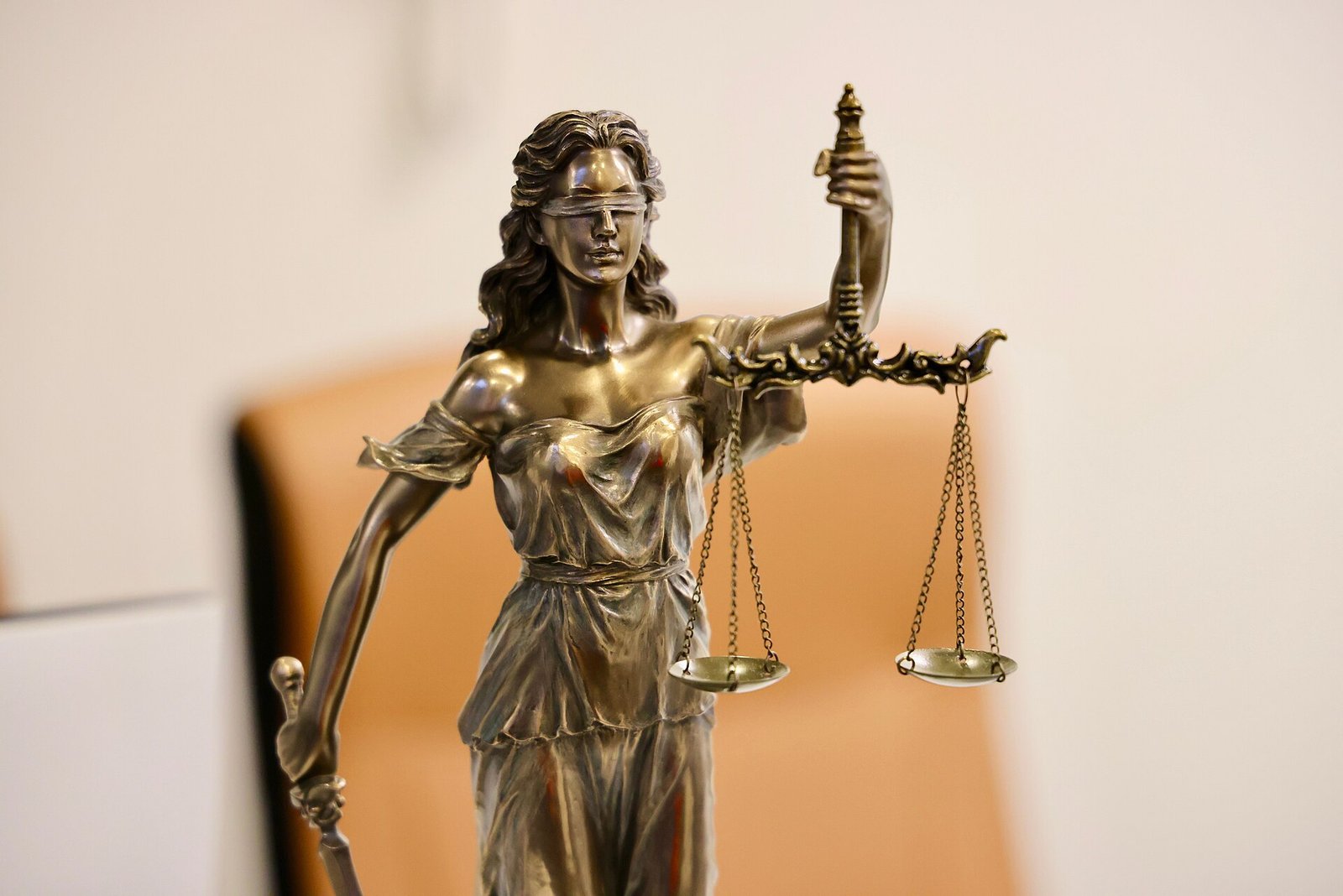
Cement holds a building together; law holds a society together. A commentary on law as the mortar that keeps society together when conscience, morality or religion alone are not enough.
When a building is constructed, dozens of materials can be used to bind its components together. In modern times, because it is easily accessible and practical to use, cement is the first thing that comes to mind. But there are dozens of other methods, such as interlocking, iron, glue and tying with string.
When a society is built, too, people speak of the factors that hold it up. Sometimes conscience, sometimes morality and sometimes religion serve this function, but so far neither pangs of conscience, nor social condemnation, nor fear of hell has been able to hold a society up on its own. The strongest factor that can keep a society standing and the people in it together is “law”.
Cement, whose main raw materials are limestone and clay, is produced by adding a certain amount of lime and some other elements and firing them in special kilns at about 1,400–1,500 °C.
Something similar applies to law. Although it may seem abstract, law, whose main raw material is human beings because it regulates the relations of people and communities with one another, is mixed with a high proportion of “bindingness”, a trace of “order” but always with “sanction” backed by state power, and baked entirely in an atmosphere of “trust”.
Just as there can no longer be a society without law, that binding force which one tries to serve without these additives and without baking it in the kiln called trust cannot be called “law” either!
In fact, law is not an abstract concept that cannot be seen or touched. It is alive and well within us and among us in every area of life. By “concrete law” I certainly do not mean the “law faculties” whose number has nearly tripled in Türkiye over the last ten years, the magnificent new “courthouses”, the multiple bar association system, the giant prisons, or those who confront people everywhere shouting “I am a judge, a prosecutor, a police officer, a gendarme”.
Law shows us whether it is concrete when its mortar is mixed with wrong judgments and political motives, when foreign fillers such as bribery, corruption and favouritism are mixed into it, or when it is not baked at the required temperature in that kiln called “trust”, which now seems to us like an ideal.
Those who think that injustices and lawlessness have not yet burned them and will never come their way understand that law is in fact concrete and visible only when their economic power weakens and market prices burn their pockets, when they cannot get a job they deserve or do not receive the reward for their work, when they suddenly find themselves in a spiral of injustice, when the reputation of society and the country is reduced to zero, when criminals roam free and the innocent fill the prisons, when their rights and freedoms are lost one by one… They understand that law is a substance like bread, like water!
That is why “Justice is the foundation of the state!” It is the cement of society. It is the salt that, when not present under suitable conditions, will rot and stink and be poured onto human flesh.
Türkiye, which never managed to enter the climate of law anyway, has in recent years surrendered completely to a desert climate.
According to the “2021 Rule of Law Index” prepared by the World Justice Project (WJP) and published last month, Türkiye ranked 117th among 139 countries.

This table was prepared not according to the number of lawyers graduating from countries’ law faculties, the grandeur of their courthouses, or the careers and academic backgrounds of the prisoners in their prisons, but according to the headings of constraints on government powers, absence of corruption, open government, fundamental rights, the security of persons and property, regulatory enforcement and citizens’ access to justice.
Unless the rot in the courthouse corridors is salted urgently, the foreign matter in the mortar of justice is removed and the ever-deepening cracks of distrust are closed, the whole of society will pay a much heavier price for this picture. That is why Türkiye needs to leave this atmosphere, in which destroying is very easy, and return to law, to the climate in which “building is hard”. Whatever, or whoever, it may cost!
Otherwise, in our time, when buildings can be built even from “Lego” pieces and very solid structures can be built without cement, time will surely prove to us that without law neither the state, nor society, nor the individual can be kept standing; that the individual will rot, society will collapse and the building will fall.
The only way to bring the individual and society out of this bottleneck will be for concrete law to overflow from the pages of books and fill the courthouse corridors and courtrooms.
Monthly · free
Compass of the Month
PUGAT’s monthly newsletter.
Read next


What is PUGAT? A non-profit community publishing independent analysis from Europe on security, migration and society in Turkish, German and English.
Go to the homepage
