

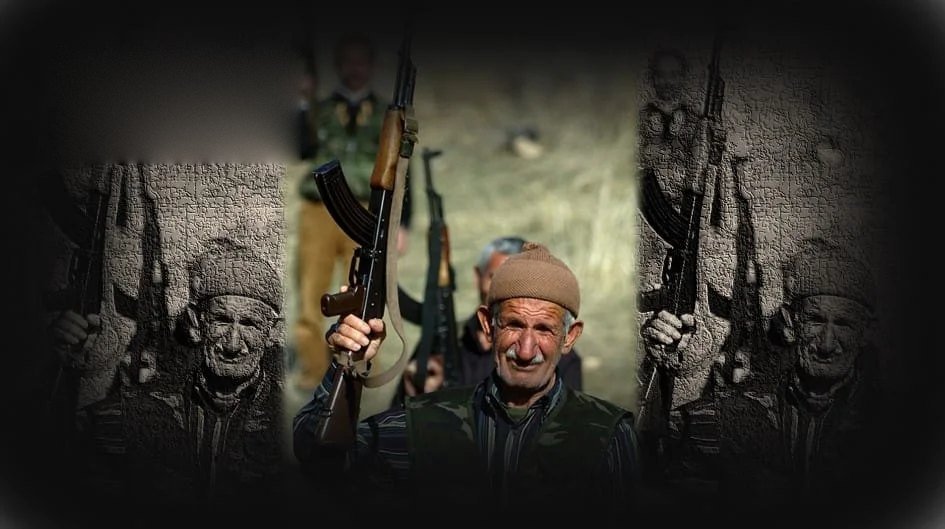
Allegations of serious crimes against some village guards have reopened the debate on the village guard system. The author assesses the system, covering nearly 70,000 armed personnel, together with the arguments of all sides.
After the intensifying reports of a prostitution ring in Hakkâri and Şırnak, allegedly led by village guards, forcing women into prostitution through blackmail, attention turned once again to the village guard system. Opening the necessity of the village guard system to debate after such incidents is not a fair approach and also gives an opportunity to circles that profit materially and morally from the village guards. You cannot transform the village guard system with propaganda news portraying an armed paramilitary group numbering 70,000 entirely as rapists. In Türkiye, like many subjects, this one too is discussed through memorised arguments.
In this article I have tried to examine the village guard system from an objective perspective, without ignoring the arguments of the sides. Because I worked intensively with security guards in Şırnak province, my last posting, I also had the opportunity to observe the system in the field.
Historical Background
When the historical origins of the village guard system are examined, it can be seen to have dynamics similar to the Hamidiye Regiments. By similar dynamics I mean that in the village guard system too, the military, sociological, geographical, historical and cultural contexts and the state’s threat perception resemble those of the Hamidiye Regiments era.
The Hamidiye Regiments began in 1891 under Abdülhamid II with 36 regiments formed from about 100 Sunni Kurdish tribes; their number reached 57 in 1895 and 66 in 1910.
The main reasons for the establishment of the Hamidiye Regiments can be summarised as follows:
- Establishing central authority,
- Creating a buffer against Russia and Iran,
- The state’s wish to use the tribes as a military force to create a new political and social circle that would make it effective in Eastern Anatolia,
- Creating a balance of power between the Muslim and Armenian communities,
- Integrating the Kurds through pan-Islamist policies,
- Creating a law enforcement force in Eastern Anatolia.
After Abdülhamid was deposed, the Committee of Union and Progress began to apply centralisation policies more strictly. The name of the Hamidiye Regiments was changed to Tribal Light Cavalry Regiments. At the same time, the idea of using these regiments mainly in military rather than paramilitary duties was adopted. To ensure central command and control, the regimental structure, which allowed too much initiative, was replaced by a divisional structure, the number of academy-trained officers in their ranks was increased and a tribal inspectorate was established.
Nevertheless, the Tribal Light Cavalry Regiments did not give up their paramilitary character. They were organised to be able to wage irregular warfare. In this context, supported by the army, they carried out tasks such as hampering enemy reconnaissance patrols, gathering intelligence, deceiving, delaying and raiding the enemy, and pursuing a retreating enemy.
With the outbreak of the First World War, the Tribal Regiments were reorganised as Reserve Cavalry Regiments. From the 1920s onwards they were used for a while longer by the Republican administration in internal security services. But the Hamidiye Regiments and their successor, the Tribal Light Cavalry Regiments, came to an end on the grounds that they had been influential in the formation of Kurdish identity, once the young Republic reached sufficient army and gendarmerie strength.
In the Republican period too, resistance to centralisation in the Eastern Anatolian region continued. In the internal security threat assessment, this time only one ethnic element, the Kurdish population and the micro-nationalism linked to it, came to the fore. From the proclamation of the Republic until the PKK’s first armed action in 1984, twenty-four Kurdish uprisings took place in the region. It can be said that the uprisings until the Marxist-Leninist mass Kurdish movements after 1961 were not separatist.
Developments After the PKK’s 1984 Eruh Raid
The Security Guard System (GK), formerly known as the Temporary Village Guard System (GKK), is a paramilitary institution created in 1985 by an amendment to Village Law No. 442. Although administratively they report to the district governor, all their personnel affairs are handled by the District Gendarmerie Command.
The Temporary Village Guard system came into effect a year after 15 August 1984, the date the PKK began its armed actions. Especially within the State of Emergency Region declared in 1987, the people of Diyarbakır, Bingöl, Elazığ, Hakkâri, Mardin, Siirt, Tunceli and Van were asked to fight against the PKK on the side of the state as security guards, under the command of soldiers equipped with broad powers. The basic policy was that every village should provide guards.
With the amendment to the Village Law, the Voluntary Village Guard System (GÖKK), in which only weapons and no pay were given, at the request of the village headman and with the approval of the district governor, was offered as a second option. Until 1990, besides individual participation, collective acceptance of guard duty by tribes, families and villages is seen more often. The PKK’s introduction, in all areas it could reach, above all Şırnak and Hakkâri, of a conscription law meaning that every family had to give a young person to the organisation as a militant accelerated the move to guard duty.
The PKK’s beginning to take by force the children of the people whose bread it ate and in whose tents and homes it stayed, and even at times taking away the women and small children of a household and saying it would not release them until the young men came and surrendered, left apolitical Kurds, who already did not want to leave their villages under state pressure, no option but guard duty. Even children aged 12 to 13 were taken to the mountains under the name of “military law”. Many of them were shot for wanting to escape. The PKK also carried out raids on villages targeting large families on the grounds that they were village guards, committing massacres of civilians. The Şırnak/Görümlü massacre can be given as an example. I had listened on the spot to an elderly village guard who had survived that day by chance tell what happened.
On the other hand, some state officials began systematically committing grave human rights violations such as torture, abduction and extrajudicial execution. So much so that soldiers at the rank of general and colonel who opposed these methods were killed.
The reason for the emergence of the village guard system was, at the strategic and tactical level, to gain control of the terrain against the PKK and to deny the PKK a foothold in the region. In this way the state would be able to distinguish more easily between those loyal to it and those not, and secure the intelligence flow it needed. In this context, at the beginning of the 1990s the state made a new definition. Tribes, villages and individuals who accepted becoming guards were called “pro-state tribes, villages and individuals”, while the other group was called “anti-state/enemies of the state”. In other words, the people were now caught between the state and the PKK. From 1990 onwards, the first records every gendarmerie officer newly starting duty in the region looked at to learn the threat situation were which villages were village guard villages and which were not. The same was true for the PKK.
The Village Guards and Politics
The governments in power, which found a new field of profit and exploitation with the village guards, saw this mass entirely as a vote bank. The village guards, who went through a process in which strong family and tribal ties were brought into play, were not respected by the state for years, and their personal rights and training were always neglected. The village guards, sensitive about the Kurdish question and keeping their distance from parties appealing to the same base as the PKK, were automatically forced towards the ruling party. While the region’s leading families and influential head guards enjoyed the benefits and privileges of power, the guards’ problems were always ignored.
On the other hand, it is no secret that, through the wrong practices of senior officers and intelligence officials serving in the region between 1990 and 2000, privileged groups of village guards were formed and many crimes were committed. Privileged guards who made large sums of money through smuggling, especially in the border regions, became much richer than their peers.
After 2000, during the AKP’s uninterrupted rule, while all projects that would reform the village guard system, and even all plans that would gradually end it, were somehow blocked, the existing problems deepened further. Especially during the opening process, the PKK launched a lynching campaign against the village guards.
The PKK, which has had a blood feud with the group it has suffered most from since its foundation, found the opportunity it was looking for in the opening process. During this process the PKK carried out executions of village guards. When the opening process ended, the village guards, coming to the fore again, now had to commit themselves fully to the AKP. I say had to, because the guards did not trust the AKP, which had left them alone in a struggle for survival during the opening period; but the MPs, the leading families, the prominent head guards and federation chairmen who held the will of the guards committed themselves to the government in return for material and moral benefits and abandoned the tens of thousands of guards they represented.
Today the conditions of 1985, when the village guard institution was created, no longer exist. With the effective use of armed drones, even the number of missions of commando battalions, apart from special units, has fallen, and the operational need for village guards has almost disappeared. On the other hand, its being a tool of exploitation in domestic politics and the state’s wish to keep the Kurdish question hot in parallel with developments across the border show that the village guard system will continue. But until when?
Monthly · free
Compass of the Month
PUGAT’s monthly newsletter.
Read next



What is PUGAT? A non-profit community publishing independent analysis from Europe on security, migration and society in Turkish, German and English.
Go to the homepage
