


Young men who harm themselves to avoid military service, people who burn their property to collect insurance… Can states take a similar path? The first part of the self-coup series.
Would anyone deliberately harm a part of their body for personal gain? For example, have you ever heard of a young man cutting off his index finger, or deliberately harming some part of his body, to avoid military service? Don’t say, “Who would do such a thing?” There are so many examples of this that the Military Penal Code even defines a crime of “making oneself unfit for military service and using deceit to evade military service”.
Even if you have not heard of this, you have surely heard of people who damage their property, their life or anything of value they own to collect insurance. I know one myself. A man who drove a lorry had fallen into a debt trap; he swapped the expensive spirits he was carrying for fakes and made the lorry roll down a cliff. He would supposedly sell the original spirits and at the same time collect the same value from the insurance. If only the insurance company had not noticed!
Just as in these examples, leaders too have sometimes engaged in such games to gain other advantages. Throughout history, leaders have pursued various policies and campaigns to gain power or strengthen what they hold. This has happened in absolute monarchies that held all authority and power, and even in tribal times when authority was gathered in the hands of more than one body or person. Today’s politics revolves around the same axis.
Those who lost power have resorted to every means to regain it, and those in power to avoid losing it or to gain more. Let us accept leaders’ efforts to reach their goals through legitimate means as a requirement of political and administrative science and set them aside.
Sometimes this path was taken with acceptable, legitimate means, and sometimes its stones were laid with incredible intrigues, tricks, tyranny or conspiracies, illegitimate and unacceptable stones.
Although these paths are varied, here I want to talk about a ‘special’ case, perhaps the least known of them. I am talking about what is known in Latin America as the ‘autogolpe’, more generally as the ‘self-coup’, and in Turkish as ‘kendi kendine darbe’.
The self-coup (autogolpe) is a type of uprising or military coup to which a head of state, despite having come to power by legitimate means, resorts by abusing his powers in order to dissolve or weaken the country’s legislature and render the judiciary dysfunctional, that is, to sideline the independent courts, and to acquire power beyond what the law allows. Other consequences of this move may include the violation or outright abolition of the limits of the national constitution.
In this case, the head of state assumes extraordinary powers. He suspends the existing constitution and laws, or reorganises existing institutions to suit his own interests by changing them. When this step-by-step process reaches its final stage, the constitution is abolished and parliament is dissolved. In the end, a dictatorial or authoritarian system, or non-system, is built in which the head of state holds all power.
Now I ask: why would a leader carry out a coup against himself?
The answer to this question is very important for assessing 15 July and its effects more soundly.
While searching for the answer to this question myself, and failing to work it out, I felt the need to look at history too. Since history is nothing but repetition, which event or events, I wondered, did what happened on 15 July repeat?
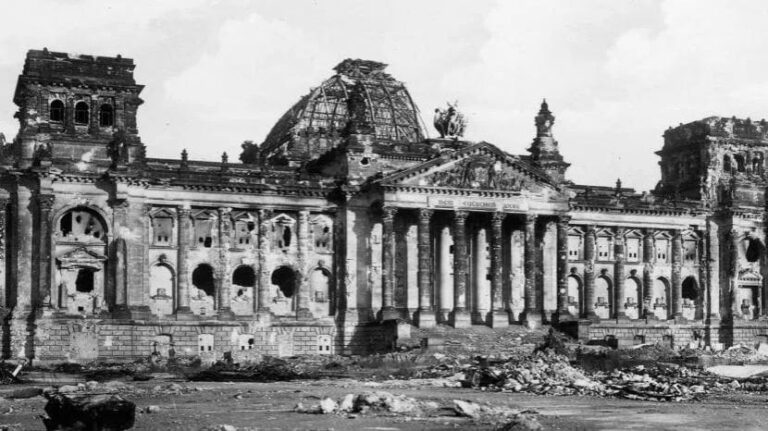
In history, of course, dozens and perhaps hundreds of examples of the self-coup can be found. This list, in which the likes of Julius Caesar, Napoleon Bonaparte, Benito Mussolini and many more mighty leaders parade, is quite long. Hitler and his “Reichstag Fire”, which closely resemble Erdoğan and his 15 July, are already known to all!
In history, some of these self-coup attempts succeeded and some failed.
Most of the failed examples ended with the leaders who resorted to this path committing suicide, being lynched by the people or by a group, being tried and convicted or executed for the attempt, or being sent into exile.
The successful examples resulted in the leader concentrating all power of government in his hands. But many of them, too, ended in the end with suicides, lynchings, trials and exiles, and only a lucky few kept the power they had obtained in this way for the rest of their lives.
So who was the first leader to take this path?
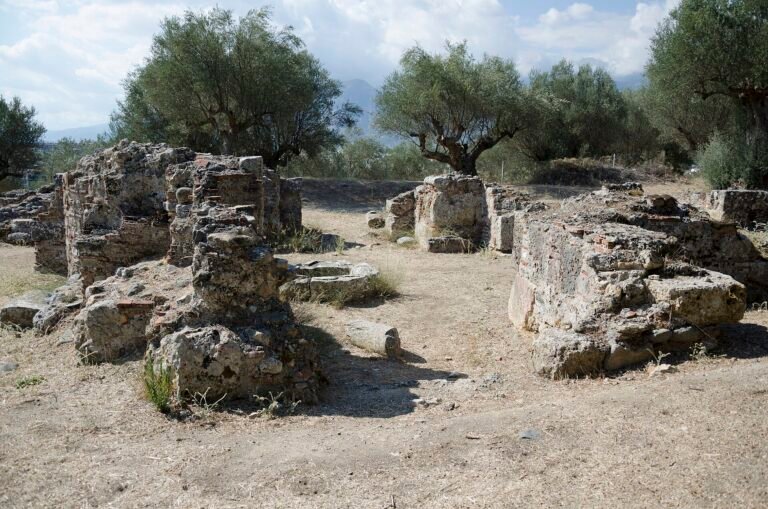
In the next article I will tell the story of King Cleomenes III of Sparta, who carried out the first known example of a self-coup in history.
Monthly · free
Compass of the Month
PUGAT’s monthly newsletter.
Read next

What is PUGAT? A non-profit community publishing independent analysis from Europe on security, migration and society in Turkish, German and English.
Go to the homepage
