


While jihadist attacks fuel Islamophobia, rival fundamentalisms threaten social peace. The author discusses the “new fundamentalism” through the approaches of Olivier Roy and other thinkers.
From the past to the present, it has been quite common for someone’s faith to be seen as a security problem for others (or for “the others”). This threatens both social peace and freedom of belief. One of the important reasons behind this problem is that reactionary responses based on fundamentalist approaches can find support in society.
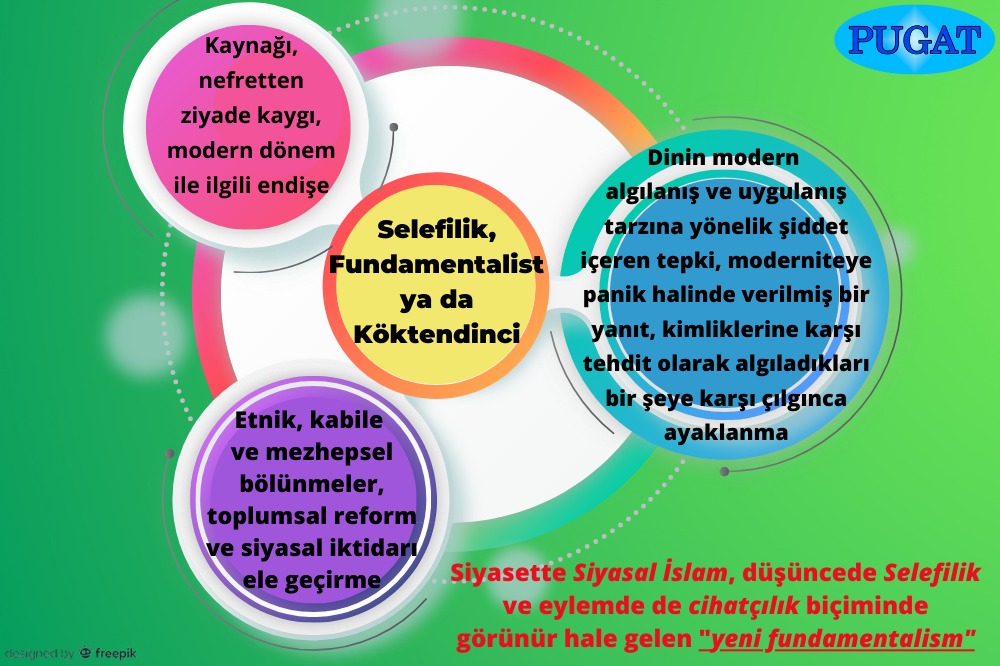
With the effect of globalisation, we are faced with the fact that we now live in an age of terror that can be designed through the media. The successive attacks of organisations or individuals who define themselves as Islamist or jihadist, and their savage fighting as paramilitary elements in various crisis and conflict zones of the world, have been enough to sow the seeds of anti-Islamic sentiment and hatred all over the world and to engrave the concept of Islamophobia in people’s minds. As a result, labels such as “Islamist terrorists” and “Muslim terrorists” have come to be used by many people, whether or not they have any connection to the matter.
Unfortunately, in Turkey and in many countries of the world, there is a not insignificant group that, adopting various fundamentalist approaches, declares that it represents “true” Islam and lives with an “Islamist” motivation. To what extent are these individuals or groups, who claim to serve religion, armed or unarmed, in the intellectual or the political sphere, aware that they are harming the Islam they claim to represent and creating an atmosphere of fear and terror in society? Or, even if they are aware of it, do they care?
Today in Turkey we painfully witness many political, religious-administrative, academic, Sufi order, religious community organisations and back-street religious education institutions in this situation. Although they do not define themselves as fundamentalist, when their religious thinking and motivations for action are considered together, we can say that it is entirely appropriate to use the concepts “fundamentalist” or “radical religious” to explain these people’s thoughts or actions.
First, let us refresh our minds about the concepts, and then make an assessment of the political atmosphere of Turkey’s last quarter-century.
Definition
The word fundamentalism derives from the Latin root “fundamentum”, meaning “foundation”. In Turkish it is seen as the equivalent of words such as religionism, originism, foundationalism and, most commonly, radicalism, and it is defined in the dictionary of the Turkish Language Association with the expression “religious radicalism”.
The concept is essentially Christian in origin. Although it relates to many fields, it is used mostly in a religious context, to categorise certain movements that defend religious values in a modern or secular world. The term, which Western academics used at the beginning of the 20th century to describe certain radical Protestant movements in the United States, came over time to be used for similar tendencies in other religions as well.[i]
Fundamentalist movements, which began to spread in the last quarter of the 20th century, also became active in religious movements of a political character. In this context, in the case of Islam, what first comes to mind are the radical movements with religious motifs that formed around Salafi thought.[ii]
What Does Olivier Roy Say?
In his books translated into Turkish as “Globalised Islam” and “The Failure of Political Islam”, Olivier Roy defined Salafism as “neo-fundamentalism”. According to Roy:
“Today, whatever political victory Islamism may win in any Muslim country, it will be illusory and will change nothing other than customs and law. Islamism, unable to create new political forms, has turned into a neo-fundamentalism that seeks only to re-establish Islamic law, the sharia. This condemns Islamism to being a screen for a political logic that has slipped from its grasp; and what that logic ultimately rests on are traditional ethnic, tribal and sectarian divisions, new social categories ready to change their discourse of legitimation at any moment, and existing regimes.”[iii]
In my view too, Roy’s definition of “neo-fundamentalism” is entirely apt for explaining Salafism’s practices in reality. That is to say:
Individuals or groups that adopt Salafi views build their existence on a religious discourse. Yet when one looks at their actions, one encounters inhuman practices that have no counterpart in any divine religion. This reminds us that, in grounding the issue (that is, the actions or activities carried out by radical individuals or groups with religious motifs under the umbrella of Salafism), it would be more accurate to use sociological concepts such as fundamentalism rather than theological/religious concepts. Indeed, the “Dictionary of Sociology” edited by Gordon Marshall also stresses that fundamentalism is a concept that, “despite having a theological character, is generally linked to projects of social reform and the seizure of political power”.[iv]
What Does Jean Baudrillard Say?
The view of the French sociologist Jean Baudrillard (1929-2007), regarded as one of the important thinkers of our time, also supports this argument of ours.
Baudrillard does not accept the view that a religion-based motivation is at work in actions of a fundamentalist character. According to him, what drove Osama bin Laden or certain Islamists to terror was not a religious justification; the 11 September attackers, for example, rushed to their deaths without putting forward any conditions. At this point Baudrillard makes the following important observation: “Fundamentalism is a symptomatic form of refusal and rejection. Fundamentalists do not want to create anything concrete; they rise up wildly against something they perceive as a threat to their identity.”[v]
It is often stated that fundamentalists reject the separation of religion and politics, believe that treating religion as a merely personal or spiritual matter causes the corruption of public life, and, on this basis, struggle for law, society, culture and politics to be rebuilt in accordance with religious principles.[vi]
This approach tells us the following. Fundamentalism has to do with a style of belief rather than with any specific text or religious dogma. Whether we are dealing with Islamic, Christian or any other religious fundamentalism, what is really being emphasised are violent reactions to the modern way religion is perceived and practised. Seen from this angle, fundamentalism is not a simple return to a pre-modern form of relationship with religion. In the words of the Italian thinker Giovanna Borradori,[vii] it is “a panicked response” to modernity, perceived as a threat rather than an opportunity.
What Does Terry Eagleton Say?
Terry Eagleton puts his finger on the same point and states that the source of fundamentalism is anxiety rather than hatred. According to Eagleton, fundamentalism is “the mindset of people who feel bruised by the brave new modern world, some of whom have concluded that they can draw attention to their belittled existence only by setting off a bomb in a supermarket…”[viii]
What Does Anthony Giddens Say?
The view of the British sociologist and thinker Anthony Giddens is no different. Giddens refers to the Islamist fundamentalist movements that began to spread in the last quarter of the last century as the “Islamic revival” and notes the following assessment:
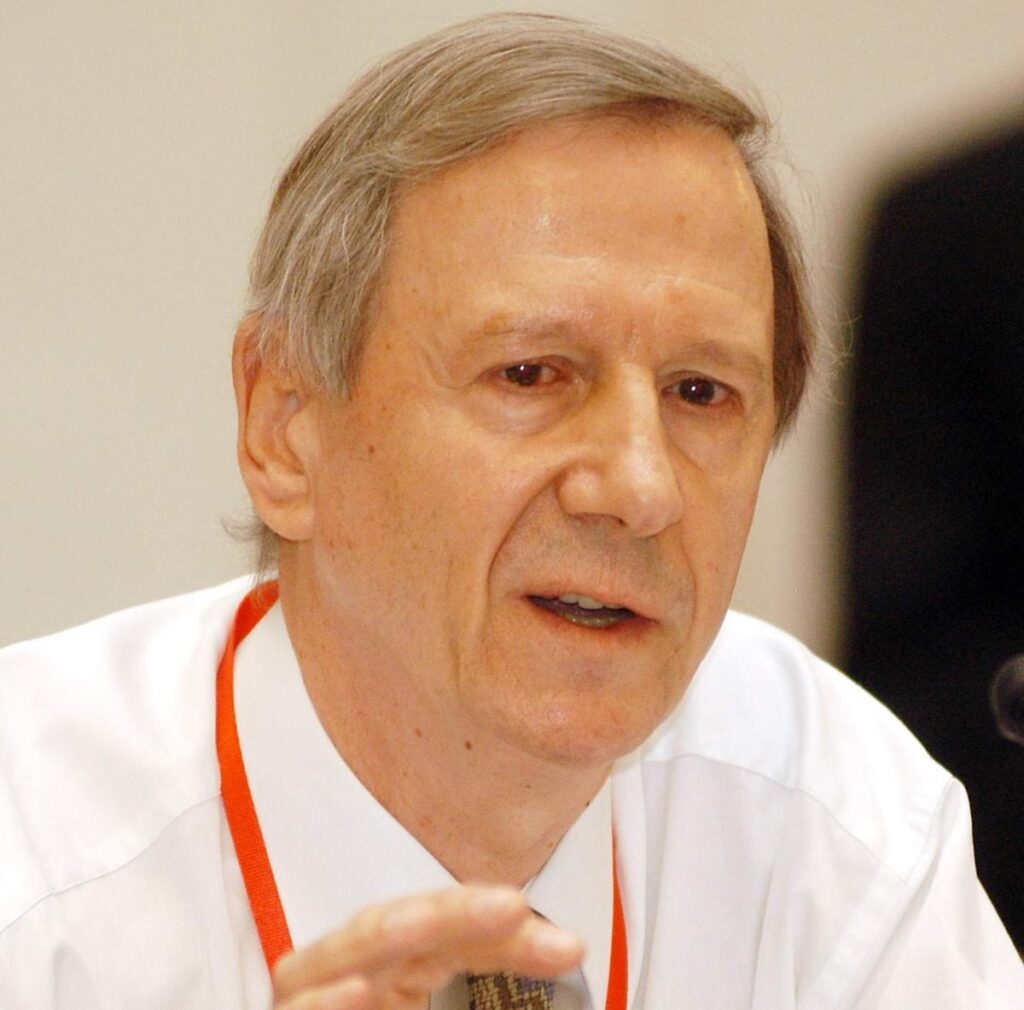
“The Islamic revival cannot be understood wholly in religious terms; it represents in part a reaction against Western influence and is a movement of national or cultural assertion. It is doubtful whether the Islamic revival, even in its most fundamentalist forms, should be seen simply as a renewal of traditionally held ideas. What is going on is much more complex. Traditional practices and modes of life have been revived, but they have also been combined with concerns specifically relevant to modern times.”[ix]
Conclusion
On the basis of the approaches of the thinkers mentioned, which I too believe to be correct, we can say that fundamentalism is a reactive outlook born of modernism and, at the same time, directed against modernism. One point must not be overlooked here: this reactive stance need not necessarily manifest itself in violent action.
The political and intellectual fronts of fundamentalism must not be ignored. Although the authors’ emphasis puts the phenomenon of violence first, in my opinion violence is not a necessary condition for speaking of a fundamentalist process. Violence may or may not be part of it. Indeed, what Giddens in particular stresses (in the quotation above), the revival of traditional practices and their combination with concerns relevant to modern times, expresses exactly what the adherents of radical religious thought and movements want to do.
We will address in another article how the new fundamentalism, which has become visible as political Islam in politics, Salafism in thought and jihadism in action, manifests itself in recent Turkey.
[i] Ramazan BİÇER, Mehmet DALKILIÇ; “Dini Temalı Terör Hareketlerinin Ana Nedenleri” (The Main Causes of Religiously Themed Terrorist Movements), Terörün Sosyal Psikolojisi, ed. Murat SEVER et al., Ankara, Polis Akademisi Yayınları, 2010, pp. 86-87
[ii] In this context, the early Islamic thinkers who adopted Salafi thought, in interpreting the religion of Islam, preferred Ahmad ibn Hanbal (d. 855), founder of the Hanbali school, who foregrounded the traditions of the Prophet, the Companions and the people of Medina. Ahmad ibn Hanbal came to be seen as the forerunner of later movements regarded as fundamentalist. He has been regarded as the spiritual leader of Wahhabism, influential particularly in Saudi Arabia, and, together with Ibn Taymiyya, as the founder of Salafi thought. (Ibid., p. 87)
[iii] Olivier Roy; Siyasal İslamın İflası (The Failure of Political Islam), Metis Yayınları, p. 11
[iv] Gordon Marshall, Sosyoloji Sözlüğü (A Dictionary of Sociology), Bilim ve Sanat Yayınları, 2005, p. 251
[v] Jean BAUDRILLARD; “Jean Baudrillard ile Söyleşi” (Interview with Jean Baudrillard), Silinen Yüzler Karşısında Terör, ed. Cemal GÜZEL, Ankara, Ayraç Yayınevi, 2002, p. 371
[vi] https://tarihibilgi.org/fundemantalizm-nedir/
[vii] Giovanna BORRADORI; Terör Günlerinde Felsefe (Jürgen Habermas ve Jacques Derrida ile diyaloglar) (Philosophy in a Time of Terror: Dialogues with Jürgen Habermas and Jacques Derrida), trans. Emre Barca, Istanbul, Yapı Kredi Yayınları, 2008, p. 36
[viii] “… Moreover, needless to say, this matter knows no West or East. Fundamentalism is a universal creed. Its adherents can be found in the hills of Montana as well as in the bazaars of Damascus. In this sense the world is divided between those who believe too much and those who believe too little. Some are bereft of all conviction, while others are full of passionate intensity. On one side are those faithful to little beyond power and profit; on the other are those who, enraged by some of the consequences of this moral vacuum, preach doctrines that would blow the heads off small children.” (Terry Eagleton, Tanrı’nın Ölümü ve Kültür (Culture and the Death of God), Yordam Kitap, 2014)
[ix] Anthony Giddens, Sosyoloji (Sociology), Kırmızı Yayınları, 2012, p. 622
Monthly · free
Compass of the Month
PUGAT’s monthly newsletter.
Read next



What is PUGAT? A non-profit community publishing independent analysis from Europe on security, migration and society in Turkish, German and English.
Go to the homepage
