


Sixty-two years have passed since 27 May 1960, yet neither the “coup or revolution” debate nor Turkey’s democratic deficit has changed. The author argues that every form of authoritarianism, military or civilian, is equally destructive.
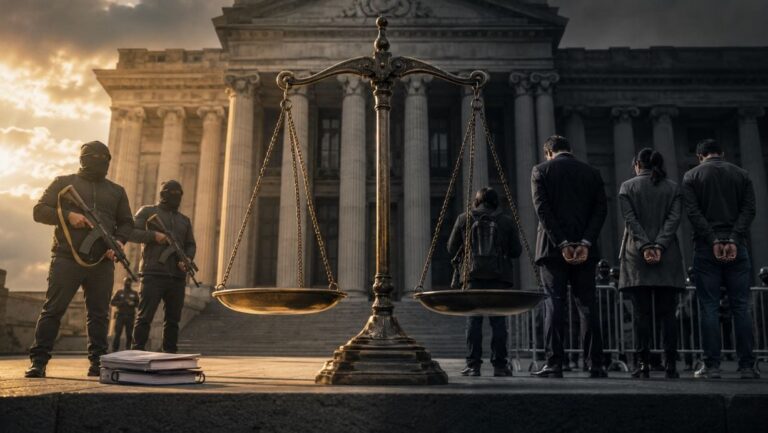
Despite all the years that have passed, we have sadly not moved an inch forward on democratic essentials such as freedom and equality, the rule of law, the separation of powers and multi-party political life. On top of that, whereas military power once meant only the army and the police, we now have, so to speak, our own bouncing new private military companies and paramilitaries.
Another 27 May has come and gone, and we have seen that nothing has changed, neither in the endless “coup or revolution?” debates nor in the mutual accusations of treason. Everyone claims to be the architect of equality and freedom without seeing the faults of their own political camp. Yet if we are truly talking about building freedoms and democratic values somewhere, there can be no place there for a coup aimed at shelving democracy, nor for revolutions. That being so, the partial or total destruction of the regime and of the fundamental values listed above produces the same destructive results, whether it is carried out by soldiers or by elected officials.
The biggest factor behind this picture is ideological bigotry. Voltaire defines bigots as “judges who condemn to death people whose only crime is not thinking as they do.” “Ideological bigotry is dangerous, whether it comes from the elected or from the institutions of the state.” Although the best-known obstacles to the development of democratic thinking are repression and bans, this obsessive mindset in particular is the most dangerous element working in the background. It also plays a role in creating the polarisation that splits a society into hostile camps.
Whichever global index of development, rule of law, freedom or democracy you examine, you can see where anti-democratic thinking and practices have dragged our country, and how we keep ending up back where we started.

As the sudden drops in this sample chart, and the periods just before them, make clear, it is an undeniable fact that the perpetrators of this sorry picture are repressive civilian regimes and, for the most part, military coups. In other words, in the effort to cow opponents and hold on to power, democracy can be destroyed by democratic means just as it can by undemocratic ones.
Today’s figures are at the level of 1945 and the years after, the first years of the return to multi-party life. Moreover, in the international reports and democracy indices published each year, our country, sadly, not only fails to rise above 100th place in a list of 167 countries but is also referred to as a hybrid (democratic-authoritarian) regime.

As in other countries where democracy is underdeveloped, in our country too those who hold power, and even those who claim to be the true owners of the state, at the first opportunity resort to undemocratic and unlawful practices against those who do not share their views. Until now soldiers have carried out such actions through the army, which holds armed power, and by force. This time, however, the situation in our country has evolved into a more dangerous and worrying form because of the existence of SADAT and similar structures, which we mentioned at the outset and which have grown stronger, especially in recent years.
With its unaccountable, more aggressive, centralised and steerable structure, this new armed force is a formation without precedent in our past.
It has carried out its mission meticulously so far, has appeared on the ground in various countries and situations, and, although it is not an official institution, even played a role in the employment of Turkish Armed Forces personnel after 15 July. Considering its close ties with the government, this structure, full of unknowns, is a tool that could be recklessly put on stage to avoid losing power or to seize back power that has been lost. At the point we have reached today, this new and complex situation, with its potential to cause unforeseeable consequences, overshadows even the current 27 May debates.
It appears that, in the face of a power struggle that has become more complicated than the traditional kind, there is a pressing need for a positive change of mindset among politicians and bureaucrats as well as in society. In this respect, great responsibilities fall on the civil and military bureaucracy as much as on our nation and the intellectual public.
It would be a big step towards reconciliation if all institutions and individuals freed themselves of their hidden oligarchic aims, shed their ideological obsessions and interests, confronted their past, learned from their mistakes and admitted the wrongs that were done. Whoever imposes them, neither political bans nor executions are acceptable. Both the political power that steers the legislature as it pleases when it suits it and the soldier who intervenes in democracy must be open to constitutional criticism and be tried equally and fairly before the law.
*****
One of the mechanisms for holding an elected government to account is elections, as laid down by law. In this respect the citizen, the system’s most important auditor, needs to get the balance of supply and demand right, so to speak. In other words, when equality, freedom and justice are demanded without partisanship or the pursuit of personal gain, the government will be obliged to supply these values. Rulers who behave otherwise should know very well that in such a case voters will not hesitate to change their political choice. Otherwise, democracy is abused, and the result is a government in which the majority does whatever it pleases and whatever serves its interests.
Governments that abuse democracy treat every development that does not fit their political leanings as illegitimate, a threat to the regime and a question of national survival, and pass laws and impose bans solely to strengthen their own position. On the other hand, when voters neglect their duty, democracy is reduced to paper and a trip to the ballot box, and the door to autocracy opens.
In modern democracies, holding power to account and the separation of powers are absolute necessities. This can only be achieved within a strong legal system, through accountable institutions that act as guarantors of one another. This understanding is precisely what the idea of and belief in democracy means. And its foundation, once again, is the will of the nation. Preventing armed force from being concentrated in a single hand, whether that of a political power, a government or an institution, and whether official or semi-official, can also be considered in this context.
Otherwise, political mindsets that lag behind the times will get us nowhere, and every attitude and development will serve to erode the democratic character of a state governed by the rule of law and based on freedoms and human rights.
In short, democracy is not the property of a clique, a government or “the state”; it belongs to society. Everyone has an equal right to shape state policy, and it must not be forgotten that Turkey will become a fully democratic country only when the individuals and institutions that make up society embrace democratic values together.
Monthly · free
Compass of the Month
PUGAT’s monthly newsletter.
Read next

What is PUGAT? A non-profit community publishing independent analysis from Europe on security, migration and society in Turkish, German and English.
Go to the homepage
