

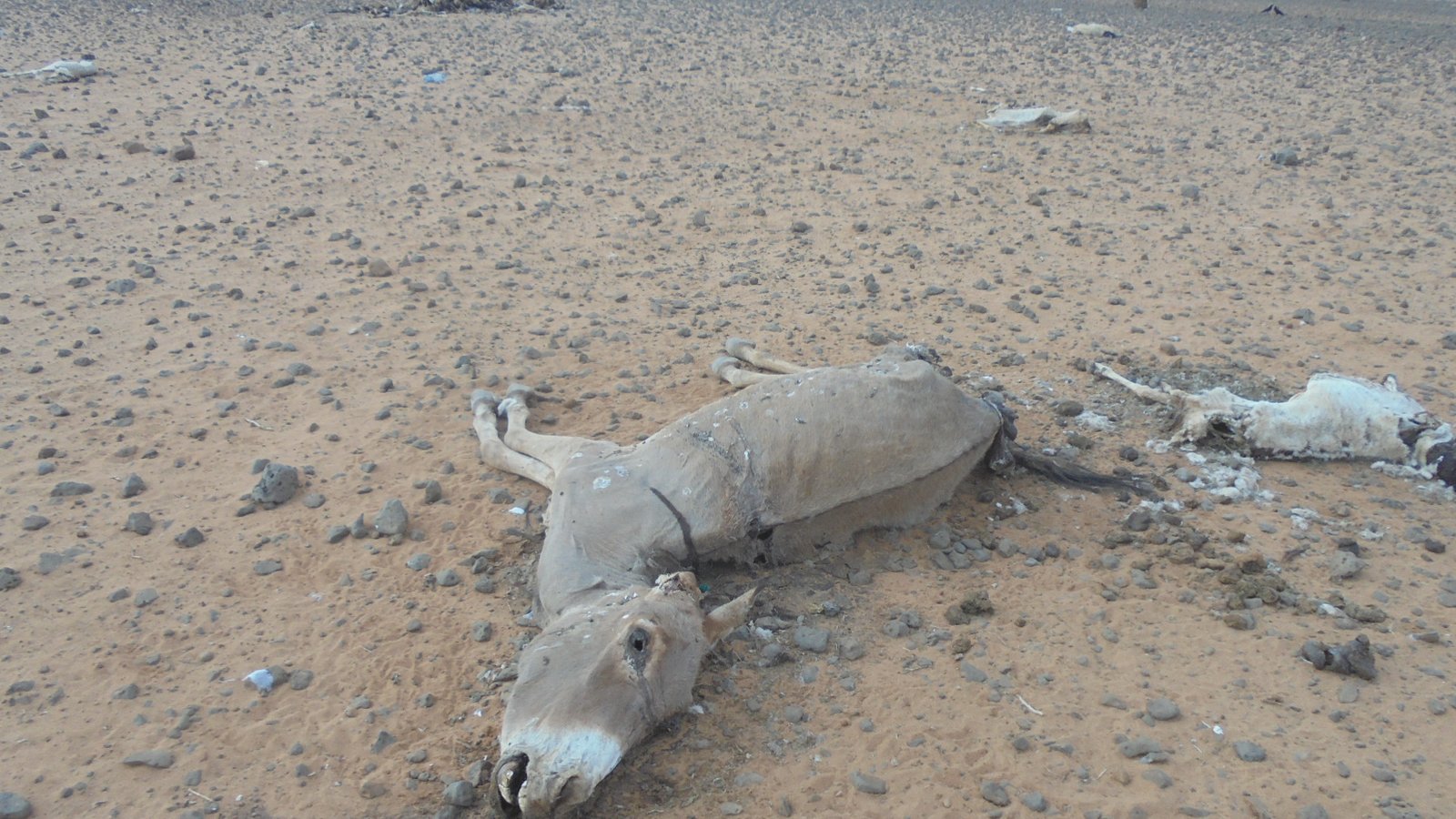
Drought in Syria forced 1.3 million people to migrate to the cities before the war. Climate change is turning into a security problem that triggers conflict and migration.
“Climate change opened the gates of hell in Syria.” These words, spoken in 2015 by former US Vice President Al Gore, became one of the clearest statements on the relationship between Syria and climate change. Because of the drought in Syria between 2006 and 2010, around 1.3 million people migrated from rural areas to the cities. This migration fuelled unrest in the cities and lit the fuse of the first protests against the government.
Drought was also one of the factors that strengthened the Taliban in Afghanistan. With the droughts of the last 30 years, people living from agriculture in rural areas could no longer work, and it became easier for the Taliban to bring this section of society, which the state could not adequately support, under its influence.
There are many similar examples in countries such as Pakistan, India, Bangladesh and Sudan.

Climate change has been the greatest force shaping human history. It directly affects people’s basic needs, and people shape their lives according to these effects. It is decisive in every area, from production to consumption, from scarcity to abundance, from peace to war.
The examples I have given to draw your attention show how strongly climate change affects humanity. I should also note that while these examples are accepted by a large majority, a certain group rejects them on the grounds that climate should not be framed in terms of security.
Is Climate Change a Security Issue?
Whether climate change should be treated as a security issue is debated in many fields. Against those who argue that it is a security issue, there are those who argue that it is not (or should not be).[i]
The main reason behind the position of those who reject the security framing is that treating climate change as a security issue would make solving many important problems harder, even impossible.
Those who accept climate change as a security issue divide the subject into traditional security and human security. Traditional security thinking sees climate change as a trigger of conflict, while human security thinking approaches it from economic, political, social, food and environmental perspectives.[ii]
In my view, climate change should be treated as a security issue in its own right, and it must be approached entirely from the standpoint of human values. Including climate change in security assessments through short-term, interest-driven approaches will drag humanity’s fate towards serious threats.
Can Climate Change Be Prevented?
The Earth’s climate has changed many times from the past to the present. At times our planet has been colder than it should be, at times warmer. Changes in ocean currents, solar events, volcanic activity and other natural causes have played a role in these shifts. Since the Industrial Revolution, human activity has made, and continues to make, our planet warmer than it should be. Humanity, wanting to halt the climate change known today as “global warming”, is aware that it must act globally.
Many international agreements have been concluded and various initiatives undertaken to this end, the Kyoto Protocol and the Paris Agreement being among the most important steps. The main factor causing global warming is the release of greenhouse gases into the atmosphere. Many states have pledged to reduce these emissions by a certain amount. However, industrial needs that affect every area of our lives and the desire to protect our comfort zone are hindering this process. Bringing these efforts, which require enormous economic change and sacrifices in our comfort, to a sufficient level calls for a very difficult process.
Under the Paris Agreement, states aim to keep the rise in global average temperature to 1.5 degrees. If this threshold is crossed, our planet will enter an irreversible phase. Yet research predicts that, if things continue as they are, the threshold will be crossed by 2030. Since the Industrial Revolution, the average temperature has risen by about 1.1 degrees. Crossing the 1.5-degree target will greatly accelerate events. Arctic ice will melt completely by 2050, some island states and many coastal cities will be entirely submerged, forest fires will occur on a far larger scale, and freshwater resources will largely disappear.
Update (November 2026): According to Copernicus and the World Meteorological Organization, 2024 was the first calendar year in which the global average temperature exceeded pre-industrial levels by more than 1.5 degrees. Because the Paris Agreement threshold refers to a long-term average, this alone does not mean the threshold has been crossed. It does, however, indicate that the forecast in this article is materialising faster than expected.
The Gates of Hell Are Opening
India experienced its hottest March since records began 122 years ago, and by the end of April temperatures in many regions had risen above 44 degrees. Around the same time, temperatures in Pakistan reached 49 degrees. In March, rainfall fell by an average of 72% in Pakistan and by 69% in India.
The situation is far from encouraging for Africa, the region most affected by climate change. According to a World Bank report, 86 million people in Africa will be forced to migrate because of climate change by 2050. The World Bank also states that the Mediterranean basin will warm 25% faster than the global average and that Türkiye will be the third most affected country by climate change by the end of the 21st century.
The likely problems linked to climate change in the world are border disputes, energy supply, resource scarcity, social tensions, humanitarian crises and migration. It is clear that all these problems will reshape the world, give rise to new security paradigms and produce new definitions.
Climate Migrants
Migration is regarded both as a consequence of climate change and as a way of coping with it. People who migrate for this reason have therefore come to be defined as climate migrants. According to the Migration Research Foundation, it is estimated that by 2070 one in three people on Earth will be a climate migrant. Migration will significantly change the demographic structure of many countries. Approaches to migrants must therefore be reconsidered. Unless we move from capitalist approaches to humane ones, it is clear that the problems will keep growing in the years ahead.
Conclusion
Climate change must now be one of the priority issues on the world agenda. By displacing billions of people, it is opening the door to new crises for all of humanity. Alongside global efforts, many things we can do as individuals also matter for humanity’s fate. Everyone must put their shoulder to the wheel. We should not forget that even small efforts will, over time, have a positive impact on millions of lives. This issue should be seen as much for ourselves as a legacy we leave to future generations.
We are obliged to take climate change into account in connection with every area of life. Effects that were invisible until now have become visible. Unfortunately, many critical thresholds are about to be crossed. Even though we are forced to regard climate change as the gate of hell, I carry a hope within me that, despite all these adversities, humanity may learn to unite. Perhaps this bleak picture could also be an opportunity to open the doors to a world without borders and hierarchies.
[i] Baysal, B., & Karakaş, U. (2017). Climate Change and Security: Different Perceptions, Different Approaches. Uluslararası İlişkiler/International Relations, 14(54), 22
Monthly · free
Compass of the Month
PUGAT’s monthly newsletter.
Read next



What is PUGAT? A non-profit community publishing independent analysis from Europe on security, migration and society in Turkish, German and English.
Go to the homepage
