

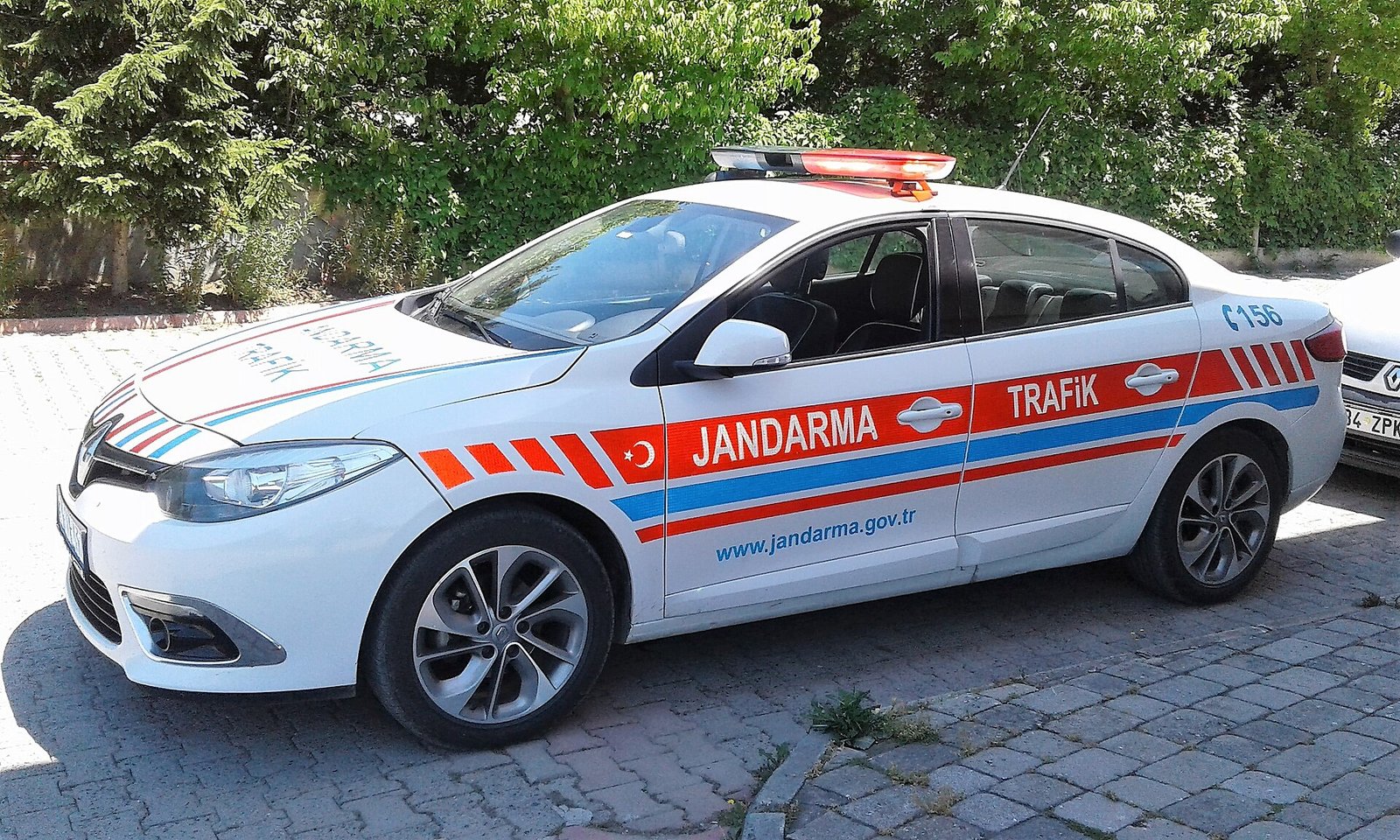
The Gendarmerie Commander’s interview puts the post-15 July counter-terrorism concept of “destroying it at its source” in the spotlight. The author assesses the statements in light of the gendarmerie’s last six years.
General Arif Çetin, Commander of the Gendarmerie, gave an interview to M5 magazine. I would like to present some passages from the interview, which focused on counter-terrorism, and make a brief assessment of where the gendarmerie stands after the last 6 years.
In the interview, General Çetin says:
“With the purge of FETÖ members from our Gendarmerie, Police and Coast Guard organisations, great successes have been achieved in counter-terrorism. After 15 July, Turkey put into practice a new concept in the fight against terrorist organisations and soon began to reap its fruits. With this new concept, terror began to be sought out and identified at its source and, as a result, neutralised.”
“Our counter-terrorism strategy, based on finding and destroying terror at its source and continuing the fight without interruption through operations carried out summer and winter, has produced very successful results. As a result of strengthened intelligence sharing between institutions, pinpoint operations based on human intelligence, the effective use of armed drones, drones and camera traps, and the selfless work of our personnel, terrorist organisations have been dealt a heavy blow.”
“When all these points are considered together, it would be right to call our counter-terrorism strategy a distinctive ‘TURKISH DOCTRINE’.”

In July 2016, the General Command of the Gendarmerie was completely separated from the Turkish Armed Forces by a decree-law and attached to the Ministry of the Interior. A general from the gendarmerie was promoted to full general and appointed Commander of the Gendarmerie.
The divided command that had been complained about for years was over, and every obstacle that might prevent the gendarmerie from breaking new ground in public security and order had been removed. The expectation was that human-centred approaches would develop in public security and order, and that the way would be opened to an organisation that was auditable, accountable, transparent and staffed by high-quality personnel. It was also hoped that disproportionate use of force by law enforcement and violations of human rights and freedoms in the provision of public security would be reduced to a minimum.
However, according to independent international reports, Turkey has been steadily falling behind over the last 6 years in preventing incidents that fall within the duties and responsibilities of law enforcement. Personally, I found it strange that these issues were not discussed in the interview. I can understand a PR exercise built on the fight against PKK terrorism, Turkey’s bleeding wound for 50 years. Indeed, the fight against the PKK has always been used as an advertising tool by the senior security bureaucracy. Lately, however, a profile of a gendarmerie whose only task seems to be fighting separatist terrorism is being presented. That there are many signs suggesting this orientation is a political choice is also worrying.
While praising his own term as the most successful period in the nearly 50-year history of the fight against the PKK, General Arif Çetin stresses that the fight against terrorism conducted in coordination between the Turkish Armed Forces, the Gendarmerie, the Police and the National Intelligence Organisation (MİT) and based on the “search, find and destroy” and “area dominance” doctrine can be regarded as a “Turkish doctrine”.
I must say that I find it presumptuous to present as a Turkish Doctrine the fact that armed drones, flying around the clock in all weather conditions, now deliver the basic “SEARCH, FIND AND DESTROY” and “AREA DOMINANCE” doctrine the armed forces adopted in the fight against the PKK. The results of armed drone use in the fight against the PKK are indisputable, but it is not a new practice. The US military began using armed drones in Afghanistan in 2001. For 40 years the armed forces set up thousands of base areas and carried out hundreds of thousands of ambushes and operations to secure area dominance, losing thousands of soldiers in the process. The real question to ask is this: Why, despite armed drones, has there still been no significant fall in the number of personnel killed? I do not want to go into too much detail on drone use. While I was preparing this article, the first article in Salih Ergün’s series “The Role of Intelligence against Asymmetric Threats in Counter-Terrorism” was published on PUGAT. You can read detailed information on drones and intelligence in this series.
The Duties of Law Enforcement Agencies
The primary duty of law enforcement is to provide public security and order and to protect public order. Preventing criminal incidents before they happen is the main goal of public security services.
For example, if a woman in an abusive relationship is identified and rescued by the police before she is killed, that is a preventive public security service. Catching the killer after the murder and bringing him to justice is a secondary success.
To judge whether law enforcement agencies are successful, one has to look, besides preventive services, at the activities of organised crime groups, violence against women and femicides, the fight against drug trafficking, the fight against corruption, and crimes against persons and property.
Of course, no law enforcement agency can overcome these crimes on its own. Many factors, such as the country’s justice system, the education level of society and economic conditions, have a direct effect on rising crime. But the existence of these factors does not remove the responsibility of law enforcement.
Let us now look in turn at the course of some crimes over the last 5 years.
Smuggling and Organised Crime Groups
In the Global Organized Crime Index published by the Global Initiative against Transnational Organized Crime, Turkey ranks 12th in the world. According to the index, with an organised crime score calculated at 6.89 out of 10, Turkey ranks first among European countries.

Violence against Women and Femicides
According to a 2019 report by the Organisation for Economic Co-operation and Development (OECD), Turkey is the OECD member country where violence against women is most widespread. As for femicides, more than 2,000 women were killed between 2016 and 2020, a record in the history of the Republic.
Drug Trafficking
Turkey is currently one of the main routes to the European drug market. Indeed, according to recent assessments by European security analysts, Turkey is being used as the main route from Asia to Europe because the northern route is closed by the Russia–Ukraine war. For the last 20 years, a large share of the drugs seized in Europe each year has been seized in Turkey. This did not change after 15 July, but an even more curious situation arose. Although Turkey is not on the cocaine route to Europe, record amounts of cocaine were seized in South American ports on ships bound for Turkey. Colombian officials also confirmed that the drugs had a Turkish leg. Yet no effective investigation or inquiry into the matter has been carried out in Turkey.

Crimes against Persons and Property
According to data published by TurkStat in November 2020, 281,605 people entered penal institutions in 2019. In 2009 this figure stood at 74,404. Looking at the data by type of offence, there has been an explosion in theft, sexual assault, drug and smuggling offences. For example, the number of people processed for murder was 1,514 in 2009, while in 2019 it rose sixfold to 9,574, and for assault it rose 4.5-fold to 34,987.
The Fight against Corruption
Turkey, ranked 96th out of 180 countries in Transparency International‘s 2021 Corruption Perceptions Index, has fallen 42 places since 2012 and received its lowest score in 14 years. Research on the damage to the legal system, pressure on civil society and the press, measures of transparency in political financing and the level of non-transparent, closed-circuit oversight of public tenders is consistent with the 2021 index results. In fact, under these conditions it would not be realistic to expect corruption operations from the gendarmerie either.

As you can see, the picture is not encouraging. According to the statistics, some of which I have given above, it can easily be said that law enforcement agencies are struggling. Last week, the murders of a lawyer in Istanbul and a doctor in Konya put public security back on Turkey’s agenda. The public order problem has almost become a bigger problem than terrorism. On the very first pages of the textbook “Public Security and Order Services” used in gendarmerie schools is this question: “What would happen if the gendarmerie and police were given just one day off in the country?” The more I see the statistics made public, the more I wonder: Are the gendarmerie and police given a collective day off on some days?
Monthly · free
Compass of the Month
PUGAT’s monthly newsletter.
Read next


What is PUGAT? A non-profit community publishing independent analysis from Europe on security, migration and society in Turkish, German and English.
Go to the homepage
