

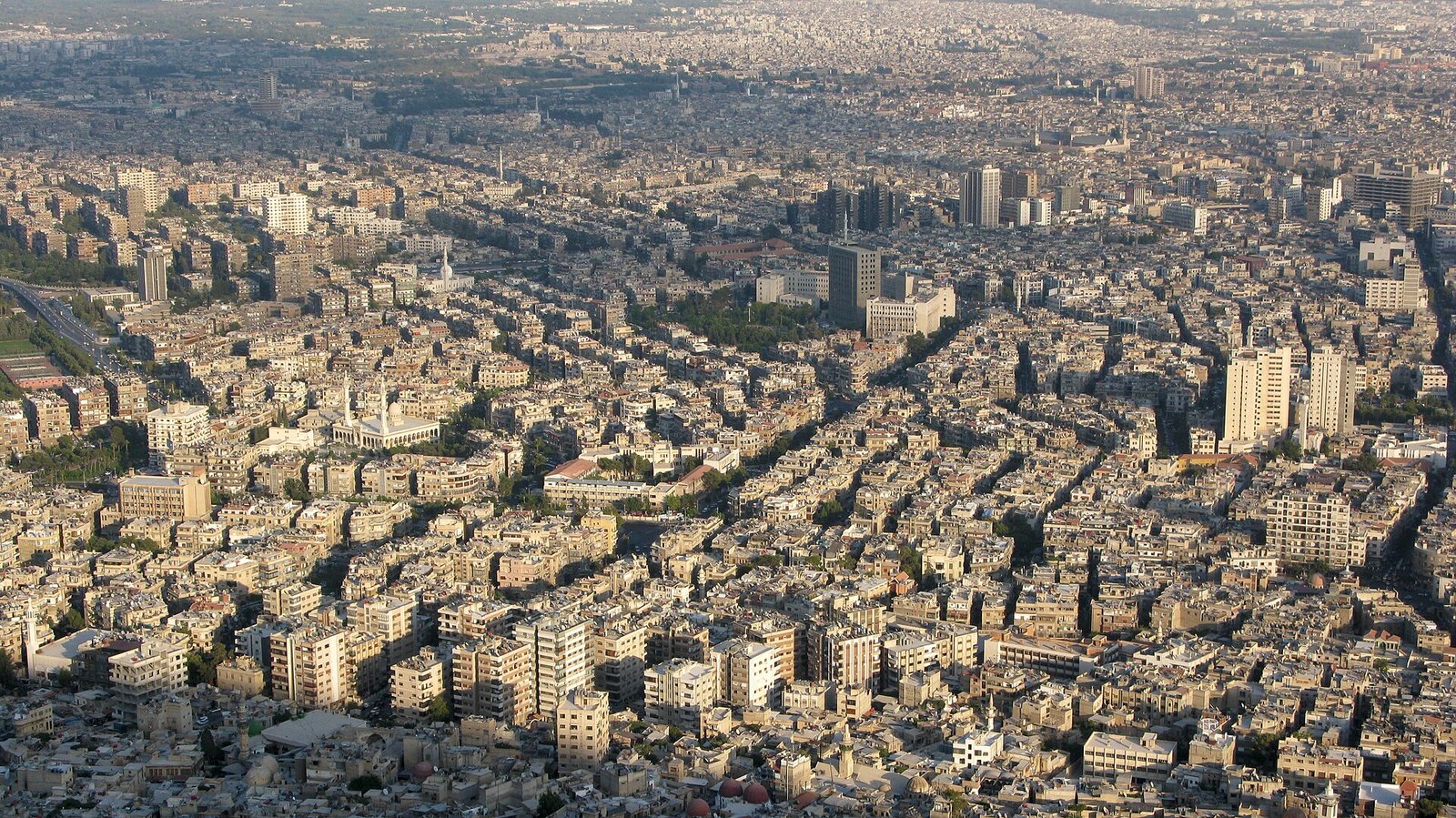
From brother Assad to Assad the murderer: Turkish–Syrian relations have never followed a straight line since the 1980s. This part examines the parameters that shape the relationship.
What Is Happening in Syria, What Is Turkey Doing? | 2
How does Turkey follow developments in Syria? It is very hard to answer this question in a single breath. For the nature of Turkey’s relations with Syria since the 1980s makes this difficulty considerably more pronounced.
The neighbourly relations with Syria and the Hatay question, which took a different shape in every period, acquired an entirely new dimension with PKK terrorism. For a long time, sometimes cautious but mostly harsh language was used towards Syria, which harboured the leader and members of the PKK terrorist organisation on its territory. Finally, with Abdullah Öcalan’s departure from Syria at the end of the 1990s, relations between the two countries entered a process of normalisation before a new crisis could arise.

Brother Assad – Assad the Murderer
During the AKP government’s 2002–2011 period, Erdoğan raised the cautious dialogue between Turkey and Syria, almost overnight, to the level of “brotherhood” in rhetoric. With mutual compliments and visits, a “spring” began. This development, which pleased the peoples of both countries, fell apart just as quickly as it had begun. From 2011 onwards, because of Erdoğan’s rhetoric and actions, a wind of hostility began to blow more openly than ever before in the history of the two neighbouring countries. Not only Erdoğan’s rhetoric but also that of other government bureaucrats and politicians hardened. The threats grew stronger by the day. Erdoğan’s pre-war compliment “my brother Assad” was replaced after the war began by the hatred of “Assad the murderer”.
It did not stop there: direct interventions affecting the internal turmoil in Syria came onto the agenda. The AKP government’s arbitrary policy in supporting anti-regime structures (some of which no one doubts are terrorist organisations) and the turning of hostile rhetoric towards Syria into action closed all channels of communication between the two countries. At no time in history had relations between the two countries deteriorated to this level and come to the brink of hostility.
The Victims
The hostile attitude between the two neighbouring countries naturally produced many victims. In the Syria question, in which political, social, economic and cultural relations were thrown into disarray, the psychology of the citizens of the Republic of Turkey was turned upside down. Both the human tragedies and the helplessness into which the AKP government fell damaged the people’s trust in the state. The Alevis in Turkey (especially in Hatay, Adana and Mersin) watched what was happening in Syria and the stance taken by the AKP government with concern. Syrian Kurds in the areas near the border, who have kinship ties with Kurds in Turkey, were also first-hand and direct victims of the developments. Just like the Turkmens in various parts of Syria.
The Turkmens
The AKP government’s “Turkmens in Syria” policy is a disaster in its own right. What kind of policy has been pursued to protect the rights and legal protections of this people, called “our kin”, and to ensure their safety remains unknown.
Is Turkey helping the Turkmens or not? Which aid supplies is it delivering? Can it meet their needs for food, medicine, shelter and so on? Is it providing weapons? Is it giving armed training? What has been done so far in terms of political and moral support?
Many such questions and many complicated answers lie piled up before us. For example, where are we to place the contradictory statements made by AKP government officials about the trucks loaded with weapons and ammunition stopped in Adana and Hatay in January 2014? It was said that “humanitarian aid was going to the Turkmens in those trucks”. Yet those trucks were not going to the Turkmens. And there was no humanitarian aid in them but war materiel. Turkmen officials also stated at the time that neither weapons nor humanitarian aid had been delivered to them.
Much could be said about what the AKP government, which produced policy using the name of the Turkmens, was really aiming at. The ultimate truth is this: the Turkmens, with whom the Turkish people following developments in Syria also formed an emotional bond, were victimised by the AKP leadership on top of having their name used as political material, and became the target of the various groups fighting in the region.
Syrian Refugees in Turkey
The AKP government made sure that Turkey hosted the meetings of structures opposed to the Syrian regime, above all the Free Syrian Army (FSA). This stance was perhaps understandable at first. But because the AKP government did not pass the open threats and hostile attitudes towards Syria’s sovereign rights through the filter of the logic of the Turkish state, they pushed Turkey’s relations with the Syrian government, whose legitimacy is still recognised internationally, to the level of “hostility”. As a result, Turkey’s embrace of Syrian refugees numbering in the millions and its shouldering of their burden became invisible.
Opening its arms did not solve the problems and cannot solve them. At first, thousands of Syrian refugees suffering hunger and destitution presented a wretched sight in various parts of Turkey’s cities, before the public’s eyes. The AKP government virtually offered an opportunity to those wanting to exploit this scene. It did not give the refugees the help they expected, and at the same time it set out, through its “train-and-equip” policy, to train armed elements to fight Syria’s legal government. As a result of a policy full of contradictions, shortcomings and errors, it fanned the fire burning in Syria ever more.
The issue of Syrian refugees, initially seen as a human tragedy, turned into anti-migrant sentiment, particularly from the 2020s onwards. Criminal activity began to appear on the streets. The question of the AKP government granting Turkish citizenship to Syrian refugees as an electoral investment moved to the centre of speculative political debate.
Yet the AKP government had wanted to play an active role in the coalition formed by the world’s countries to bring stability to Syria. Because of Erdoğan’s recklessness in taking the initiative in the region, this enthusiasm took on an insincere appearance and drew reactions from the world’s states following developments closely.
The Foreign Service
We see that the political government did not use the state’s collective wisdom and the experience of the foreign service in setting and managing Syria policy. We can say that the main reason for this is Erdoğan’s style of government.
Erdoğan, first as prime minister and then as president, was responsible for many wrong practices and persisted in these mistakes over time. The framework of the consensus somehow reached among the world’s countries to end the chaos in Syria was broken by Erdoğan himself. The Assad regime was provoked with jingoistic rhetoric in order to create the image at home that the AKP government was very strong. With arbitrary, uncontrolled and irresponsible actions, wood was thrown under the cauldron boiling in Syria. Meanwhile, the foreign service of the Republic of Turkey, its Armed Forces and its intelligence services were used like internal political organs of the ruling party.
In this process, Turkey’s Foreign Ministry appeared to form the bureaucratic arm of the official state policy pursued in Syria. But real policy developed not through the experience of the foreign service bureaucracy but through Erdoğan’s ambitions and expectations and the skills of the intelligence service. (By “skills” here we do not mean the positive, textbook sense of the word, but the “power” the intelligence service was able to display in using its means and capabilities.) The situation on the ground is no different today.
NGOs and Companies
It is clear that the public has not been adequately informed about the nature and scale of the activities of the Turkish Red Crescent, which carries out humanitarian aid work in the region. When we look at which other civil society organisations’ activities can be mentioned besides the Red Crescent, the first that stands out is the Foundation for Human Rights and Freedoms and Humanitarian Relief (İHH). But the fact that some circles mention its name together with Salafi-jihadist individuals and groups leaves many question marks. İHH rejects these claims; however, the view that the foundation’s activities are supported by the AKP government keeps the question marks alive. Other civil society organisations can be seen in the region only to the extent that they get past the AKP’s secret accreditation and are willing to cooperate politically or pragmatically.
SADAT, short for “International Defence Consultancy Construction Industry and Trade Inc.”, founded on 28 February 2012 by retired Brigadier General Adnan Tanrıverdi and 23 retired officers and non-commissioned officers, is also one of the companies seen to be active in Syria. Regarding SADAT’s activities in Syria, which we think should be examined in a separate study, let us simply recall the claims made by Sedat Peker, accused of being the leader of an organised crime group, in his video published on 30 May 2021. In that speech Peker claimed that, together with the trucks carrying aid supplies he sent to the Turkmens, other trucks containing weapons sent to al-Nusra were also dispatched to Syria, and that this arms shipment was organised by a team that included SADAT. SADAT has denied these claims.
Considering that materials sent to the conflict zone (whatever their contents) are subject to security checks, we do not yet know what kinds and quantities of goods were sent to Syria in shipments of the type Peker described.
Monthly · free
Compass of the Month
Once a month: five points from Europe’s security and migration agenda and the month’s PUGAT articles, in your inbox.
Newsletter sign-up opens soon.
Read next


What is PUGAT? A non-profit community publishing independent analysis from Europe on security, migration and society in Turkish, German and English.
Go to the homepage
