


Smuggling on the Turkey–Syria border is a regional reality that has persisted since the collapse of the Ottoman Empire. With the war in Syria, these networks turned into a criminal economy stretching from drugs to antiquities.
Turkey–Syria Criminal Links | 1
It is worth noting first of all that the news reports alone on the criminal dimension of events and developments on the Syrian–Turkish border number in the thousands. This density tells us how grave the matter is for any assessment in this field, and gives an idea of the scale of the lack of authority in the regions of both states, of bribery and corruption, of the breakdown of state mechanisms, of public officials’ involvement in crime and of the long-running instability in the region.
Undoubtedly, it is very difficult to address this subject in all its dimensions, to obtain reliable information about what has happened and to make sound assessments. However, the assessments of people who know the region, have served there, are familiar with the character, culture, customs and traditions of its people and at the same time follow current developments closely are important.
In this study we will try to address the criminal issues arising in the context of Syrian–Turkish relations under the headings of smuggling in general, drug smuggling, human smuggling, oil smuggling, arms smuggling and antiquities smuggling.
In a region beset by instability, it is a natural consequence of current conditions that people resort to smuggling to earn a living and survive. However, the smuggling problem on the border between Syria and Turkey is a regional reality that began almost with the collapse of the Ottoman state and has continued to this day.
So much so that there are many reports on solving this problem dating even from the first years of the Republic. In other words, even the young Republic of Turkey saw how sensitive the situation was and carried out various studies to take measures. But today, as in the recent past, the country’s administration has sadly been unable, in all its functions, to produce solutions fully in line with the requirements of the modern age, and the problem has therefore become deeply entrenched.
A Brief Look at the History of Smuggling on the Syrian–Turkish Border
Aleppo and Damascus, which today lie within Syrian territory, were provincial centres within the borders of the Ottoman state until 1918. One of the natural trade routes in the region was the İskenderun–Antakya–Aleppo route, which continued beyond Aleppo as far as the Persian Gulf.[1] The Antakya and İskenderun areas were district centres attached to the province of Aleppo. After the First World War, however, the political situation there changed. Many territories, including the provinces of Damascus and Aleppo, were separated from the Ottoman state. As a result, commercial activities that had run normally there now took on the character of smuggling. Before this development, the only place in the region where smuggling took place was the port of İskenderun, which connected the region with the outside world.[2]
From then on, the situation would turn into a problem that was hard to contain. Many of the former trading craftsmen and merchants had now become professional smugglers who knew the region, the routes and the people to contact intimately. Subsequently, both because smuggling was very profitable and because of the terrain, other areas besides the port of İskenderun came to be used intensively.
Many points were so rocky that they made movement by mounted or motorised patrols very difficult, so tracking smugglers with patrols was almost impossible. In addition, the ethnographic and demographic structure of this section also made smuggling easier. There were Kurdish and Arab villages throughout the areas inside Syria’s borders and the land on the Turkish side. The close ties among the people of this region, owing to kinship and the language they spoke, influenced smuggling activities. Mostly live animals were smuggled from Turkey into Syria, and various goods from Syria into Turkey. Naturally, these could change depending on price fluctuations on the two sides and on profitability and availability.
In short, the causes of smuggling in the region have been researched throughout the history of the Republic, and geography, ethnic structure, economic fluctuations and inconsistencies in state policy have stood out as the leading causes.
Today, in addition to the same basic causes, it is plain to see that, because of the instability on the Syrian side and the excessive politicisation of the army and law enforcement that came with the “de facto” situation in Turkey after 15 July, there are weaknesses in the fight against smuggling, as in all public order matters.
Leaving aside state officials who are involved in crime, neglect their duties, are mixed up in bribery and corruption or even lack sufficient qualifications, the following points stand out in assessments:
For example, the great length of the border and, as a result, the distance between border posts emerges as an important factor. However, given today’s technological developments, this can no longer serve as an excuse.
We see that, especially since 2012, the instability in Syria has given smugglers a very wide field of action. This has also drawn the attention of leading international media organisations and has from time to time made the news.
For example, the Financial Times wrote on its world news page that the conflict in Syria had created a large field of action for border smugglers.
The article by Michael Peel and Daniel Dombey can be summarised as follows:
“As a dozen tractors loaded with smuggled oil move along a muddy track from Syria towards Turkey, a Turkish farmer named Abdo says: ‘It used to be very hard to smuggle like this.’ Then, rubbing his hands, he adds: ‘But now everything is very good.’
The bloodshed and fighting on the other side of the border stand in stark contrast to the good mood on this side. The conflict in Syria has opened up a great source of profit along the long border.
In Hacıpaşa, a man who says his name is Abu Muhammad says: ‘There is no border here any more.’ Syria’s 900-kilometre border with Turkey is very important for the Bashar al-Assad regime, the opposition and ordinary Syrians.
A bridge from a stable country on Europe’s border to both Syria’s trading hubs and its conflict zones…
Border smuggling has gone on for many years. Oil in particular is very profitable.
Memet Faruk Hansa, mayor of Hacıpaşa, explains that farmers who saw that smuggling was more profitable have taken up the business.
People living here say that Turkish soldiers turn a blind eye to smuggling. A Turkish official denies this claim and says: ‘If they are so sure, let them smuggle in broad daylight in front of the soldiers.’
The next day Abdo and the others cheerfully cross back and forth across the border in the middle of the day. Their concern is to earn as much money as possible. ‘Who knows?’ says one of them. ‘Maybe tomorrow they will stop us.’”
Note that the farmer in the report says that smuggling used to be very hard, but that the current situation has opened up a very wide field for them. The information coming from the region points in the same direction. So there is nothing surprising here.
Meanwhile, with economic policies that almost every authority in economics considers mistaken, the government of the Republic of Turkey has put the economic welfare of the people under severe strain. In this context, smuggling has become a source of livelihood, even a matter of life and death, for many people living in the region.
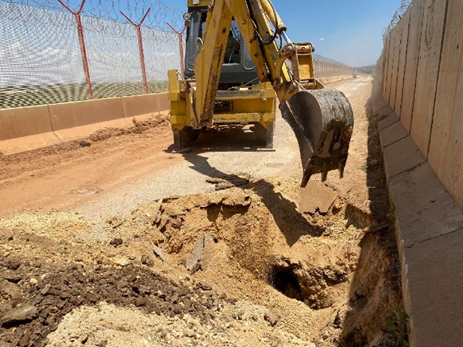
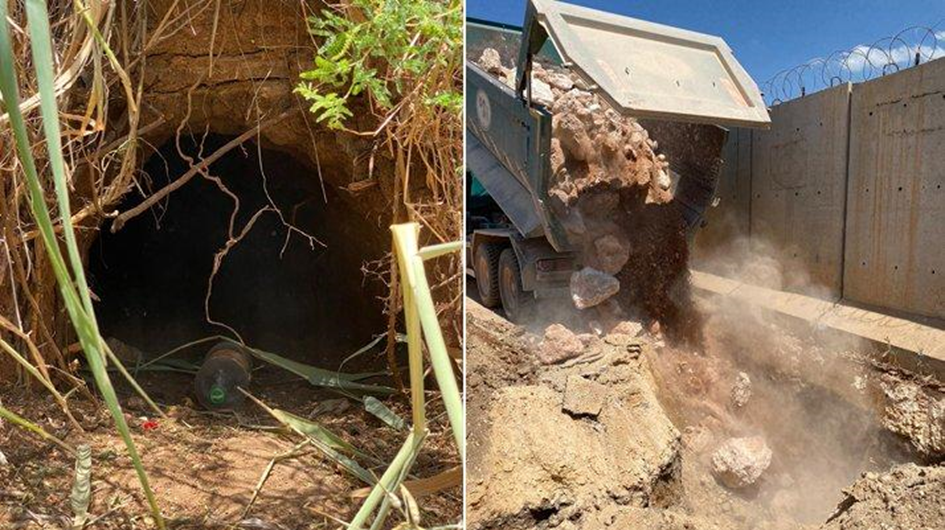
Another example is information reported in the press on 7 June 2021. The headline of the report on the website of the newspaper Sözcü read: “Smuggling tunnel from Syria to Turkey”. The report said: “While the concrete blocks built along the border in Hatay, Kilis, Gaziantep, Şanlıurfa, Mardin and Şırnak prevent illegal crossings and smuggling, it was found that a tunnel had been dug from Syria into Turkey in Hatay. It was noted that the tunnel had been dug under the concrete blocks built along the Syrian border to prevent border crossings.”
Sources
- Ürkmez, Naim. (2016), Doğu Akdeniz’de Bir Liman Kenti: İskenderun (1914-1919), Ankara: Pegem Akademi Yayınları, pp. 110–111; Çelik, S. (2020), Hatay-Suriye Sınırında Kaçakçılık (1940), Atatürk Üniversitesi Sosyal Bilimler Enstitüsü Dergisi, 24 (3), p. 1055
- Ürkmez, Naim. (2016), “19. Yüzyılın İkinci Yarısında İskenderun Limanı’nda Yapılan Yolsuzluklar”, Hatay Tarihi ve Kültürü Üzerine Araştırmalar-1 Dr. Mehmet Tekin Armağanı, ed. Sacit Uğuz, Bülent Arı, Hatay: Mustafa Kemal Üniversitesi Yayınları, pp. 152, 155; Çelik, S., op. cit., p. 1055
Monthly · free
Compass of the Month
Once a month: five points from Europe’s security and migration agenda and the month’s PUGAT articles, in your inbox.
Newsletter sign-up opens soon.
Read next


What is PUGAT? A non-profit community publishing independent analysis from Europe on security, migration and society in Turkish, German and English.
Go to the homepage
