

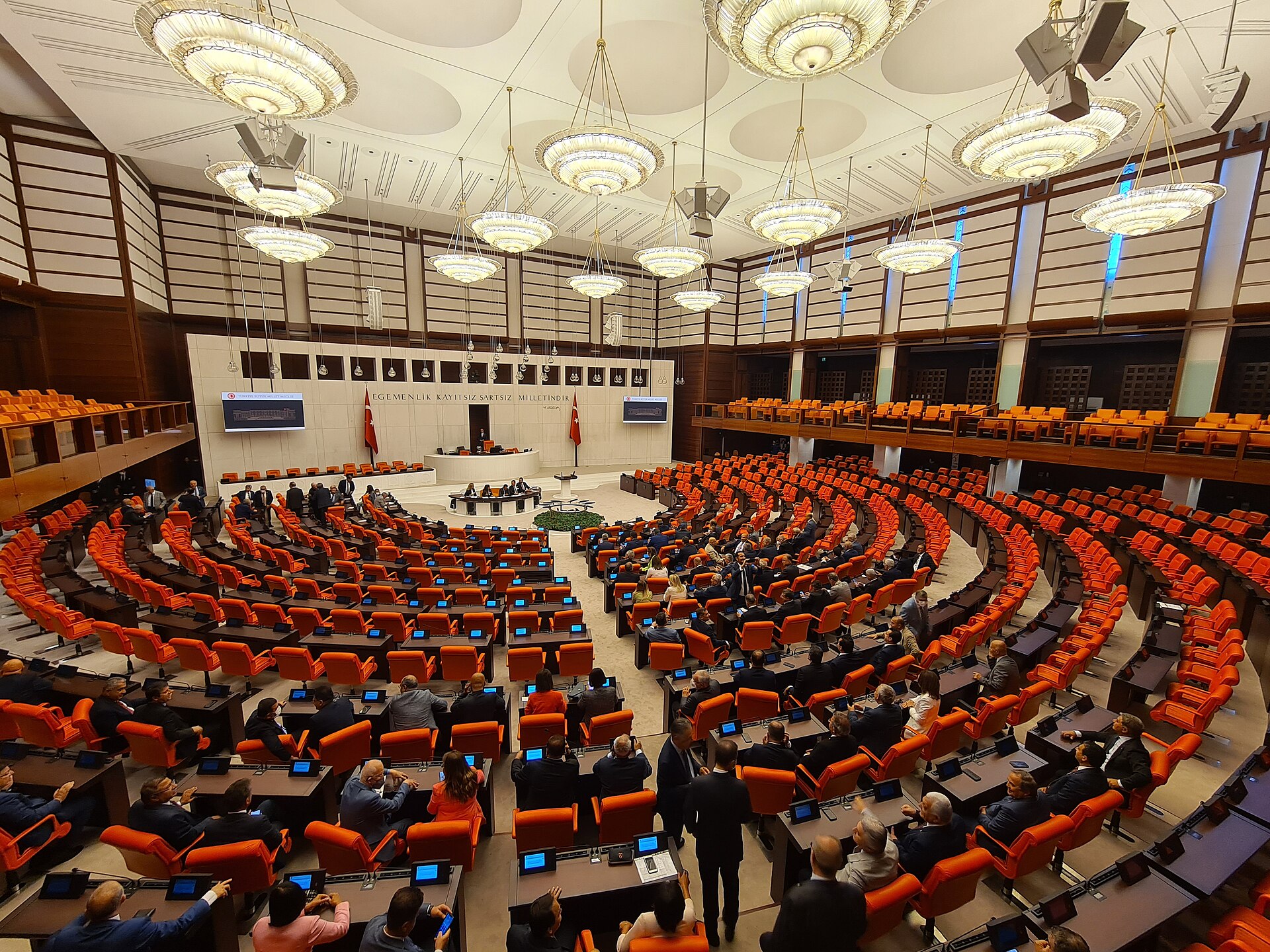
Despite the earthquake, poverty and corruption, the opposition lost the 2023 elections. In the author’s view, the roots of this lie in a leader-centred social structure and the lack of a real tradition of opposition.
For thousands of years Anatolia has been the stage of millions of people struggling for ideals. This land has tried to develop in a constant atmosphere of struggle, with conflicts coming from outside and from within. Yet in a land where social ideals were placed before individual ones, rulers chasing their own ambitions and egos have often paved the way for the exploitation of the settled population. The established notion of sacrifice for society has led people to hand over their own fundamental rights to others with ease. The individual has been robbed of the ability to form their own ideas, and society has become a collection of foot soldiers for ideological groups.
This legacy from the past lies at the root of today’s quarrels and polarisation. Every individual is preoccupied with keeping alive their own way of thinking and the system they belong to. In this environment compromise has become impossible. These conflicts create indifference in society and lead people to react according to the atmosphere they are in. Loyalty to the group and the leader becomes the greatest obstacle to individuals’ personal development and to their inclination to rebel.
After this long introduction, let us come to the present. The AKP regime has once again managed to win the latest elections. Despite the robberies, plunder and rent-seeking, despite the deaths of thousands of people in the earthquake due to negligence and irresponsibility, and despite millions of people living below the hunger line, the opposition lost these elections.
So why did the opposition not get the result it expected? Was there really an opposition in a society that has been leader-centred for more than a thousand years, and in the Republican period of the last century? Let us try to answer this question. Our country came to know the concept of opposition with the transition to multi-party politics in the second half of the 1940s. But because our political history is full of periods shaped by coups, only in the last 20 years has the opposition had ground on which it could be truly effective. Within those twenty years, the main opposition party, after wasting its time with a shallow left-wing political outlook and covert-recording scandals, has been on the stage for the last 10 years. The state of the other opposition parties is well known. Reading Turkish society correctly with a ten-year-old understanding of opposition was a difficult task. The direct links between the dark mindsets within the opposition and the AKP regime were also the guarantee that elections would once again somehow be handed to the AKP as a gift.
I should add that the people of our country tend to act according to the behaviour of the group and leader they belong to, rather than producing or assessing ideas individually. To win the election, the opposition needed to build a solid ideal, anchor this ideal in the opposition bloc around a leader who appealed to this historical tradition of society, and clearly consolidate the strength of its groups with its own agenda.
The people of this country have been exposed to clashes of ideas for centuries. It is not realistic to expect a society that has drifted so far from a culture of compromise to suddenly break its taboos. All of us are familiar with these sentences our mothers, fathers or those around us often said to us in childhood or later in life: “Don’t meddle in anyone’s business, finish your school, do your job, don’t stick your neck out…” These sentences counsel us to stay silent rather than correct someone who is doing wrong, and not to upset the order. Unfortunately, this mindset prevails across society.
A society raised with this mindset will not be able to take a firm position around an opposition that has failed to prove its leadership and to overcome its own organisational and trust problems.
So who is to blame? The opposition? Society? When looking for someone to blame, we should first try to look at ourselves. How far have we come individually that we should try to carry society forward with a critical eye? Of course, while trying to make our voices heard, we must bring the ground we stand on and ourselves to a solid level so that the impact of our voice can be felt more clearly.
To develop, we must first start with ourselves as individuals. We must do our best to encourage personal development and to pass on to future generations the habit of standing up to wrongs. We must try to understand one another, accept our differences and meet on common ground. Instead of relying only on leaders or opposition parties, we must discover our own power and work actively for the future of society.
Let us not forget that the role of society and the opposition is of great importance in the search for a future. Society must voice its demands and hold those in power to account. The opposition, for its part, must represent society’s expectations correctly, offer alternative solutions and champion fundamental values such as justice, freedom and equality.
In this process, however, we as individuals need to take responsibility and contribute. Social change and progress will be possible through the actions of each of us. It is important to form our own thoughts, develop our critical thinking skills and get actively involved in society’s problems.
We must therefore understand correctly the role of society and the opposition in the search for a future, and strive to create positive change starting with ourselves. Only by moving forward together in this way can we build a more just, free and sustainable future.
Monthly · free
Compass of the Month
Once a month: five points from Europe’s security and migration agenda and the month’s PUGAT articles, in your inbox.
Newsletter sign-up opens soon.
Read next


What is PUGAT? A non-profit community publishing independent analysis from Europe on security, migration and society in Turkish, German and English.
Go to the homepage
