

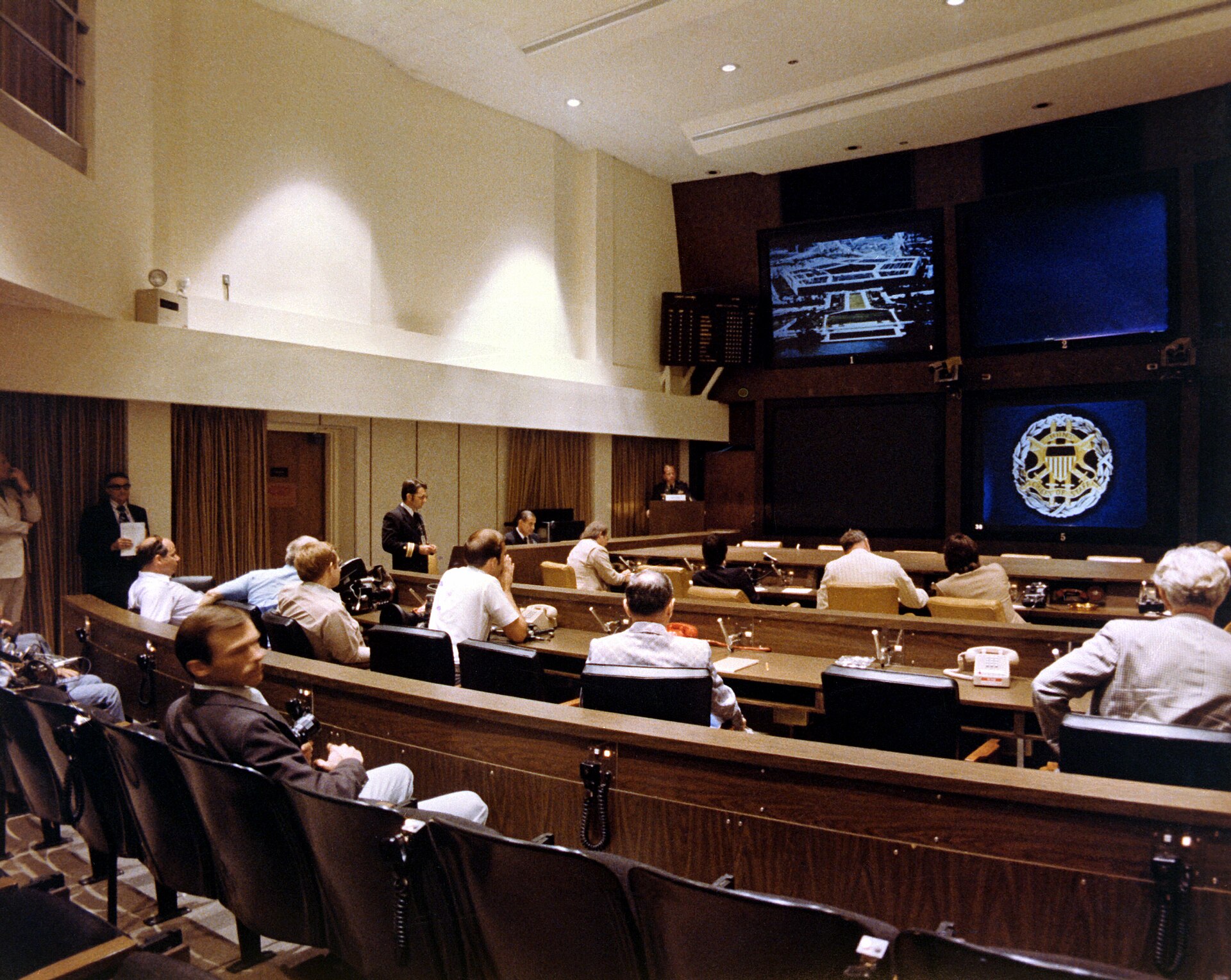
Armies plan new tanks and aircraft in decade-long cycles, while technology changes within months. The digital dilemma faced by the German car industry is now at the door of the defence industry.
Software Defined Defence – SDD
The logistics system of many countries’ armed forces consists of a series of stages. Requirements are usually planned in long cycles of five to twenty years until a new generation of vehicles (tanks, ships, aircraft and so on) is introduced. As a result, the system is often neither flexible nor agile. In addition, complex processes such as harmonising equipment among national and international partners and building command and control capacity require time and large amounts of financial and human resources.
When assessing the operational readiness of the armed forces, politicians usually focus on physical capabilities. In politicians’ eyes, for example, if 5 aircraft are scrapped, 5 new aircraft with the same capabilities must be procured. An approach focused on the number of weapons and vehicles ignores the developments of recent years and endangers the future existence of the armed forces.
The innovations brought by the IT sector have offered, and continue to offer, an opportunity for new concepts and perspectives. Innovation cycles are now months, not years. Keeping pace with this rapid development is no longer possible with a device-centred mindset in which the vehicle is planned and built first and information technology is then somehow adapted to it.
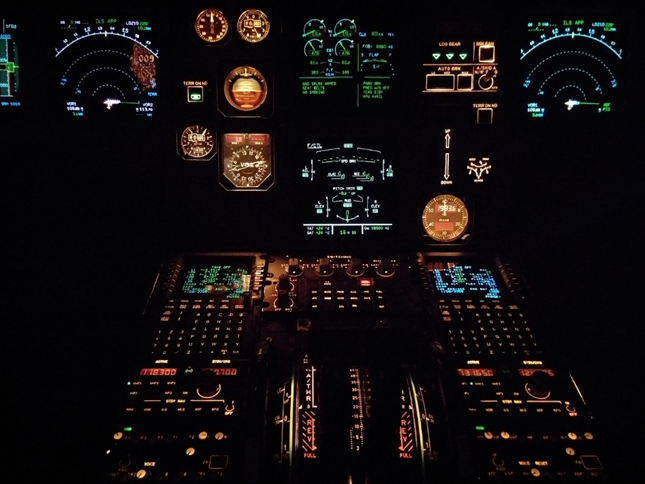
The defence industry is now going through a dilemma similar to the one the German automotive sector has faced since 2007. A few years ago, major international software companies announced that they aimed to enter the automotive market.[1] German carmakers are steadily losing market share to American and especially Asian rivals.[2] But the main reason for these losses is not engineering skill alone. Digital transformation demands new business models. Software has become a critical element for gaining new capabilities and scaling business models.
Those Who Fail to Digitalise Lose
The expectations and debates around the automotive sector are also affecting the defence sector. The term “Software Defined Mobility” has been adapted in the defence sector as “Software Defined Defence” (SDD). The main difference is that device platforms in the defence sector must be compatible with one another, because NATO member armies must be able to act in concert with their NATO partners. Having interoperable state-of-the-art technology is as important as having the best equipment. Given that armies acting together has become a necessity in today’s world, adopting existing standards (NATO standards, for example) will save a great deal of time and money.
It is a fact that technical advances now come from the civilian market rather than from the defence industry. Such technological breakthroughs need to be integrated into the defence sector with security principles and technical requirements in mind. American and Asian rivals are pushing the defence market to compete in this respect. Asian companies, for example, can now complete complex work involving many high standards, such as shipbuilding, in a relatively short time.[3]
Calculating how proteins fold in three dimensions had been a goal of scientists for half a century. This topic, one of biology’s greatest mysteries, has recently been largely solved thanks to artificial intelligence. The solution came not from a state laboratory, hospital or university but from DeepMind, a London-based civilian AI laboratory owned by Google (Demis Hassabis and John Jumper, who developed AlphaFold, shared the 2024 Nobel Prize in Chemistry with David Baker).[4] This news confirmed once again that developments in many sectors today come from the civilian IT market.
Software-centred planning reduces costs and time cycles as well as the lengthy build processes of physical prototypes. Constantly procuring new generations of equipment is no longer financially desirable because of rising maintenance costs. Product improvements on existing device platforms can now be achieved mainly by changing the software rather than physically upgrading the equipment. In the Russia-Ukraine war, the performance of self-propelled howitzers (PzH 2000) was seen to improve through software updates alone. Likewise, innovators in the international automotive industry improve car performance and eliminate faults through software updates alone. With this approach, physical upgrades are hardly needed and the costs of maintenance are reduced. How these innovations will be transferred to the defence industry, however, is not yet clear.
A Software-Centred Approach
The battlefield of the future is described as an environment with regional networking and a seamless media environment, able to operate resiliently against external interference (both nationally and internationally), compatible with other devices, compliant with standards and adapted to developments in artificial intelligence. Today, software often provides most of a device’s functions. For this reason, software will play an ever larger role at the heart of warfare.
The armed forces should be in a position to contribute their own software expertise as a catalyst for civilian solutions. The need for an open-market dialogue on procurement in the defence sector has grown. In this way, however, innovations could be adopted more quickly.
Software Defined Defence
Today the device-centred approach is defined by a mechanical point of view and a perspective focused on stand-alone systems. This approach pays no attention to compatibility with the outside world. There are even production runs in different series that are not compatible with one another. This reduces the level of interoperability and also hinders competition. Software Defined Defence (SDD) offers the opportunity to identify innovations quickly, adapt them digitally and develop products in an ecosystem made up of government, business and scientific developments.[5]
Because SDD allows industry to learn directly from customer requirements and develop accordingly, it requires deeper integration between industry and the armed forces. The US Army’s software factory, for example, keeps soldiers trained by industry in modern software development processes, enabling them to respond more effectively to current and future operational priorities and needs.
SDD is not merely a passing trend but a strategic approach that represents a significant transformation in the defence industry. By offering advantages such as broader functionality, lower costs and greater flexibility, SDD can deliver important benefits compared with traditional device-centred policies.
It is critical that policymakers and bureaucrats in the defence industry understand how SDD will affect core capabilities and how international competition will take shape. This approach can offer more effective and agile solutions as an alternative to cumbersome processes.
Creating an open defence market in NATO and the EU and greater interaction with the business world could play an important role in the adoption and implementation of SDD. Such open platforms encourage cooperation and information sharing among different players and allow more innovative and competitive solutions to emerge.
Technical Implementation Steps
The basic requirements of SDD have been identified. The NATO C3 Taxonomy is a model that represents the concepts involved in all life-cycle activities of NATO’s Consultation, Command and Control (C3) capabilities and the relationships between them. This taxonomy provides a tool and a common language for synchronising activities and for better linking NATO’s Strategic Concept and Political Guidance to traditional Communication and Information Systems architecture and design structures.[6]
The first step towards SDD concerns abstracting the physical computing resources in data centres through software (virtualisation). Virtualisation programs should be used extensively in physical server rooms. In addition, classic applications depend on the libraries of operating systems. In modern applications, “container” technology is used to reduce applications’ dependence on specific operating-system environments and software libraries. This development also needs to be adapted to applications in the defence industry.
The second step towards SDD is an open-source operating platform for containerised applications. These applications consist of many small, independent services that communicate with one another through interfaces (APIs). This architecture makes it possible to develop the application without affecting the program’s functions, increases its flexibility and makes it easy to scale. The operating platform provides the technological foundation that will enable interoperability for software applications from the data centre to the edge. Developments in the cloud in particular have created the chance to build a common, secure and modular platform for devices.
We can explain this modern approach with an example scenario. A unit within the armed forces needs a technical solution that will increase its capabilities by using software. The application is prepared within the armed forces or by a supplier and delivered in a container. This solution is installed so that it can be used on a frigate, an aircraft, a tank or at a command post. A feedback loop is created to improve the application by gathering feedback from users. Sticking to a small, module-based standard, this structure makes it possible to achieve improvements and efficiency gains at short intervals.
Allocation of Liability
One of the main challenges raised by software-based defence is the sharing of liability. Until now, liability covered the whole product. Liability for a tank, for example, covered the entire tank. With SDD, all responsibilities must be divided among the software development unit, the system administrator and other stakeholders. Responsibilities within the content of the application must likewise be clarified in advance. [7]
In conclusion, SDD is an important step towards building the defence systems of the future. This strategic approach offers an important opportunity to adapt to evolving technologies and business models in the defence industry. Steps must be taken to support this modern approach so as not to miss the opportunity. This requires supporting not only production and improvements within the armed forces and large companies in the defence industry, but also small and medium-sized entrepreneurs, software companies above all.
Sources
- Automotive and the Software Market – The Next Business - FutureBridge futurebridge.com
- German automakers fight to defend their turf from Chinese rivals | Reuters reuters.com
- Çin ile savaşın eşiğine gelen Tayvan yerli savaş gemisini üretti | Euronews tr.euronews.com
- Biyolojinin en büyük gizemlerinden biri yapay zeka sayesinde ‘büyük oranda çözüldü’ - BBC News Türkçe bbc.com
- Software-defined Defence: Algorithms at War (iiss.org) iiss.org
- NATO - C3 Taxonomy Perspective nato.int
- Ursuleac, Stephan. “Software Defined Defense: Schillerndes Schlagwort oder Notwendigkeit für moderne Streitkräfte?” Europäische Sicherheit & Technik, 11/2023, pp. 28–31.
Monthly · free
Compass of the Month
Once a month: five points from Europe’s security and migration agenda and the month’s PUGAT articles, in your inbox.
Newsletter sign-up opens soon.
Read next


What is PUGAT? A non-profit community publishing independent analysis from Europe on security, migration and society in Turkish, German and English.
Go to the homepage
