

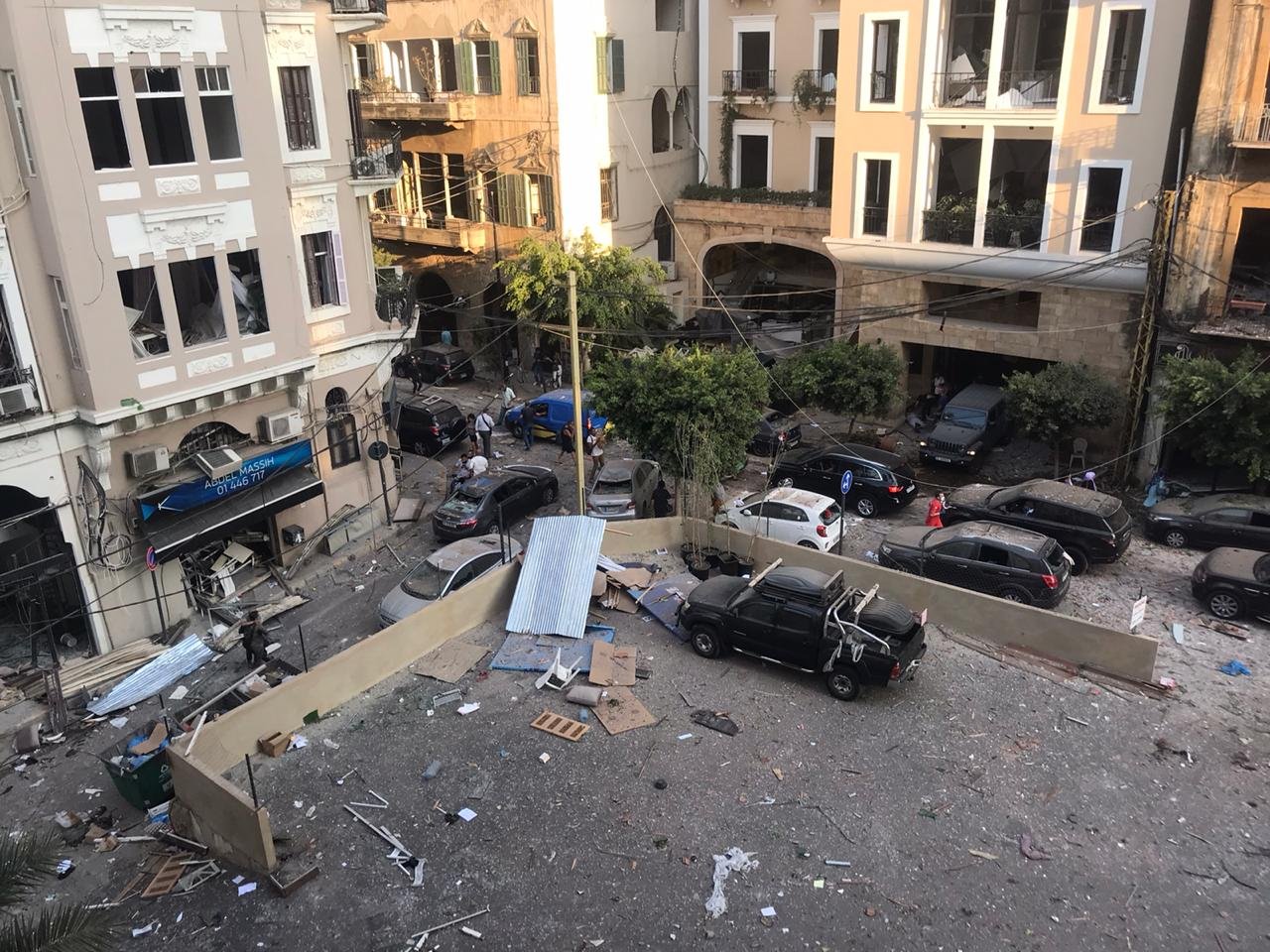
On 17 September 2024, Hezbollah’s pagers exploded simultaneously. The incident showed how the global supply chain can become a means of attack and how exposed states are to such risks.
The detonation of pagers used by Hezbollah in Lebanon revealed how quickly today’s globalised world can be plunged into chaos. The incident stands out as an example highlighting the importance not only of military matters but also of international relations, social responsibilities and legal mechanisms.
What Happened?
In the incident in Lebanon on 17 September 2024, old-model pagers used by Hezbollah were detonated in an attack allegedly organised by Israel’s intelligence service, the Mossad. More than 10 people were killed and over 3,000 injured in the explosions; among the injured were Hezbollah members, civilians and Iran’s ambassador to Lebanon, Mojtaba Amani. With the second wave the following day, in which walkie-talkies were detonated, the death toll over the two days rose to 37; in November 2024 Netanyahu confirmed that Israel had carried out the operation.
Olayın Analizi
The operation is assessed to have been an intelligence operation aimed at sabotaging Hezbollah’s communications infrastructure and weakening the organisation’s security. The attack very probably used C-4-type plastic explosives placed inside the pagers and remote triggering mechanisms. This operation can be seen as the product of intelligence work, and the infiltration of the targeted organisation may have taken place at any stage of the supply process of the detonated devices.
Why Explosives and Not Batteries?
It is very likely that the devices exploded because explosives were used rather than in a simple battery explosion. Battery explosions are usually low-impact and unpredictable; the probability of the batteries of several devices exploding at the same time is extremely low. Moreover, battery explosions commonly occur because of overheating, short circuits or manufacturing defects and do not usually cause major destruction.
In this incident, however, the large number of injuries and the deaths caused by the explosions indicate that the material used was a high-impact explosive, even if in small quantities. Plastic explosives such as C-4 can have a seriously destructive effect even in small quantities; this may have been preferred to achieve a precise result against the targets. In addition, unlike a battery under unexpected conditions, an explosive produces the desired effect by being detonated in a fully controlled way.
Why Low-Weight Explosives?
There are several important indications that the explosives used in these attacks were of low weight:
- The effect of the explosions: Many people were injured in the explosions, but deaths remained limited. This shows that the explosives used were not very powerful but were calibrated to cause sufficient damage. Had heavier explosives been used, both the death toll and the surrounding damage would have been much greater.
- The devices functioned normally: The devices continued to work normally before exploding. Had heavier explosives been fitted, the weight of the devices would have increased or their internal mechanisms might not have worked so smoothly. This would have drawn users’ attention. The low weight of the explosives allowed the devices to be used without arousing suspicion.
How Might the Devices Have Been Obtained?
For such an operation to succeed, gaining access to the target devices is a critical step. How the devices may have been obtained can be explained by several possible scenarios:
- Infiltrating the supply chain: Devices pass through many stages from initial production to the end user. An intelligence organisation may have infiltrated the point at which the devices were manufactured or distributed. Such infiltration allows the devices to be manipulated before they reach the organisation. For example, access to the devices may have been gained through collaborators or agents working at the factory, logistics centre or distribution points. At this stage, explosives may have been placed inside the devices, which were then repackaged as normal devices and sent for distribution.
- Infiltrating the organisation: As an alternative scenario, direct access to the devices may have been gained through agents or collaborators who had infiltrated Hezbollah. For example, people responsible for procuring the devices, or collaborators who had the devices for maintenance or updates, may have placed the explosives inside them.
- Interfering in the purchasing process: The devices may have been bought by the organisation from outside sources and manipulated in the process. An intelligence organisation may have cooperated with the sellers or distributors of the devices to ensure that devices fitted with explosives were sold to the organisation. In such a case, the devices are delivered looking normal but contain explosives placed in advance.
Now Let Us Show That This Was a Controlled Detonation
Given the details of the incident, there are many signs indicating that the devices were detonated in a controlled manner:
- Simultaneous explosions: The fact that the explosions took place at the same time in different areas shows that the operation was controlled by a central command. Had the devices exploded uncontrollably, the timing of the explosions would not have been so coordinated. Explosions taking place at the same time at different points are the clearest sign that the perpetrators were able to control the devices remotely.
- The existence of a triggering mechanism: Analyses of the incident show that the explosions were triggered by a specific signal or command. The fact that the devices exploded only on receiving a specific signal shows that this was an entirely controlled operation. Without such a triggering mechanism, the devices might have exploded at random, but then the timing of the explosions and the rate at which targets were hit would not have been so high.
- Concealment of the explosives: The explosives were placed inside the devices in such a way that this went unnoticed for a long time. While performing their normal functions, the devices aroused no suspicion and exploded only at a specific moment. This shows that the explosives and the triggering mechanism were placed extremely professionally and that the operation was carried out in a controlled way.
A Reliable Supply Chain
Such attacks seriously call into question the reliability and control of device supply chains. Devices must not be manipulated in any way during the process from the initial supply stage until they reach the end user. These explosions show how serious the consequences of security gaps in the supply chain can be.
Commercial relations with countries that do not respect fundamental values such as democracy, human rights and the rule of law, as well as with terrorist and criminal organisations, harm the country and create security vulnerabilities when interests clash.
Is Domestic Production a Solution?
While stressing the importance of domestic production, we must not forget that the rule of law must also be ensured for it to be reliable. If the legal system is weak, there is also no transparency, accountability or sufficient oversight and control mechanisms within the system. This means that even domestic production is open to abuse. In such environments, every capability produced can become a threat to the country’s own citizens in the hands of internal interest groups or criminal organisations.
We must invest not only in technological development but also in strengthening the legal infrastructure. Only in a system where the law is strong does production inspire confidence, do individuals and institutions feel secure, and does the country become resilient to threats.
Hukuk Perspektifi
The legal system is the foundation of a society. It works not only as a judicial process but also as a mechanism that maintains social order, protects individuals’ rights and oversees the functioning of institutions. Where the rule of law is not ensured, politicians and the powerful can take arbitrary decisions. Under such governments, supply chains can be manipulated for political interests or ambitions through various means such as bribery and corruption, and ultimately national and global security can come under serious threat.
Law and Supply
A strong legal mechanism ensures transparency and trust in both domestic and international supply processes. The rule of law makes it possible to minimise potential risks in the supply chain, ensure the security of imported devices and fully oversee these processes.
Reliable International Partnerships
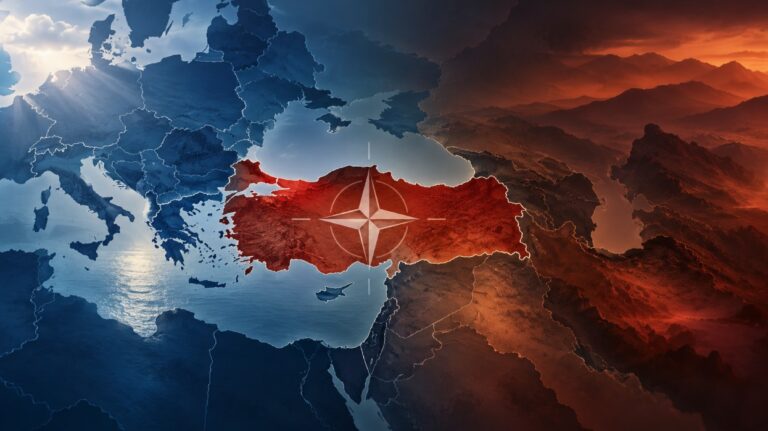
In Turkey’s case, such incidents show us that we need to make maximum use of the opportunities offered by accredited international alliances such as NATO, which inspire a high degree of trust. Acting under the security umbrella NATO provides plays a critical role not only militarily but also in building a law-based security policy. In short, moving forward on the safe path created by such strong partnerships, which have no problem with democracy and human rights, may be the first stage of the solution.
Security and Law in a Globalising World
In a globalising world, many countries and nations come into contact with a product on its way from production to consumption, and nations become dependent on one another. In this process, issues such as product safety, the robustness of supply chains and the protection of end consumers have become the shared responsibility not of one country alone but of all societies in the world. In this new world order, ensuring law and human rights is essential for global security and stability.
In today’s world, where every stage from production to consumption involves contact with different countries, cultures and systems, mutual trust cannot be established without global cooperation and the rule of law. Disruptions in a country’s legal system or human rights violations directly affect the other links of the global supply chain, and this can ultimately lead to chaos worldwide. For example, a product made in one country can harm consumers in another, or a security gap in one link of the supply chain can cause the whole system to collapse.
Sonuç
In the globalising world order, the rule of law and the protection of human rights should not be seen as a merely local matter but embraced as a global necessity. Unless these values are ensured, no nation and no individual can feel fully secure. An injustice occurring anywhere in the world can directly affect people elsewhere. Spreading law and human rights at the global level is indispensable both for national security and for international peace and prosperity.
In conclusion, to overcome the challenges of interdependence in the global world and to build an order in which everyone can feel secure, the rule of law and human rights must be ensured and these values respected on a universal scale. Only in this way can both individuals and nations continue to exist in trust and peace in a globalising world.
Monthly · free
Compass of the Month
Once a month: five points from Europe’s security and migration agenda and the month’s PUGAT articles, in your inbox.
Newsletter sign-up opens soon.
Read next


What is PUGAT? A non-profit community publishing independent analysis from Europe on security, migration and society in Turkish, German and English.
Go to the homepage
