

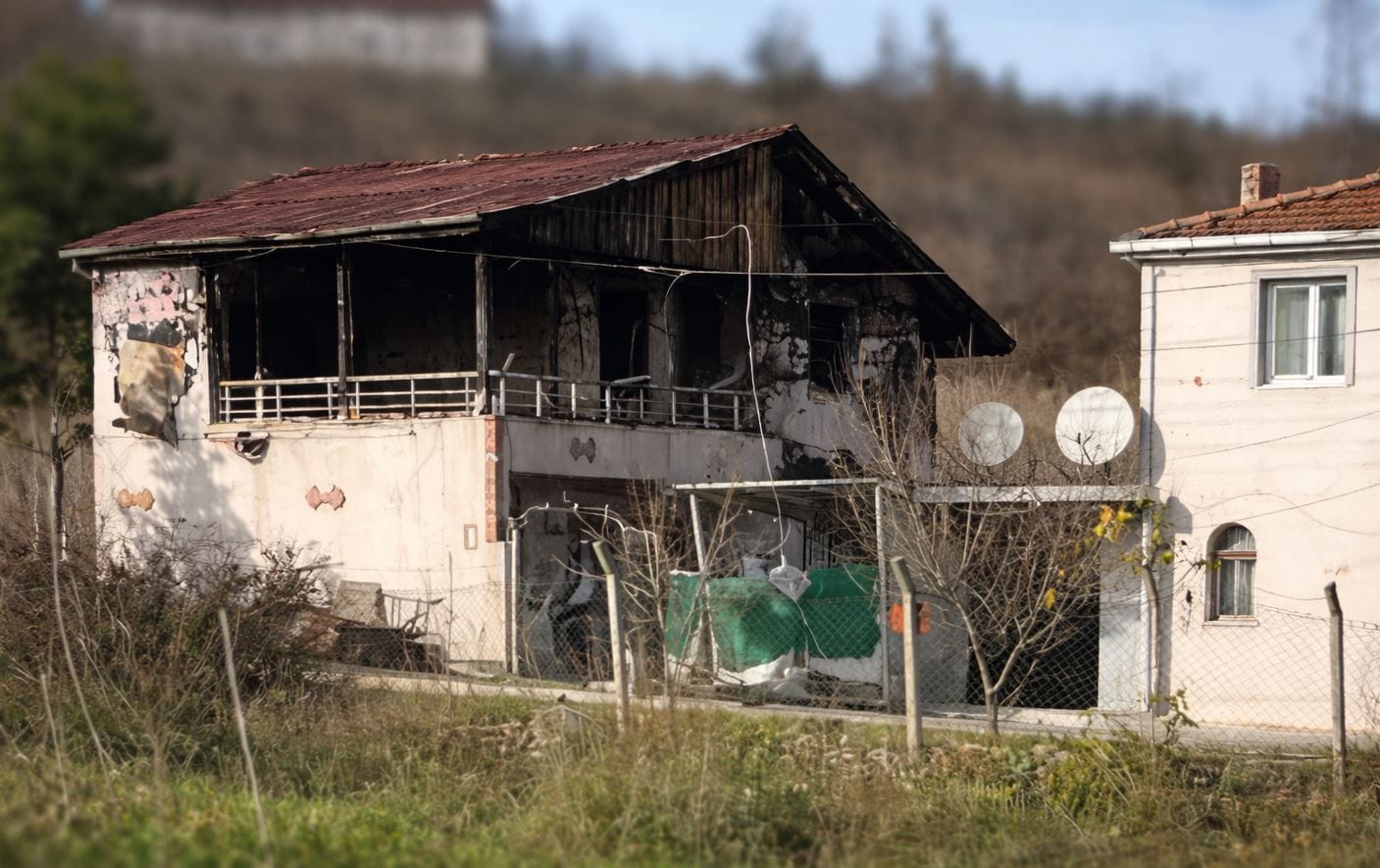
The clash with an ISIS cell in Yalova shook the perception that “the organisation is no longer effective”. Having lost territory, ISIS is in a phase of “strategic patience” with silent, localised cells; the real question is when, and to whose benefit, these cells are set in motion.
On 29 December 2025, in an armed clash in Yalova between the security forces and ISIS-linked elements, three police officers were killed and six ISIS militants were killed. At first glance, what happened could be read as an isolated counter-terrorism operation. In my view, however, this clash calls for reflection on the transforming structure of ISIS, its cell strategy and, more importantly, the question of under what conditions, and to whose benefit, such structures can be set in motion.
The perception that “ISIS is no longer effective”, long dominant in Turkey, has been called into question again with the clash in Yalova. Having lost territorial control in Iraq and Syria, the organisation had ceased to be an army in the classical sense. This did not mean, however, that the organisation’s ideological, logistical and operational capacity had disappeared. On the contrary, in recent years ISIS had evolved into a quieter, more localised and harder-to-trace form.
A senior ISIS figure who was captured described this transformation as “strategic patience”. In the “strategic patience” phase, which describes a shift away from large, high-profile attacks towards a structure that stays invisible for long periods, blends into society and waits for the right conditions, cells often do not plan direct action. Nevertheless, they retain a potential to be activated quickly when a triggering development, a suitable vacuum or a guiding atmosphere emerges.
Information that later emerged about the Yalova clash indicates that the cell in question was not a passive “sleeper cell” in the classical sense but an active cell that had come close to the action stage and had, to a certain extent, completed its process of arming and preparation. This suggests that the incident may represent a more critical micro-phase, which could be called a transition phase or operational threshold, beyond the underground phase ISIS defines as “strategic patience”. Indeed, the operations carried out simultaneously in many provinces, on the basis of intelligence assessments concerning possible ISIS attacks expected before New Year, show that the law enforcement agencies had anticipated the organisation’s elements that might take action in this period. According to information made public later, five of the six militants killed had been detained in a 2024 ISIS investigation and acquitted by the Yalova 2nd High Criminal Court in October 2025. In the indictment that became public in February 2026, the prosecution sought charges against 17 suspects.
That a clash took place in a city like Yalova, regarded as relatively calm and low-risk, is not surprising for precisely this reason. Such places offer favourable ground for low-profile organising. But the truly striking question is this: When, under what conditions and to whose benefit do these cells act?
Here it is necessary to recall the concepts of provocation and letting things happen and of the catalyst element, which I set out in my earlier article on covert operations published on PUGAT. Historical examples have shown that terrorist organisations do not always act on their own and fully autonomously, and that they can sometimes be turned into useful tools in larger power struggles. This does not mean that the organisations are “innocent”. But it shows that the ultimate benefit of an action does not always remain with the organisation.
A similar grey area stands out in the Yalova incident. The very fact that a clash occurred suggests either that the preparation for a possible attack was uncovered at an early stage or that the militants, perceiving an unexpected intervention before their own action as a large-scale operation, chose armed resistance. Both possibilities show that the cells still retain an operational capacity, not merely an ideological one. But one question remains open: Are these cells mobilised by their own internal motivations, or under the influence of a wider regional or political climate?
ISIS’s activities in the digital sphere play a critical role here. Radicalisation efforts conducted through Turkish-language propaganda, social media networks and closed platforms make it easier, in particular, to bring local elements into play. Compared with foreign fighters, local elements attract less attention and can blend into the social fabric more easily.
At the same time, the role of external triggers in activating ISIS cells should not be overlooked. Developments in Syria, operations against members of the organisation, provocative incidents in Europe or rising waves of Islamophobia on a global scale can revive the organisation’s rhetoric of revenge and victimhood. Such periods can create favourable ground not only for the organisation’s ideology but also for actors who want to make use of it.
The point that needs underlining here is this:
Not every terrorist act or clash has to be the product of a great conspiracy planned by a single centre. But some incidents can produce outcomes that coincide with the methods of “provocation”, “letting things happen” or “leaving a vacuum” described in the literature on covert operations. These outcomes can take the form of a redesign of domestic politics, a hardening of security policies, a deepening of public fear or the strengthening of certain narratives internationally.
The latest incident has shown ISIS’s potential to move rapidly, under triggering conditions, from the dormant phase it calls “strategic patience”, in which it goes underground, to an active state. This warning calls not only for deeper security operations but also for political and social reason to question the unseen background of events.
Finally, let us close our article by asking two important questions. First: How is the organisation’s ideological presence spreading in Turkey? And the second: To whose benefit, and in which vacuums, do the organisation’s cells take action?
The clash in Yalova, beyond its visible aspects concerning ISIS, is a crossroads with many grey areas as regards the terrorist threat in general.
Footnote: The concept of “strategic patience” appears in the “Worried Watchers” section of the report “An Enduring Challenge: ISIS-linked Foreigners in Türkiye”, prepared by the International Crisis Group and published on 28 February 2023.
Sources
Monthly · free
Compass of the Month
Once a month: five points from Europe’s security and migration agenda and the month’s PUGAT articles, in your inbox.
Newsletter sign-up opens soon.
Read next


What is PUGAT? A non-profit community publishing independent analysis from Europe on security, migration and society in Turkish, German and English.
Go to the homepage
