


For people seeking asylum from Turkey, the destination is not only Germany or the Netherlands. Belgium and France are important options, but a reception crisis and harder politics are changing the rules there too.
For refugees and asylum seekers who leave Turkey to seek asylum, the destination countries are not limited to Germany and the Netherlands. In recent years France, Belgium and several Scandinavian countries have also become important destinations. At the same time, shifting political balances across Europe, rising application numbers, capacity problems and a hardening of asylum policies stand out as dynamics that directly affect the choice of country.
Especially since 2023, developments in many European countries, such as the growing strength of “asylum crisis” rhetoric, tighter border controls, longer procedures and restrictions on access to rights, have made applicants’ strategic choice of country even more critical. In addition, EU-level rules such as the new Pact on Migration and Asylum are reshaping in which country and under what conditions applications are examined.
In this respect, professionals interested in migration and asylum, and asylum applicants themselves, need to make a multi-dimensional assessment that takes into account not only the rights offered by the destination country but also its current political approach, capacity in practice, recognition rates and integration policies.
Belgium
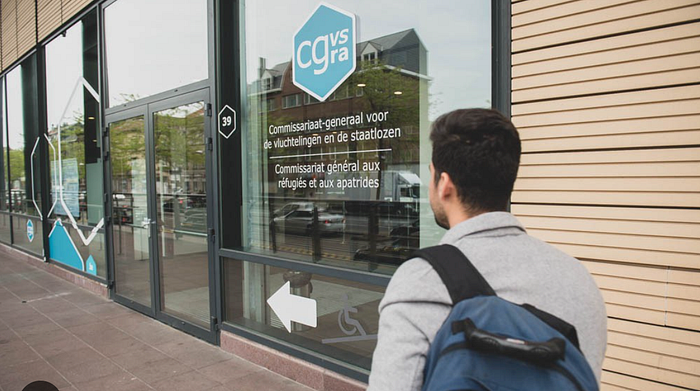
Over the past decade Belgium has become one of the countries where asylum applications from Turkey are most concentrated. Under the influence of the post-2016 political climate, it has become an important destination especially for people linked to the Gülen movement, political opponents, journalists and academics.
The CGRS (Commissariat Général aux Réfugiés et aux Apatrides), which runs Belgium’s asylum system, stands out for its flexible approach based on individual assessment, detailed interview procedures and strong legal safeguards. After registration and a preliminary interview at initial reception centres, applicants are invited for an interview; claims of political repression and human rights violations are central to the assessment.
Application Figures
In 2024 a total of 39,615 asylum applications were made in Belgium, a 12% increase on 2023 and the highest level in a decade. For applications from Turkey recognition rates are high, and the success rate of politically motivated claims is above the EU average. In recent years, however, the system has faced serious capacity problems: a shortage of places in reception centres, long waiting times for files and a growing administrative burden make it all the more important for advisers to inform applicants about delays and temporary accommodation options. Although application numbers partly stabilised in early 2025, Belgium remains one of the countries receiving the most asylum seekers relative to its population (third in the EU for applications per 100,000 inhabitants). Add access to strong social rights and language and employment support, and Belgium deserves to be treated as a separate heading on asylum alongside Germany and the Netherlands.
After the general elections held in June 2024 in the face of rising asylum numbers and a reception crisis in Belgium, a new coalition government led by the Flemish nationalist N-VA was formed (February 2025). The new Prime Minister, Bart De Wever, made migration a priority and announced that Belgium would pursue “the strictest migration policy ever”. The government programme includes tough measures at both EU and national level. At EU level it argues for a further tightening of the Pact on Migration and Asylum, which was then about to take effect, while at national level the aim is for Belgium not to be seen as more generous than its neighbours.
One important detail deserves attention here: it was announced that about half of the asylum applications made in Belgium in 2024 came from people previously registered in another EU country. In other words, Belgium is the first port of call for people who applied for asylum elsewhere and were rejected. To prevent this, the then State Secretary for Asylum and Migration, Nicole de Moor, decided that people who had received protection in another country should not be admitted to Belgian reception centres (November 2024). In December 2024 the Belgian Council of State suspended the instruction, on the grounds that, being regulatory in nature, it had not been submitted to the Council of State for an opinion and that it exposed people to the risk of severe destitution. Applying again in Belgium after obtaining protection in another EU country is legally possible. The new government turned the same restriction into law in July 2025; however, on 26 February 2026 the Belgian Constitutional Court temporarily suspended these provisions and referred the matter to the Court of Justice of the EU.
The Reception Crisis in Belgium and the New Political Climate
Belgium’s biggest problem is the reception crisis. Since 2023 Fedasil (the Federal Agency for the Reception of Asylum Seekers) has faced court rulings because it could not find places for thousands of asylum seekers, and hundreds of asylum seekers have been left on the street every day. Although Fedasil’s capacity rose to a record of around 36,000 places at the end of 2024, occupancy of 94% is unsustainable.
Targeting single male asylum seekers in particular, the government officially stopped providing places to adult men arriving alone from August 2023. As a result, during 2024 some 10,191 single male asylum seekers were denied initial reception and placed on a “waiting list” by Fedasil. At the end of 2024, around 3,000 male asylum seekers were waiting their turn on waiting lists of 3–4 months for a place. Many of them had to sleep in parks or on the streets in the meantime. This situation is causing a humanitarian crisis and has led to thousands of lawsuits against the Belgian government (in 2023–2024 asylum seekers went to court to claim their right to reception and won against the government every time). The new government continues its controversial policy, saying “no more places for single men, our priority is families”. Civil society regards this practice as discriminatory and unlawful, but the government points to a lack of capacity.
Finally, it was announced that the special accommodation provided to Ukrainian refugees in Belgium would be reduced in 2025. Wallonia, for example, announced that from April 2025 it would gradually cut by 50% the 1,325 places of accommodation it provides for Ukrainians. The decision was taken so that people arriving as the war in Ukraine drags on would not become a long-term burden on the general asylum system.
France
France has for many years been one of the most popular countries for asylum applications from Turkey and has consistently been among the top three in the EU in terms of application numbers.
A significant share of applications from Turkey comes from people of Kurdish origin (we know France above all as the country that hosted figures such as Yılmaz Güney and Ahmet Kaya), people linked to political parties, journalists and, since 2016, groups linked to the Gülen movement.

The French Asylum System
France’s asylum system is run by OFPRA (Office Français de Protection des Réfugiés et Apatrides), and interviews focus on fundamental rights such as political repression, violations of freedom of expression and the right to a fair trial. After registration at initial reception facilities, applicants enter the interview process and can receive free legal advice and interpreting support throughout.
French asylum policy has shown a two-fold trend in recent years:
- On the one hand, a relatively protective attitude is maintained towards politically motivated claims,
- On the other, stricter practices are being introduced to shorten procedures and prevent abuse.
For applications from Turkey, protection may take the form of refugee status or subsidiary protection depending on the grounds of the claim; both give applicants residence and social rights. France also offers asylum seekers comprehensive integration programmes and language and vocational training. This means advisers’ role is no longer limited to legal guidance; they must also actively guide people on access to social services, cooperation with municipalities and long-term settlement planning.
Spain
Although less prominent than Germany, the Netherlands and Belgium, Spain has become an important centre for asylum in recent years. In 2024–2025 total application numbers remained high and, mainly because of applications from Venezuela and other Latin American countries, Spain rose in some months of 2025 to become the EU country receiving the most applications. Its position as one of the end points of the Mediterranean route and its linguistic and cultural proximity make it attractive to asylum seekers from Latin America. As for Turkey, although Spain does not reach application numbers as high as Germany or the Netherlands, it is among the countries chosen as a second option by people who come to Europe for political reasons. Some applicants of Turkish origin may choose to register in Spain before any procedure to transfer them to another responsible country is started, something to bear in mind when planning an application strategy.
Some Other EU Countries
Different and notable trends can be observed among these countries as well. Sweden, with its long-standing human-rights-based approach and high recognition rates, remains an important alternative for political asylum seekers. Italy, because of irregular arrivals especially from the Middle East and Africa, functions mainly as a “country of first arrival”; nevertheless, some applications from Turkey are also made there. Austria, although it has tightened its rules on security grounds in recent years, maintains its recognition rate for political asylum claims. Greece, as the EU country closest to Turkey by land and sea and as a transit country, has a special position for applications from Turkey; many asylum seekers lodge their first application there and are then directed to other countries.
In conclusion, we have seen that, after Germany and the Netherlands, Belgium, France and some other EU countries differ significantly in their asylum policies, recognition rates and practices, and that this directly affects application strategies.
In our next article we will look at these structural and practical differences between countries within the European Union.
Sources
- CGRS – Statistics cgrs.be
- Fedasil fedasil.be
- OFPRA ofpra.gouv.fr
- EUAA – Asylum trends euaa.europa.eu
Monthly · free
Compass of the Month
Once a month: five points from Europe’s security and migration agenda and the month’s PUGAT articles, in your inbox.
Newsletter sign-up opens soon.
Read next
What is PUGAT? A non-profit community publishing independent analysis from Europe on security, migration and society in Turkish, German and English.
Go to the homepage
