

An earthquake is above all a security problem. After every earthquake, the promises made and the taxes collected are forgotten. In the author’s view, repeated negligence is no longer negligence but betrayal.
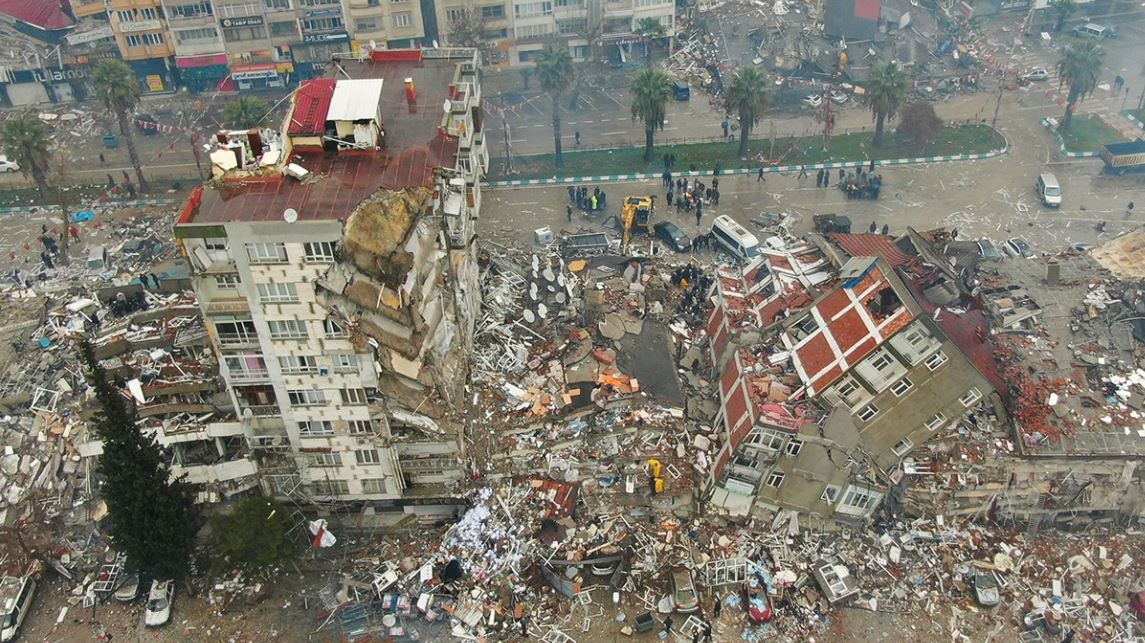
On 6 February 2023 at 04:17 we experienced the second-largest earthquake in the history of our Republic. The magnitude 7.7 earthquake centred on Pazarcık in Kahramanmaraş caused great destruction. I suppose that in terms of the area it affected, this is the biggest earthquake we have experienced.
An earthquake is above all a security problem. It must be addressed in its individual, social, regional and international dimensions. It requires advance planning. Developing the ability to respond quickly depends on serious investment in human resources and equipment. The response to areas hit by an earthquake must be independent of politics and vested interests. For human life is worth far, far more than any political, ideological or economic expectation of gain.
Unfortunately, Turkey once again failed almost every one of these criteria. If, despite so many great earthquakes and disasters, no lessons have been learned and no measures taken for the future, and if this keeps repeating, then it is no longer called negligence. I see nothing wrong in calling repeated negligence “betrayal”.
After every earthquake we have grown thoroughly used to the creation of an earthquake fund, the collection of an earthquake tax, the preparation of education programmes to raise our awareness of earthquakes, the holding of earthquake drills, and promises that earthquake-resistant buildings will be built and all existing buildings inspected for earthquake resistance. We have grown so used to it that we do not even object when these sensitivities are forgotten two days later, when the government turns a deaf ear, and, more painfully, when no one is asked to account for where the money collected was spent. I suppose this stems partly from our wholehearted embrace of the aphorism “Fire burns where it falls”. Yes, fire burns where it falls, and those who are burned, whose homes are destroyed, are consumed by the fire within them.
But what kind of insensitivity is it to be a spectator to the pain of others?
If the person who is a spectator to the pain of others is an ordinary citizen, you may call it “indifference” and move on. But if this spectatorship appears in the politician who has a say in governing the country, in the bureaucratic actor with technical expertise, in the official body holding economic power, in the legal actor with obligations to establish law and justice, you cannot dismiss it as indifference. In my view, this is betrayal of one’s country and fellow citizens in the fullest sense. Turkey lives with the reality of earthquakes, and sadly the people have been paying the bitter bill of earthquakes large and small for years.
Our rulers never tire of repeating the saying “Let the people live so that the state may live.” But at the point we have reached, they have slid into the callousness of “Death is in the nature of this business!” or “It was fate!” This is not an acceptable understanding of government. Trust in God is a parameter of religious belief. Those in positions of power have no right to abuse this understanding. But they do abuse it. To put it simply, they use religion as a political tool. They exploit people’s religious feelings. If we want to name this situation in the case of the current government, we need not hesitate to call it “Political Islam”.
Trying to make death look beautiful to the relatives of the dead is not the job of those who govern the country. The job of those who govern the country is to close off the roads to death as far as possible, that is, to keep people alive.
How? Our repertoire holds plenty of bitter experiences. First of all, lessons must be learned from these bitter experiences.
One might perhaps argue that inspecting, checking and renewing old buildings will take many years. But after so many bitter experiences, the excuse that preparations which should long since have been made to respond to an earthquake have not been completed can no longer be accepted.
- First of all, these preparations could have started by taking into account the strongest earthquakes recorded in the country so far and the strongest possible earthquake intensities and regions foreseen by experts.
- Then the measures needed to respond to disaster areas after an earthquake could have been planned.
- In this context, the manpower to take part in search and rescue operations could have been trained.
- The materials and equipment to be used in the response could have been procured and kept ready for use.
- Flexible, workable response plans that had been rehearsed could have been kept at hand.
But none of this was done in any useful way. Had it been done, we would not today, 48 hours after the magnitude 7.7 earthquake centred on Kahramanmaraş, still see rubble sites that have not been reached. We would not witness those who escaped the destruction waiting under the rubble so as not to freeze to death. We would not watch in outrage as rescue work was carried out in places without electricity, dark and cold. We would not be drowned in the tears of a father waiting with a packet of biscuits hidden in his pocket to feed his child if the child came out of the rubble alive.
Reciting elegies after those who died in the earthquake is not the duty of those in power. Those in power and the stakeholders of government are obliged to find a thousand and one ways to keep people alive. And for this there is no escaping accountability for what they have achieved and what they have failed to achieve. For those who govern the country, being a spectator to the pain of others must surely carry a price.
Sources
- AFAD – Earthquakes of 6 February 2023 afad.gov.tr
Monthly · free
Compass of the Month
Once a month: five points from Europe’s security and migration agenda and the month’s PUGAT articles, in your inbox.
Newsletter sign-up opens soon.
Read next

What is PUGAT? A non-profit community publishing independent analysis from Europe on security, migration and society in Turkish, German and English.
Go to the homepage
