

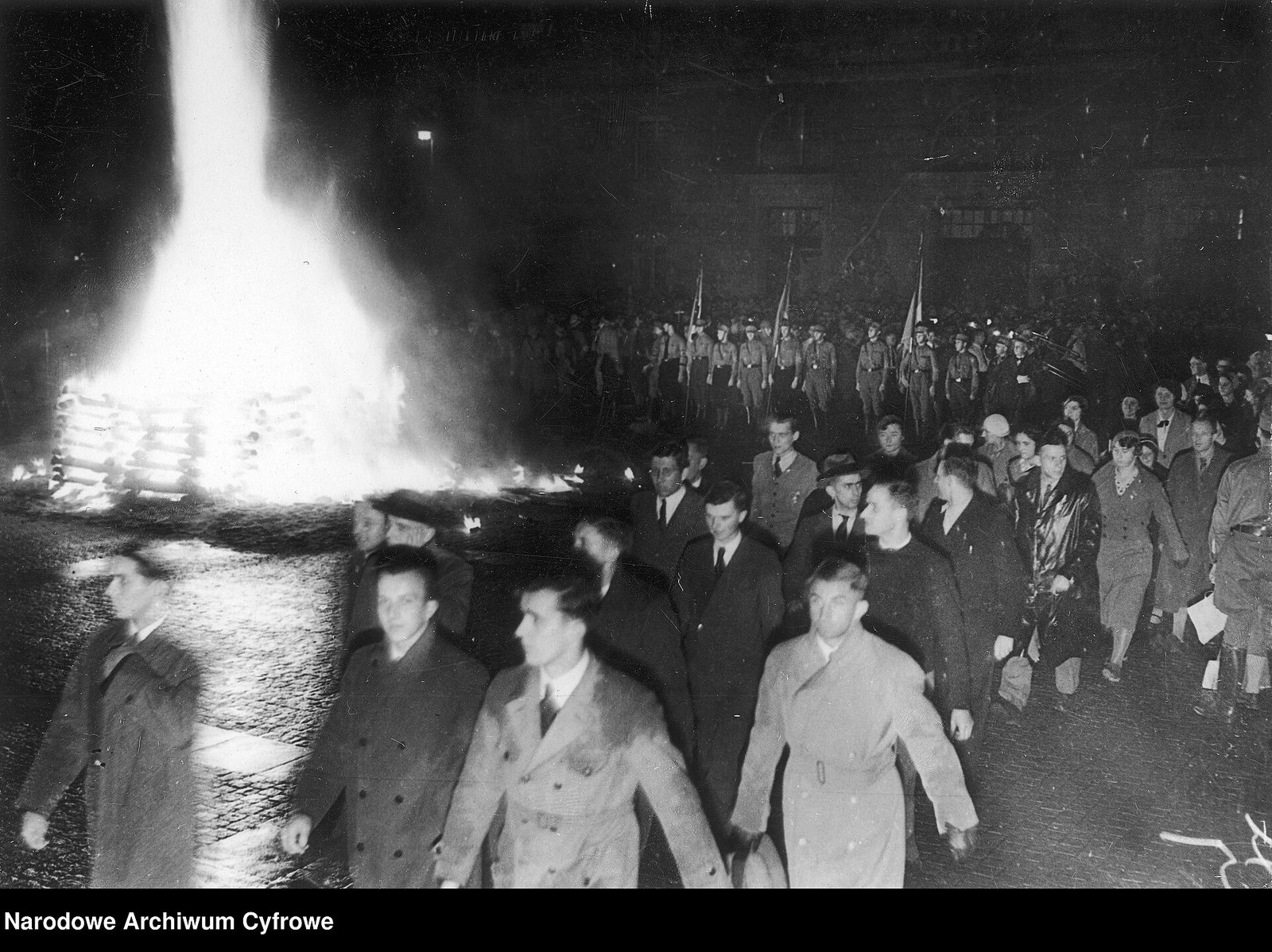
People who would harm no one on their own can take part in lynching and looting in a crowd. The article examines dehumanisation, the most effective method of inciting crowds.
People may readily display behaviour within a group or community that they would not engage in in daily life. When the group’s influence on the individual disappears, that is, when the individual is left alone, we see that they cannot even believe their own behaviour and regret having acted in such risky and excessive ways. Sometimes this regret reaches such a level that the individual may be crushed under the weight of their behaviour and driven to the brink of suicide. In this article we will look at how, as a result of the group’s influence, individuals can lose their selves, become de-individuated, and how people who would harm no one on their own can, together with a crowd, take part in lynching, looting and destruction.
What Is Dehumanisation?
In the mind of an individual who acquires a group identity, the categorisation of “us” and “them” begins to dominate. While those who are “us” are exalted in the mind, the group branded “them” is made into a target that must be harmed. For this reason, individuals within a group may engage in physical and psychological aggression. At this point the concept of “dehumanisation” comes to the fore. This concept refers to the group at which anger is directed being imagined as made up of morally inferior beings, an entity that does not deserve respect. Dehumanisation can be defined as belittling, excluding, degrading and, in a sense, demonising people because of their particular characteristics.

Throughout history, this is the method used first and foremost by those who call on communities, through perception management, to polarise, to become enemies and to hate. It was applied against the Jews under Hitler’s Nazi regime, and a mass genocide known as the Holocaust was carried out in concentration camps, without sparing even children.
The concept of dehumanisation, which came onto the agenda in recent weeks with the series The Club broadcast on Netflix, has once again helped us understand how groups lead individuals to extreme and risky behaviour.
What happened in the events of 6-7 September featured in the series is a well-known story: news spreads in Istanbul: “A bomb has been thrown at the house in Thessaloniki where Atatürk was born.” The news is first broadcast on the radio on 6 September 1955. Then the pro-Democrat Party newspaper of the time, İstanbul Ekspres, prints a second edition with the headline “Our Father’s House Damaged by Bomb”. The paper is sold throughout Istanbul by members of the recently founded “Cyprus Is Turkish Association” and used to inflame the public. In the same edition, the paper writes: “We will make those who lay hands on our sacred values pay very dearly, and we see no harm in saying so openly.” In these attacks on the homes, workplaces and places of worship of the Greek minority in Istanbul, the security forces remain passive. The transport around the city of organised units of 20-30 people, who had advance information about the addresses of Greek citizens, is provided by private cars, taxis, buses and ferries. On the evening of 6 September, an act of looting and destruction unprecedented in the history of the Republic takes place in Istanbul. The groups that inflamed the public through the press, and the crowds brought into the city from outside, are caught with the goods they have looted on them.
As for the bombing in Thessaloniki, the Greek authorities revealed in those days that it was a provocation staged by the state. Oktay Engin, who was alleged to have thrown the bomb at Atatürk’s house in Thessaloniki and was said to be an MİT agent, was caught. Engin was later appointed to important posts in MİT and in 1992 became Governor of Nevşehir.

As the events of 6-7 September show, the only tool needed for dehumanisation is to convince society of the monstrousness of the target group and that it is hostile to your values.
The Cause of Aggressive Behaviour: Loss of Individuality (De-individuation)
We see that those who watched the 6-7 September events in The Club cried and, questioning themselves, asked how on earth we could have behaved so shamefully. Social psychologists explain the aggressive behaviour in these events by the loss of individuality, that is, de-individuation.
People are sometimes seen to lose their individual identity within a group. For example, people who would not hurt a fly may display unexpected aggressive behaviour within a group. From time to time in the media we come across people who feel shame and regret for something bad they did and say they were swept up with the group they were in, acted that way and even lost themselves. Being part of a group can push people into certain behaviours they would not engage in when alone. Within a group we can sometimes lose the responsibility we feel for our own behaviour and transfer it to the group. And once we lose our own control system, it becomes easier for primitive and aggressive behaviour to emerge. This can lead to harmful and immoral behaviour.
An important factor in the loss of individuality is “anonymity”, that is, not being recognised. When group members think their own identity is not visible, they forget their own identity. Consequently, they feel less responsible for their behaviour. In a crowd, individuals blend into one another and almost form a shared identity. Conversely, when people are aware of who they are, they pay more attention to their behaviour and take care not to act irrationally or immorally.
De-individuation also emerged clearly in Zimbardo’s experimental research. Subjects were disguised with lab coats and hoods covering their faces, and their names were never spoken, that is, they were made unrecognisable, and the unrecognisable subjects were found to give twice as much electric shock to make people suffer as the recognisable ones. In short, not being identifiable by others leads to an increase in aggression.
In events where crowds are inflamed, like 6-7 September, we see that individuals acting with a group take riskier decisions than they would alone. Research explains the group’s tendency to take risks, even when group members themselves might be harmed, by the “diffusion of responsibility” within the group. As a result, responsibility for aggression committed within a group belongs not to one person but to the whole group. In risky decision-making too, a person alone will carry the full responsibility for the decision on their own shoulders, whereas within a group, because they will share this responsibility with others, they may show the courage to take more risks.
We see that the hate speech produced by the method of dehumanisation is still used today. We witness people who express their thoughts and use their democratic rights to seek and defend their fundamental rights and freedoms being branded terrorists, being othered as having a “Gezi” mentality, being given various nicknames instead of being addressed by their own names, and frequent attempts first at discrediting and then at dehumanisation.
Between 2013 and 2016, many people did not remain silent in the face of unlawful practices against public servants, and many sections of society voiced that the purges and arrests were carried out to cover up the 17-25 December corruption. Consequently, every means was considered legitimate by those who own the hate speech to make society believe it and to create arguments that would inflame the public in order to dehumanise the target group. This argument is the primary condition of dehumanisation for demonising the target group and taking away its fundamental rights. The way to obtain this argument, as in the example of 6-7 September, is to present an event that deeply shakes society as proof of the target group’s “monstrousness”. The 15 July coup attempt was also skilfully used for this purpose afterwards, and the demonising argument of dehumanisation was produced through this event. From that day on, every individual holding a different view from those in power has been dehumanised, thrown into the emergency-decree melting pot and left unable to claim even their most basic human rights.
Monthly · free
Compass of the Month
PUGAT’s monthly newsletter.
Read next



What is PUGAT? A non-profit community publishing independent analysis from Europe on security, migration and society in Turkish, German and English.
Go to the homepage

