

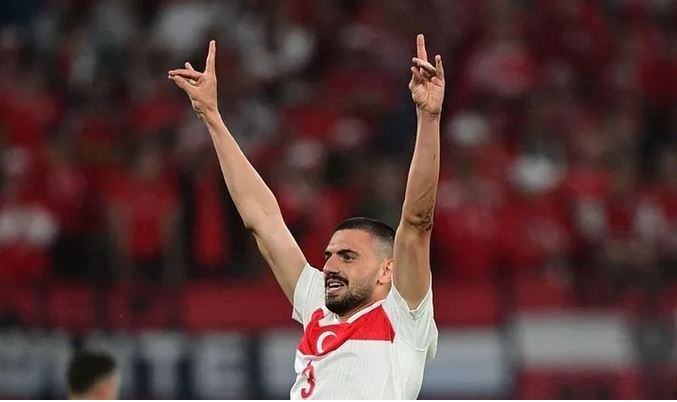
Merih Demiral’s grey wolf sign at EURO 2024 split Europe in two. The wolf appears in the mythology of many peoples, from Rome to Lithuania and from Chechnya to Scandinavia. So when does a symbol become a tool of manipulation?
In Turkey’s match against Austria at the 2024 European Championship, our national player Merih Demiral celebrated his goal with the “grey wolf” sign. The image divided the team’s supporters and international sports authorities alike and set off a range of debates. (Update: UEFA later banned Demiral for two matches over the gesture.)
Some interpreted the sign as fascism and political propaganda, while others argued that it is a sign peculiar to the Turkish nation. So what is really the case?
Mythological stories and symbols have played an important role in the cultural identity of societies since the beginning of human history. One of the strongest and most striking of these symbols is the wolf. In various cultures the wolf is regarded as a symbol of courage, protection and guidance. Today, however, such mythological symbols are sometimes also used to exploit people’s nationalist feelings and to control the masses for political ends.
The Cultural Contexts of Wolf Mythology
Wolf mythology has existed not only among the Turks but in many different cultures. Let us now take a brief look at them.
The Wolf in Turkish Mythology
In Turkish mythology the wolf is known as the Bozkurt, the grey wolf, and is regarded as the ancestor of the Turkish nation. The grey wolf is a legendary figure seen as the guide and protector of the Turks in difficult times.
Eurasia and North America
The wolf is a common symbol in the core mythologies of the peoples of Eurasia and North America. It holds great importance in the cultures and religions of many nomadic peoples, such as those of the Eurasian steppes and the North American plains. (Wikipedia)
The Wolf in Italian Mythology
In Roman mythology, the suckling of Romulus and Remus by a she-wolf lies at the heart of the legend of Rome’s founding. The story is seen as a symbol of Rome’s power and endurance and reflects the core values of the Roman Empire. The Capitoline Wolf statue is a tangible expression of this myth and an important part of Rome’s cultural heritage. (Wikipedia)

The Wolf in Georgian Mythology
The name by which Georgia is known in European languages is often linked, via the Persian “Gorj/Gurj”, to Old Iranian words meaning “wolf”; this etymology, however, is not certain.
The Wolf in Lithuanian Mythology
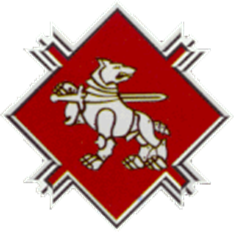
According to legend, the founding of Vilnius, the capital of Lithuania, began when Grand Duke Gediminas dreamed of an iron wolf howling near a hill.
The Iron Wolf is a legendary character from a medieval legend about the founding of Vilnius, the capital of the Republic of Lithuania. The legend became popular during the era of Romantic nationalism. Today the Iron Wolf is one of the symbols of Vilnius and is used by sports teams, the Lithuanian army, scouting organisations and others.[i]
The Wolf in Chechen Mythology
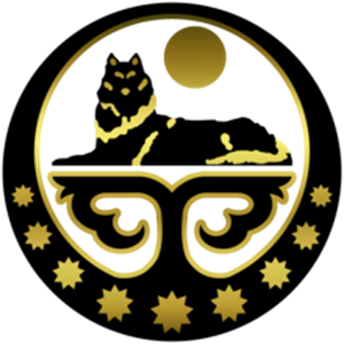
The wolf is the national symbol of Chechnya. According to mythological belief, the Chechens were “born of a she-wolf”.[i] The “lone wolf” symbolises strength, independence and freedom.
The Wolf in Norse Mythology
In Norse mythology wolves are seen as symbols of both destruction and protection. Fenrir, a gigantic wolf, becomes the enemy of the gods at Ragnarök, while Odin’s wolves Geri and Freki stand at the gods’ side. These mythological figures hold an important place in Scandinavian society as symbols of strength and courage. (Wikipedia)
The Wolf in Native American Mythology
In many Native American tribes the wolf is regarded as a symbol of guidance and protection. In some tribes it stands for brotherhood and loyalty. Others see the wolf as a spiritual guide.
The Wolf in Greek Mythology
The ancient Greeks associated wolves with the sun god Apollo. (Wikipedia)
The Wolf in Zoroastrian Mythology
According to Zoroastrian legend, when Zoroaster was a child, demons carried him to the den of a she-wolf, expecting the wild beast to kill him; the wolf, however, took him in among her own cubs. (Wikipedia)
The Wolf in Mongolian Mythology
In the Secret History of the Mongols, the Mongol peoples are said to descend from the union of a doe (gua maral) and a wolf (boerte chino). (Wikipedia)
The Cultural Diversity of Wolf Mythology
As the examples show, wolf mythology has existed not only among the Turks but in many different cultures. Mongolian, Zoroastrian, Greek, Native American, Norse, Chechen, Lithuanian, Georgian, Eurasian and North American mythologies also regard wolves as important symbols. This shows that wolf mythology is a universal theme and does not belong to any one culture.
Claiming wolf mythology for a single culture therefore means ignoring the universal meaning of the symbol. In short, the wolf has many owners, but no one claims the sheep on the banks of the Euphrates!
The Manipulation of Mythological Stories and Racist Approaches
Although mythological stories and symbols are effective tools for strengthening social identity and solidarity, they can also be used to exploit people’s emotions and keep the masses under control. Nationalist and fascist ideologies in particular use such symbols to unite societies around a particular ideology and can breed hostility towards those who think differently. Under Mussolini, the Italian fascist government used the story of Romulus and Remus and the she-wolf symbol for propaganda (Italy Travel and Life).
A Globalising World
Today globalisation has increased cultural diversity and brought societies into greater contact with one another. Nationalist and racist ideologies, however, may perceive this diversity as a threat and give rise to social unrest. Racist approaches can disrupt social harmony and cause tensions between different groups. Beyond asserting the superiority of one nation, this also threatens global peace and stability.
Conclusion
Wolf mythology holds an important place as a powerful and striking symbol in different cultures. Throughout history the symbol has often been used to reinforce the cultural identities of societies, to stir nationalist feelings and to foster social unity.
In today’s world, where different identities come together, these symbols can cause social division. Divisive figures and political nationalist rhetoric can disrupt social harmony in a globalising world and lead to tensions between different groups.
We must remember that although each of us comes from a different past, we now live in the same community, on the same planet, and must act together to secure social peace and unity.
***
Yunus Emre: “Come, let us become acquainted, let us make the work easy. Let us love and be loved; the world is left to no one.”
Martin Luther King: “We may have all come on different ships, but we’re in the same boat now.”
Monthly · free
Compass of the Month
Once a month: five points from Europe’s security and migration agenda and the month’s PUGAT articles, in your inbox.
Newsletter sign-up opens soon.
Read next


What is PUGAT? A non-profit community publishing independent analysis from Europe on security, migration and society in Turkish, German and English.
Go to the homepage
