

The wave of recognition of Palestine begun by Spain, Norway and Ireland and joined by France and the United Kingdom raises the question “why now?”: a belated conscience, or a new Western strategy against unilateral US support?
The wave of “recognising Palestine as a state”, led by Spain, Norway and Ireland and joined by Western countries such as the United Kingdom, Canada, Australia and France, has raised the question “Why now?” at the most intractable stage of a problem some 75 years old.
What might countries that for years supported the occupation, the settlements and the disproportionate use of force through their silence, and even provided or sold weapons, be aiming for by recognising Palestine at a time when Israel is militarily and diplomatically at its strongest and the two-state solution seems almost impossible? Is this wave of recognition the voice of a belated conscience awakened after the deaths of tens of thousands of civilians in Gaza, or the first step of a new strategy at a point where many international systems have stalled since US President Trump took office?
First of all, it is worth taking a look at the period since Palestine was proclaimed a state.
The Founding of the State of Palestine and the Recognition Process
The State of Palestine was proclaimed in Algiers on 15 November 1988 by the Palestine Liberation Organization (PLO), and after this proclamation it was recognised by more than 90 countries, including Turkey, Russia and China. As of September 2025, 157 of the 193 members of the United Nations recognise Palestine as a state, while countries such as the United States and Germany argue that a negotiated two-state solution must come first, citing “Israel’s security” and the role of Hamas.
Countries such as France, the United Kingdom, Canada, Australia, Portugal, Luxembourg and Malta officially recognised Palestine in 2025; Belgium announced its recognition but made legal recognition subject to certain conditions. French President Macron described this as “a precondition for peace”.
Spain, Norway, Ireland and Slovenia had taken the lead by taking this step in 2024.
Countries such as Germany and Italy are cautious about recognition and prioritise negotiations instead.
The Netherlands puts forward the disarmament of Hamas as a condition.
Spain not only recognised Palestine but also suspended its arms deals with Israel and called for Israel to be barred from all sporting competitions, including football.
The United States, as the main country giving Israel unconditional support, ignores civilian casualties in Gaza on grounds of “defence against terrorism” and “legitimate self-defence”. The Trump administration continues military aid, arguing that recognition would “reward Hamas”.
Some conservative circles in Australia and pro-Israel lobbies in the United Kingdom take a similar stance, rejecting genocide allegations because of security concerns and strategic alliance. These countries’ reasons stand out as preserving Israel’s role in the Middle East and the pressure of pro-Israel lobbies in domestic politics.
Past and Present Peace Initiatives
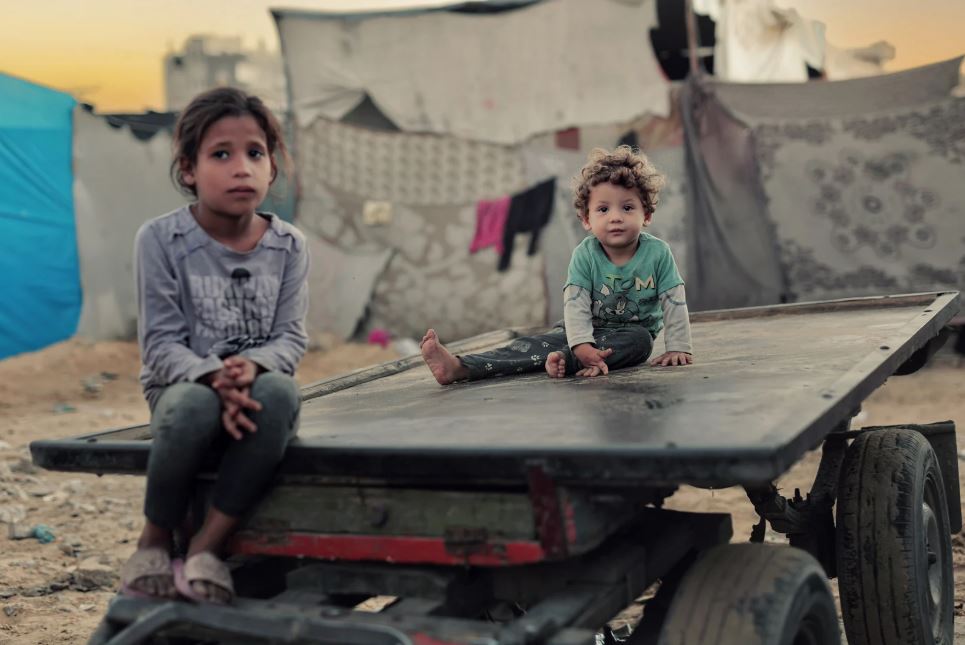
In the past, initiatives such as the Oslo Accords (1993) offered hope of peace, but Israel’s settlement policies and attacks by groups on the Palestinian side undermined the two-state solution. The Israeli attacks that have continued for nearly two years since Hamas’s 7 October attack, in which more than 60,000 people have been killed (most of them women and children), have caused suffering many times heavier than in past conflicts (for example the 2008–2009 war: 1,400 dead). Reasons such as hunger, lack of water, the destruction of infrastructure and the bombing of hospitals and refugee camps in besieged Gaza have led some to describe what is happening as “genocide”. Update: A ceasefire was declared on 10 October 2025; according to the Gaza health ministry, however, killings continued, and the total death toll had exceeded 74,500 as of October 2026.
While the steps to recognise Palestine send Israel the message that “the occupation is unsustainable and the risk of diplomatic isolation is growing”, they underline to world public opinion “the primacy of moral responsibility and international law”. These moves offer a Western approach that is an alternative to unilateral US support and reinforce the legitimacy of the Palestinian people. The messages signal that peace can be achieved through diplomacy and pressure, making the crisis in Gaza a matter of global conscience.
Although these steps may not soften Israel’s rigid policies in the short term, they have the potential to encourage negotiations by increasing diplomatic pressure in the long term. A review of the EU’s agreements with Israel, for example, could come onto the agenda.
Any softening may remain limited by the fear of losing international legitimacy, but factors such as Hamas–Israel tensions stand in the way. Combined with sanctions, this potential would of course be more effective.
In conclusion, the wave of recognition led by Spain, Norway and Ireland is a belated and in many respects correct step for Palestine. However, the timing has had no significant effect in the face of Israel’s current military power and attacks. The West’s contradictory past policies on issues such as justice and human rights leave question marks over the sincerity and impact of the steps taken.
The steps that the countries recognising Palestine, and the West more broadly, take from now on will reveal their aims in recognising it. Steps such as humanitarian aid to Palestine first of all, the complete lifting of the blockade and an end to Israeli attacks will show that they are acting on the basis of “conscience”. “Leaving Israel to its own devices” without pushing it towards peace and without establishing deterrence will go down in human history as a “bad strategy” that goes no further than an attempt to ease consciences and let off steam.
Sources
- UN – Question of Palestine un.org
- UN OCHA – Occupied Palestinian Territory ochaopt.org
Monthly · free
Compass of the Month
Once a month: five points from Europe’s security and migration agenda and the month’s PUGAT articles, in your inbox.
Newsletter sign-up opens soon.
Read next

What is PUGAT? A non-profit community publishing independent analysis from Europe on security, migration and society in Turkish, German and English.
Go to the homepage
