

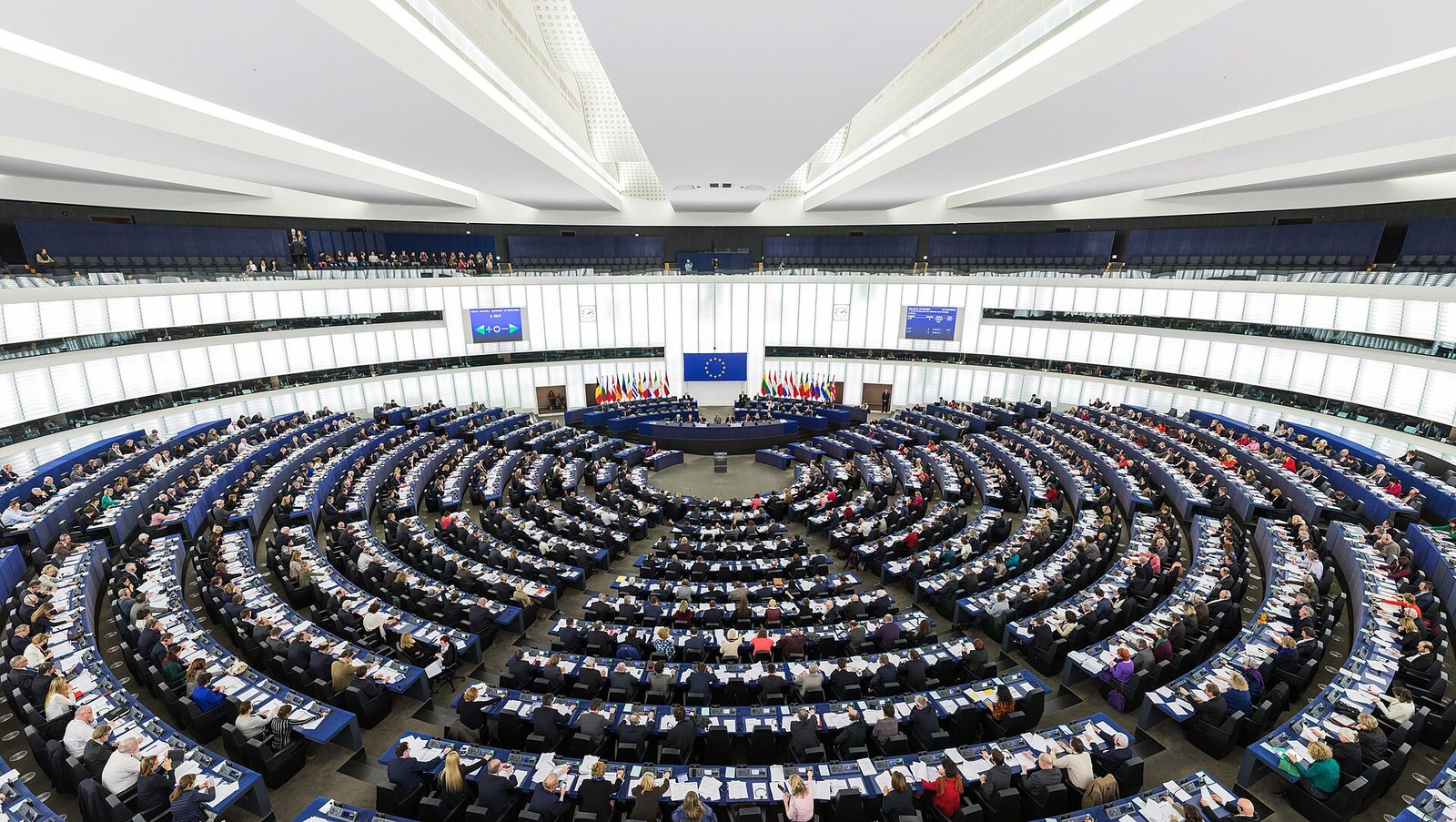
The rules are shared, but practice differs from country to country. Waiting times, recognition rates, family reunification and reception conditions in Germany, the Netherlands, Belgium and France, compared.
Although the basic framework for people applying for asylum in EU countries is set by the Geneva Convention and the EU’s Common European Asylum System (CEAS), in practice there are significant differences from country to country. Let us look at these important differences in the light of the best available data.
Application Numbers and Waiting Times
European countries apply different procedures between the lodging of an application and the first decision. While Germany and France try to decide most cases within 6–9 months, the Netherlands and Belgium currently have average waiting times of up to around a year, sometimes longer.
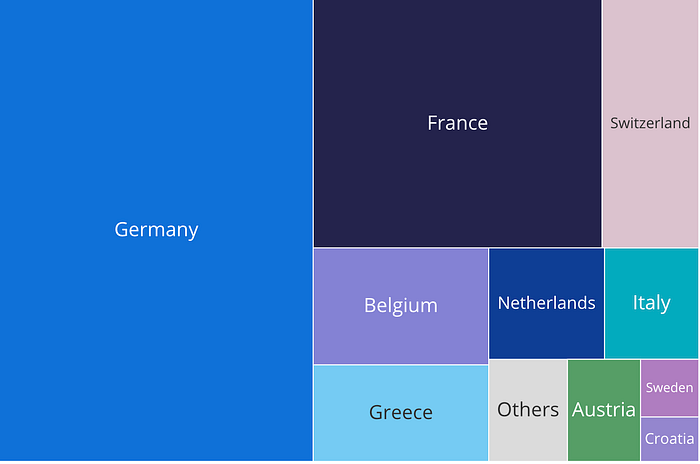
Pie chart of the main destination countries for applications from Turkey as of June 2025:
- Germany: Applications are handled by the Federal Office for Migration and Refugees (BAMF). According to BAMF figures, 229,751 first applications were registered in Germany in 2024. The average time to a decision in 2024 was around 8.7 months. At busy times this can reach 1–2 years; despite the recent fall in application numbers, the remaining backlog is keeping processing times long. In addition, the federal police have stepped up checks at the land borders in recent years.
- The Netherlands: Traditionally known for its “8-day procedure”. In reality applicants are first registered at centres such as Ter Apel, undergo an accelerated preliminary examination and have a short first interview. This is followed by a legal preparation period and the main interview. In theory first decisions can be taken within a few weeks; in recent years, however, the heavy caseload has made waiting times long (around 67 weeks, as of 2025). Although first applications in the Netherlands fell to 24,070 in 2025, most of those waiting do so for almost 1.5 years. Until the application is complete, either the accelerated (8-day) or the normal procedure can be chosen; even with the heavier workload, it is essentially a system geared to fast decisions. Since 12 June 2026, under the new EU asylum rules, the IND has applied different tracks such as the standard, accelerated, border and AMMR procedures; the account above describes the arrangements before that date.
- Belgium: The procedure is run by the CGRS (Belgium’s asylum authority). In 2024, 39,615 asylum applications were made in Belgium, an increase of 11.6% on the previous year. Registration and a preliminary interview lasting a few weeks are followed by a long interview and examination of the file. In 2024 the CGRS took a record 27,471 decisions, with an average processing time of around 9–12 months. This varies with the workload. Procedures are being reviewed, especially after the June 2024 elections, in line with the new government’s promises of “fast decisions”.
- France: Applications are handled by OFPRA. The law provides for a decision within 6 months in the normal procedure, but in practice this can take longer. According to 2024 data, the average time to a first decision was around 4.5 months (138 days). Because decisions are taken after short interviews in the initial reception structures, the application and interview process is relatively intensive. At the end of 2023 some 53,000 applications were pending. Although shorter waiting times are a goal in France, cases that pile up at busy times lengthen them.
- Other Countries: In countries such as Sweden and Norway the procedure usually takes 6–9 months (first instance plus appeal). Italy and Greece, being frequent “first arrival” countries, often see applications transferred to other countries after registration under the Dublin rules. Because units differ from country to country, the expected duration varies.
Recognition Rates and Practice
Across the EU, the share of asylum applications with a positive outcome has been falling in recent years. In the first half of 2025, an average recognition rate of 25% was recorded in EU+ countries. By country:
- Germany: In 2024, 133,710 positive decisions (grants of protection) were issued and the overall recognition rate was 44.4%. But this is an average across all applications. For Turkish nationals specifically, the protection rate in Germany is well below the overall average, because the majority nationwide are economic migrants. On the other hand, the rate is high for specific profiles such as Kurdish political activists, journalists or members of the Gülen movement. Although Turkey is not on Germany’s national list, it has fallen under the EU-level list of safe countries of origin since June 2026; applications are therefore examined in the accelerated procedure, but each one is still assessed individually.
- The Netherlands: In recent years the recognition rate has fallen, owing to an increasingly strict policy towards applications from countries such as Syria, Yemen and Turkey. In 2025 the first-instance recognition rate was around 36%. While the rate was 58% in 2024, it fell rapidly by 2025 because of the suspension and restriction policies applied to large groups such as Syrians and Yemenis. Because the Dutch system decides quickly, well-prepared individual cases have a high success rate; overall recognition, however, has declined recently.
- Belgium: In 2024 the CGRS’s protection rate reached 47.2%. This rate rose because a large number of Palestinian applications were processed, most of which were granted protection. That is a clear increase on 43.5% in 2023. About 45% of CGRS decisions grant refugee status and 2% subsidiary protection. For applications of Turkish origin the recognition rate is relatively high (politically motivated claims are above the EU average). In addition, however, inadmissibility decisions (inadmissibility: for example, having already received protection in another EU country or a repeat application) account for about 14%, which means some applications are dropped without any examination of the merits.
- France: Rates are relatively low. In the 2023–24 data the recognition rate is in the 20–30% range (official figures vary between annual reports). France still shows a relatively protective attitude towards political refugees in particular, while applying strict checks in its formal procedures. For applications from Turkey, whether protection, when granted, takes the form of refugee status or subsidiary protection depends on the grounds of the claim.
In short, although Germany appears to lead on the overall recognition rate (around 40% or more), this is mostly due to high numbers of applications from groups such as Syrians and Afghans. The overall rate in the Netherlands is lower (36%); but well-documented individual cases have a good chance of a positive decision there. In Belgium roughly every second applicant receives protection. For people from Turkey, recognition is relatively low in Germany and the Netherlands in particular, while Belgium’s practice is relatively favourable.
Family Reunification
The family reunification rights of beneficiaries of international protection also vary from country to country:
- Germany: For holders of refugee status, family reunification is almost automatic. For holders of subsidiary protection, however, quotas and restrictions have applied for a long time. As of July 2025 this right has been suspended for 2 years (by law). This means it has become harder for holders of subsidiary protection to bring their spouses and children to the country. Restrictions on the reunification of children have also been introduced since 2024.
- The Netherlands: For those granted refugee status, the family reunification process works relatively easily. Under the new asylum legislation, however, those granted “B status” (subsidiary protection) are to face a 3–5-year ban on bringing their family. In other words, if your status is A (e.g. political persecution, the Gülen movement, the Kurdish political movement), you can bring your spouse and children; but if you have B status (victim of generalised violence), family reunification will be heavily conditioned under the new government’s plans.
- Belgium: Those granted protection (refugee status or subsidiary protection) can legally apply for family reunification straight away. In practice the procedure is long. Spouses and minor children of recognised refugees can come under facilitated conditions; if the application is made within the first 12 months, certain document requirements are waived. The stricter family reunification conditions introduced for holders of subsidiary protection by a July 2025 law were temporarily suspended by the Belgian Constitutional Court on 26 February 2026, which referred the matter to the Court of Justice of the EU.
- France: In France the right to family reunification of a recognised refugee takes effect directly and is generally carried out through the consulate within a reasonable time (although some sources mention a 3-year condition). Holders of subsidiary protection can use the same special procedure for the family members specified by law, and it requires no prior period of residence; however, when the family relationship was established can change which procedure applies.
In every case, the status an applicant is likely to receive and the family reunification conditions attached to that status should be analysed before the application. New legal changes (such as those in Germany and the Netherlands) must also be followed continuously.
Accommodation and Social Assistance
Access to accommodation and social services during and after the procedure also varies by country:
- The Netherlands: During registration people stay for a time at the Ter Apel centre (a registration camp). Afterwards they are placed in collective housing or temporary accommodation centres under municipal supervision. As of 2024 all asylum seekers began to be housed only in large collective reception centres; small-scale housing was discontinued. Applicants receive a state support package: in the period after registration they are given basic accommodation, food, a weekly allowance and health insurance. They are issued a BSN (citizen service number) during registration; the BSN is only an identification number, and the right to work is subject to separate conditions (as a rule, six months after the application, with the employer obtaining a work permit).
- Germany: Initial reception takes place in centres called “Erstaufnahmeeinrichtungen”; in some federal states people move to state-provided housing after staying 12–18 months in these centres. The common model is collective reception centres followed by municipal or private rented accommodation. In 2024–25 there is no severe overcrowding in Germany, but new legislative proposals (return centres, etc.) are on the agenda. Applicants receive small social benefits for the first 3–9 months (around €300 a month), and after 3 months they can partly obtain permission to work. Healthcare is generally broad; support such as language classes or vocational training is also available.
- Belgium: Fedasil runs a reception system based mainly on hotels and camps. At the end of 2024 a record capacity of around 36,000 places was reached, with occupancy remaining at 94%. Despite many new places being opened, hundreds of new applications every day mean that no free places can be found. Although the government decided in 2023 not to give single men priority, the courts found this practice unlawful. Asylum seekers who cannot find accommodation end up on the street. Applicants receive a daily allowance, food and accommodation support from Fedasil. Although there are practices giving priority to families or women and children, a capacity crisis has occurred. After a positive decision, social assistance programmes (vocational training, language courses, etc.) apply until integration. Children have direct access to compulsory education.
- France: During the application stage, central accommodation is provided by OFII (the French Office for Immigration and Integration) in CADA centres. Because capacity is limited, many new applicants still end up sleeping rough. After recognition (a refugee or protection decision), people can receive social benefits such as the “RSA” and health insurance. Children can start school immediately, and language support and integration services are offered.
Work Permits and Social Rights
The point at which people can access work permits and social rights differs in each country. In the Netherlands, for example, official employment and social rights open up after 6 months, while in Germany there is a ban on work for the first 3 months, after which work is possible with the permission of the foreigners’ authority. It is important for advisers and asylum applicants to be informed about safety in reception centres, social benefits and rights to education and healthcare as well.
Conclusion
The asylum system in Europe is far from homogeneous; national differences stand out. In major destination countries such as Germany, the Netherlands, Belgium and France, waiting times, decision rates, family reunification conditions and accommodation vary significantly. This comparison shows that applicants and migration advisers need to make a multi-faceted assessment when choosing a country. Guidance should take into account not only the legal framework but also current population movements, the political climate and application practice.
Sources: Based on current statistics and official reports (Eurostat, EUAA, BAMF, IND, CGRS, Fedasil, OFPRA, etc.).
Sources
- EUAA – Asylum trends euaa.europa.eu
- BAMF – Current figures (German) bamf.de
- CGRS – Statistics cgrs.be
- OFPRA ofpra.gouv.fr
Monthly · free
Compass of the Month
Once a month: five points from Europe’s security and migration agenda and the month’s PUGAT articles, in your inbox.
Newsletter sign-up opens soon.
Read next

What is PUGAT? A non-profit community publishing independent analysis from Europe on security, migration and society in Turkish, German and English.
Go to the homepage
