

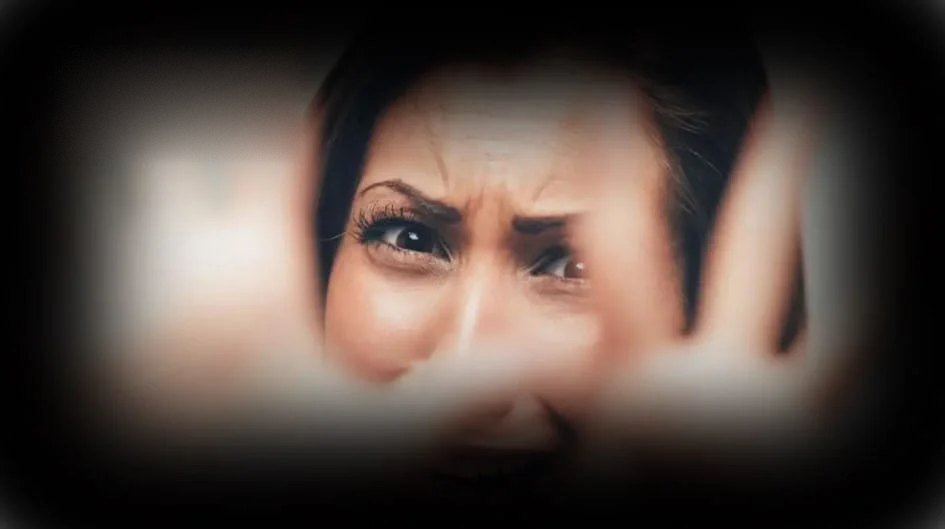
We fear rulers with a dictator's soul, yet we do not fear failing to live up to what being human demands. The author questions where fear comes from and how power is wielded without restraint.
Do we fear failing to live up to what being human demands as much as we fear people, rulers with a dictator’s soul, for instance? No!
And does this fearlessness send a shiver through our consciences? No!
Then what does a person really fear?
A person fears the powerful, and more than that, whoever wields power ruthlessly. He fears that power used without restraint will one day turn on him and harm him. Our social perceptions have been so thoroughly deconstructed that when we speak of “power” we now very often tend to describe, or allude to, “evil”.
The possibility that power will be used ruthlessly is one of the main things feeding our fears. To protect ourselves, we either try to keep our distance from it or we bow to it. Just so that the harm does not reach us.
Acts of Terror, Horror Films
I want to continue through two examples of power used ruthlessly or without control: Acts of terror and horror films.
In our minds, acts of terror long ago lost their status as tragedy. Each attack has become just another item in the general statistics.
Meanwhile, the fantastic scenes of violence we know from horror films have made their way into everyday life. Their repetition has begun to breed habit and weariness in us. For a new scene of violence or terror to register with us, we now expect it to have something original about it. Images of violence that merely repeat earlier ones, that is, unoriginal ones, hardly interest us. In a sense, we keep reproducing the old saying “Either the throne or the raven’s carrion” in today’s language of violence, and we dutifully fulfil the requirements of being a society of violence. Naturally, the place this course drags society to is an atmosphere of fear.
Horror films no longer entertain us. Nothing is left of the society that watched horror films for fun. Now, in real life, displays of violence and scenes of death more terrifying than horror films, as real as we wish they were not, confront us at school, at work, in the marketplace, on social media, in short, everywhere. As if that were not enough, those who drive society into a spiral of fear do not hesitate to draw amusement from it.
Of the scenes made of fear rituals in our imaginations, all that remains is the numbness of consciences that no longer feel the slightest shiver before the familiar displays of savagery. We no longer think of the saying “Fear does not delay death” in connection with dying. It may still have value as an encouraging motivational line, but in a society of fear it is hard to find any concrete meaning in saying it. At least in the period we are living through, that is how it is.
Love and Fear
Fear and love are each an important source of “obedience”. Dictators are very skilled at using both. But winning over those in whom they can stir love for themselves, and cementing their obedience, is not enough to make them happy. “More, more,” they say. They set out to win over “the others” as well. Where the love they expect is absent, they use fear as an instrument of obedience. In this way they seek to draw to their side, by “frightening” them, even those who do not love them.
So can fear be used as a method of persuasion and attitude change? Do fears cause people to change their attitudes? When we consider that some centres of political power resort without hesitation to intimidation in order to change the political attitudes of those they address, we can easily answer “Yes”. Here is how:
Obedience to the Feared
In the sociological sense, fear is a kind of defensive reflex, and it often results in a psychological expression such as obedience to the one who is feared. For every individual without a physical or intellectual mechanism of resistance, the place the impulse of fear carries a person to is more or less the same: Obedience to the feared. I suspect this state can also be treated as an “emotional disorder”. From the past to the present, in every society, rulers inclined towards dictatorship have used this emotional state to seize political power or to keep from losing it.
Today, policies of creating an atmosphere of fear are widely used less to seize power than to avoid losing it. Effective mostly in societies that have not attained democratic maturity, this approach also prepares the ground for an order born of fear. In fact, the slogans always resemble one another. For example, they say: “Give us 400 MPs and let this be settled in peace.”
At this point we can safely say that dictators are merchants of fear. Once we buy their “goods of fear”, we are forced to consent to all their dirty policies, to endorse all their unlawful acts and to ignore all their hypocrisy. That is why we must multiply the means of guarding against the paradigms of fear of dictators and of never bowing to them.
What Should We Fear?
So what should a person fear?
A person should first fear failing to live up to what being human demands. For this fear will teach us the wisdom of following the trail of a fearless and virtuous life.
A person should fear failing to hand down the world inherited from his ancestors to his grandchildren in a more liveable state. Otherwise he will stand guilty of betraying a trust.
A person should fear growing used to living under the reign of oppression. For this habituation leads first to indifference, then to a shrug of “what is it to me”, and finally to tormenting people as a soldier of the oppressors’ mob.
A person should fear never knowing the taste of freedom and mistaking a narrow space of freedom for the whole world. For every fortress of freedom that is lost leads to the siege of the self and to a personality riddled with concessions.
A person should fear seeing black as white and white as black, mistaking the magpie’s chatter for the nightingale’s song and imagining a rose garden without thorns. Because being deceived is among the most characteristic weaknesses of human nature. Deceptions of this kind, the ones that catch us off guard, drag a person into misery beyond anything he could imagine.
And a person should fear living as if he will never die. I do not know whether this proposition about fear needs any justification. For surely everyone longs for an eternal life. For believers in the hereafter, for non-believers in this world, through words of praise and sweet memories…
And what do you think a person should fear?
Monthly · free
Compass of the Month
PUGAT’s monthly newsletter.
Read next


What is PUGAT? A non-profit community publishing independent analysis from Europe on security, migration and society in Turkish, German and English.
Go to the homepage
