

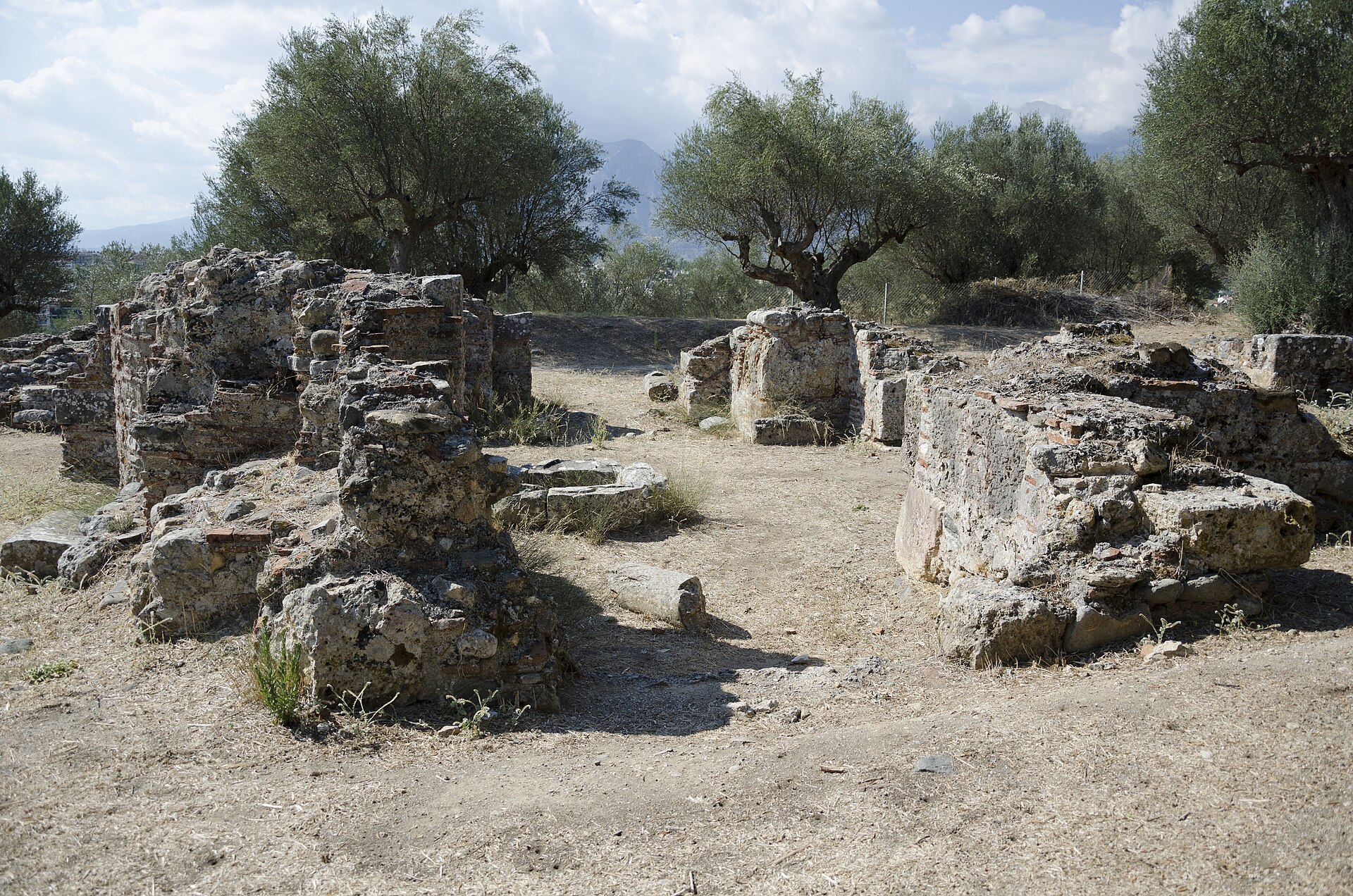
King Cleomenes III of Sparta moved against the institutions of his own state to make his power absolute. The second part of the self-coup series tells the first known example in history.
As is known, Sparta was a city-state in Ancient Greece governed by kings. In this city-state two kings always ascended the throne together, and both had to come from particular dynasties. “Cleomenes III” was a member of one of these dynasties and, as the successor of his father Leonidas II, one of the two kings who ruled the Spartan state from 235 to 222 BC.
Although their ambitions for war, conspiracies and suicides closely resemble each other, Cleomenes III should not be confused with his ancestor Cleomenes I, who reigned about three centuries earlier and is described in the “Histories” of Herodotus, known as the father of history. The ancestor Cleomenes I was the brother of King Leonidas, the hope and hero of the Greeks against the Persians with his 300 Spartans at the Battle of Thermopylae, and the king before him, and like Cleomenes III, the character I am about to describe, he fled and took his own life for fear of punishment after the plots he had made while on the throne were discovered following a war he lost.
Now to our own protagonist! Once on the throne, Cleomenes’ ambition and excitable personality immediately show themselves. First he sets out on a campaign against Arcadia. But right here he meets an unexpected obstacle. The ephors, the highest magistrates of Sparta and a kind of state auditors, think this excessive ambition will harm Sparta and recall the king to the city. Cleomenes does not like this at all.
Later, when news arrives that the Achaean army under the command of his enemy Aratus has attacked Sparta’s allies and seized certain areas, an opportunity arises for the warlike and ambitious Cleomenes. This time it is not hard for him to win the ephors’ support as he sets out on campaign again, and in this war the Spartan army led by Cleomenes is victorious.
Victorious indeed, but he cannot bring himself to accept sharing his political will with the ephors in this way. The thought that in everything he does he must obtain the consent and support of the ephors and the Council of Elders constantly troubles him. He is the king, and the city-state of Sparta should be governed by his will alone. But the state’s system of government at that time requires this, and in the early days after Cleomenes ascended the throne he has no power to change this system.
During his first period on the throne, until he seizes power, he devises a temporary solution of his own. Cleomenes, who begins bribing the ephors to let him continue his campaigns and policies, launches military expeditions against his rivals, wins victories over the Achaean League and reaches the point of exhausting his enemies.
Having thus secured a strong position, it is the right time for Cleomenes to remove the obstacles standing in the way of implementing his own policies and campaigns. Now the time has come to break off his campaign and return to Sparta to carry out the plans for change in his head.
When Cleomenes comes to Sparta, relying on his victorious army, he stages a coup. This is regarded as the first known example of a self-coup in history in the sense we know it. This coup was not carried out against Cleomenes; on the contrary, it was carried out by his will in order to concentrate all power in his hands. And indeed, as will be seen later, as a result of this coup Cleomenes will remove all the obstacles that forced him to share his powers.
Sure that he has taken power with this coup, Cleomenes begins to plot against the ephors. He assigns some of his trusted men to kill the ephors. Some of them are killed, while others manage to flee to a temple and find refuge. In this way he neutralises the ephors and abolishes the “institution of state auditing” at its root. To demonstrate this, he throws the ephors’ chairs out. Not content with this, Cleomenes also abolishes the Council of Elders, called the Gerousia, and sends those who had a say in government into exile.
Meanwhile, Sparta’s other king, Eudamidas III of the Eurypontid dynasty, dies. Cleomenes recalls Archidamus, the brother of Agis, from exile to give him the throne. But when Archidamus returns to Sparta he is assassinated. Cleomenes’ role in this assassination is not known, but according to some historians it was Cleomenes who gave the order to kill.
Having eliminated the situations obstructing his political will, Cleomenes begins to implement changes of power. Like the king before him, Agis, Cleomenes tries to re-establish the old customs and follows the old traditions. In doing so he uses the figure of the lawgiver Lycurgus, the Machiavellian of his own era, who allowed him to legitimise violence.
First he transfers all the land of the country to the state, then divides all the land and distributes it equally to every citizen. In this way the lands are brought together and redistributed equally to about 4,000 citizens. He ensures that the amount of produce grown is specified in absolute quantities rather than as a fixed share of the annual yield. By training around 4,000 hoplites (infantry warriors), he rebuilds Sparta’s military and social discipline to his own liking.
After that, Cleomenes embarks on new campaigns, but the damage and exhaustion these campaigns cause weaken Cleomenes’ army considerably. As a result of these weaknesses, the Spartan army fails to hold its own in the staged war with the Macedonian army and is inevitably defeated. In 222 BC, at the Battle of Sellasia, the Spartan army is crushed by the Macedonians and almost annihilated.
Cleomenes barely escapes this battle with his life, with only a few Spartans at his side.
While Sparta makes many enemies as a result of Cleomenes’ warlike policies, the city-state of Sparta loses its independence to King Antigonus of Macedon. Cleomenes returns to Sparta and advises his citizens to surrender to Antigonus. Then, to obtain help in regaining his throne, he flees to Alexandria, to his ally Ptolemy III in Egypt.
When Ptolemy III dies in 222 BC, his son and successor Ptolemy IV Philopator, disregarding Cleomenes, has him placed under house arrest. Managing to escape from house arrest with his friends in 219 BC, Cleomenes, in a last move, tries to incite an uprising in the city to turn it to his advantage, but receives no support from the people of Alexandria and takes his own life to avoid being captured by the people.
King Cleomenes III has taken his place in history with his ambitions, conspiracies and intrigues, and above all as the one who carried out the first known self-coup in history and chose to escape the impasse into which the uncontrolled power he seized had thrown him only through a bitter and wretched suicide.
The conclusion? Draw it yourselves…
Monthly · free
Compass of the Month
PUGAT’s monthly newsletter.
Read next


What is PUGAT? A non-profit community publishing independent analysis from Europe on security, migration and society in Turkish, German and English.
Go to the homepage
