


The presidency should be a unifying office above politics. The author discusses how language targeting part of society affects a country’s destiny, drawing on the examples of de Gaulle and Putin.
The presidency is an office above politics that represents the country and plays a unifying role. It embraces society, guides its development, supports and motivates it, and mobilises all the means of the state to solve its problems. But what does it mean if these functions break down, and the person in the presidency even insults his own people, those who do not think like him or those who criticise him?
In a speech last week, the President hurled very harsh insults at people who took part in the Gezi Park protests. We understand that this was not a slip of the tongue or a moment of anger from the fact that no apology or correction followed. This insult mattered a great deal, because Kurds, Armenians, Alevis and those dismissed by emergency decree had been insulted many times before, and millions of people had been labelled “terrorists”, yet this latest one somehow made more noise in society. Perhaps a public already overwhelmed by accumulated anger and the pressure of terrible inflation had begun to express its reaction more openly. But in fact, on this occasion almost everyone understood that there was no end to this.
Can a country whose head of state insults his own people unite the elements of national power and create synergy? Can it produce strategy? Can it reach prosperity or the level of contemporary civilisation? Can it develop and, more importantly, can it make its people happy?
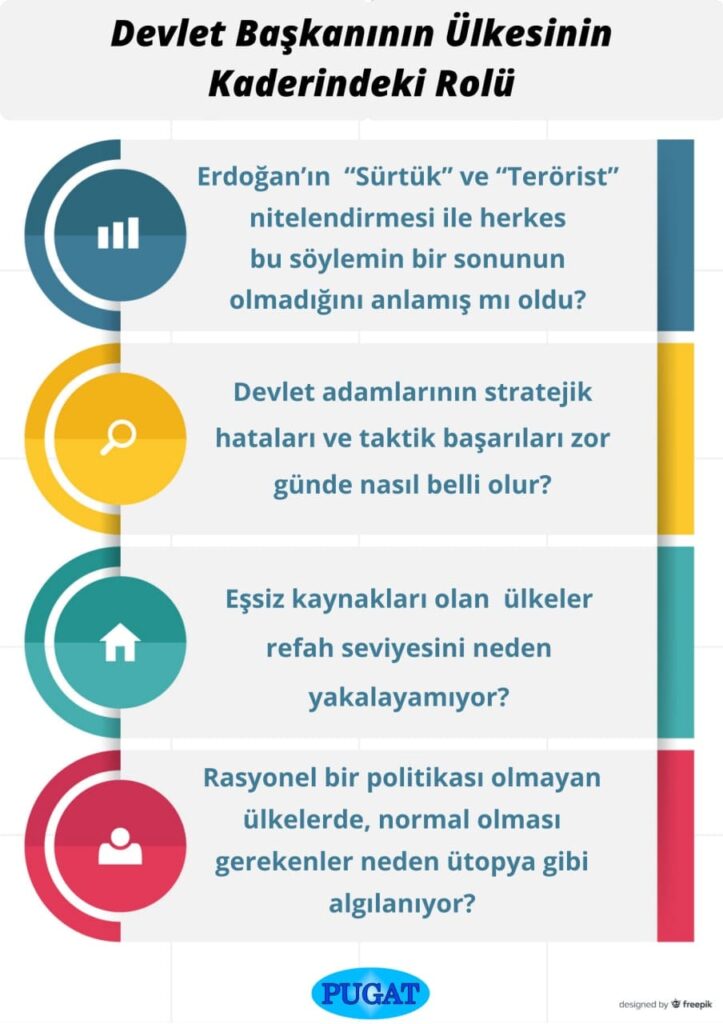
Strategic Mistakes Cannot Be Offset by Tactical Successes
According to the principle that “strategic mistakes cannot be offset by tactical, that is lower-level, successes”, if the head of state makes a mistake and even persists in it, it is unfortunately inevitable that the whole people will suffer, whatever is done. History is full of examples of statesmen who brought their countries into a new era or, conversely, brought misery upon their people.
We need not look far: Mustafa Kemal Atatürk occupies one of the highest positions in the world in this respect. The young Republic he founded with his intelligence, foresight, courtesy and diligence achieved, with the means of the time, more than almost everything that needed to be done, from science to art, from sport to industry.
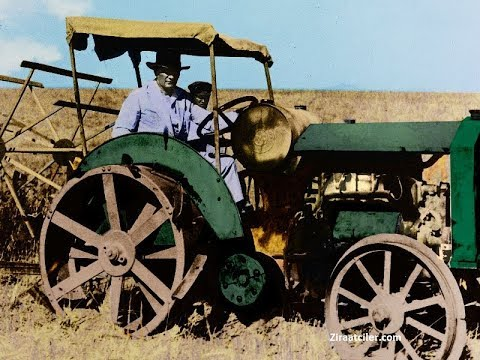
Atatürk, who gave women the right to vote and stand for election before many Western states had even dreamed of it, proved his vision in agriculture, industry, law, the army, education, in short in every field. By integrating Türkiye with the developed nations of the world within a short time and setting its course towards contemporary civilisation, he rightly earned the appreciation and admiration of the whole world.
After his death, the Republic of Türkiye, which did not abandon the great leader’s principle of “Peace at home, peace in the world”, took a very important step by managing to remain neutral during the Second World War, and then achieved a major diplomatic success by joining NATO in 1952. In this way it secured itself against the Russians, with whom it had fought 12 times in the last four centuries, and against Russian expansionism.
In the following years, very tense developments took place on the international stage. The decisions of heads of state and leading statesmen continued to affect the lives of millions of people, and thousands continued to lose their lives or their loved ones.
The Suez Crisis and Diplomacy
The Suez Canal, which links the Mediterranean and the Red Sea, was still one of the world’s most important waterways many years after its construction. This canal, which had been very important since the early 20th century especially for states leading in maritime trade such as Britain and France, was open to all states under international agreements.
Gamal Abdel Nasser, who took power in Egypt in 1954 following the 1952 coup, attaches great importance to strengthening his country militarily and gaining superiority over Israel. To this end he begins to move closer to the Soviet Union and to buy arms via Czechoslovakia. He also wants to complete the planned Aswan High Dam and contribute to the country’s economic development. But for this he needs foreign credit. He tries to obtain loans from the US and the United Kingdom, but these two countries refuse because Egypt buys arms from the Eastern Bloc and supports anti-Israeli militants.
Nasser then announces that he has nationalised the company operating the Suez Canal in order to secure the funds he needs. Although he states that he will pay the value of the company’s shares to the states that own them, the decision provokes a very strong reaction from the United Kingdom and France. Within a short time, France, Britain and Israel intervene militarily in the region. The Soviet Union reacts against France and Britain and even threatens them, declaring that it will strike London and Paris with nuclear weapons if the operation is not halted.
France and Britain then ask the United States for help, but the United States is not keen, because this war contradicts its future policies towards the Islamic world and the Middle East. Thus, for the first time in the Cold War, the Soviet Union and the United States reach the same decision. Britain and France are forced to withdraw. Responsibility is placed on British Prime Minister Anthony Eden, who is asked to resign. Israel continues the war for a while longer but eventually withdraws. In the end, despite heavy losses, Nasser achieved his aims to a certain degree, if not to the extent he wanted.
Nasser emerged from the Suez Crisis as the most powerful leader in the Arab world. Although Egypt had lost the war and suffered heavy military losses, it had established control over the Suez Canal. The British influence that had existed in Egypt since 1882 had been eliminated. Throughout all these developments, we always see statesmen as courteous and as unifying father figures towards their people.
A Turning Point for a Nation
At this point France takes a decision, and General Charles de Gaulle, who comes to power in 1958, turns it into state policy. From now on the French will develop their technology and equipment so that they never again depend on foreign aid. Thanks to the rational and consistent policies pursued after this decision, France develops nuclear energy and nuclear weapons in the following years. It reaches very high levels in nuclear energy, opens dozens of nuclear power plants, and becomes able to produce every kind of high-tech weapon and equipment, including aircraft carriers and warships, and to sell them all over the world. While developing its own national fighter aircraft (Mirage, Rafale, etc.), it also leads the founding of Airbus, which will become a giant in civil aviation.
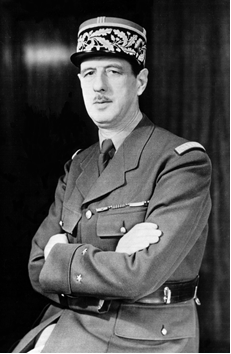
This shows clearly what a statesman is and how important a mission he carries, and how far a statesman who thinks rationally, can read the world, sees the future, has qualified advisers, is honest, unites his people and can channel the elements of national power towards the same goal will take his country.
Germany is also an example in its own right. The role of honest, principled and hard-working statesmen in bringing Germany from total destruction after the Second World War, from point zero in other words, to where it stands today is undeniable.
True Character Shows in Hard Times
These developments are closely related to some issues we are experiencing today and can use as examples. Another example on a similar subject is Putin. Some will remember that years ago there was a submarine accident: the Kursk sank, and 118 servicemen were trapped at the bottom of the Barents Sea. During this tense wait in Russia, when families complained to the head of state about their suffering, Putin insulted the wives and families of the men there: “They hire these whores for 10 dollars to oppose me.” A state mechanism based on prestige, in which human beings have no value. A mentality that believes its own race was created superior, yet accepts only its own truths even on that.
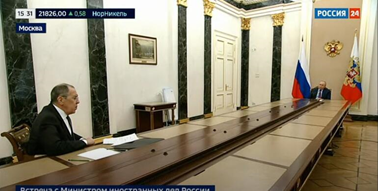
We are experiencing the same in our own country. For years, hundreds of thousands, even millions, of people have been insulted, but when these insults sank to the level of street language last week, or rather when they touched the intellectual section of society, there was a serious reaction in the Twitter community. In fact, the same speech also contained the insults “bandit” and “terrorist”, but I think people have become used to these words and no longer react. After millions of people have been called terrorists for years without any rational evidence, a kind of numbness has set in. But society found the word “whore” somewhat more brazen and striking.
Let the People Live, So That the State May Live
So why can’t countries like Russia and Türkiye, with vast lands, unique resources and populations of millions, reach even the level of prosperity of small Western countries? At this point it is obvious that the role of statesmen is crucial.
As we see in the example of Russia, with us too the statesman, his family, his relatives and the 100 to 200, at most 500 families around him consume all the resources and benefit from all the wealth. They are now superhuman beings(!). God has given them a special mission(!). For them there are no binding rules such as law, morality or religion. In fact, there are many such examples.
For example, in the 1990s, while people in Iraq could not find many critical medicines in pharmacies, Saddam seemed very happy with his family in his palace. In the end, the country has still not been able to get back on its feet.
What Should Be Normal Has Come to Seem Like a Utopia
Yet the country has more than enough potential for everyone. When you travel by plane, you can even see that the land is vast and mostly empty. So perhaps we can speak of potential and wealth sufficient for a population of 250 million. Of course, instead of bombastic phrases, real data could easily be obtained through scientific research if desired. Considering the agricultural successes of countries such as the Netherlands and Israel on very limited land, it is not hard to foresee how far one could go with a rational policy.
A Simple Comparison by Way of Conclusion Finally, if you compare France, which today meets about 65 to 70 per cent of its electricity needs from nuclear power, owns giant car brands such as Renault, Citroën, Peugeot and Dacia, and exports the Rafale fighter jet to the world, with Türkiye’s floundering in its first nuclear power plant tenders and its car project, you will easily see the difference and will once again painfully recall what statesmanship is, what rational policy is, what democracy and the rule of law are, and what happens in their absence.
Update (November 2026): The domestically produced Togg car went on sale in 2023. Nuclear fuel was delivered to the first unit of the Akkuyu Nuclear Power Plant, built by Russia’s Rosatom, in April 2023.
Monthly · free
Compass of the Month
PUGAT’s monthly newsletter.
Read next

What is PUGAT? A non-profit community publishing independent analysis from Europe on security, migration and society in Turkish, German and English.
Go to the homepage
