

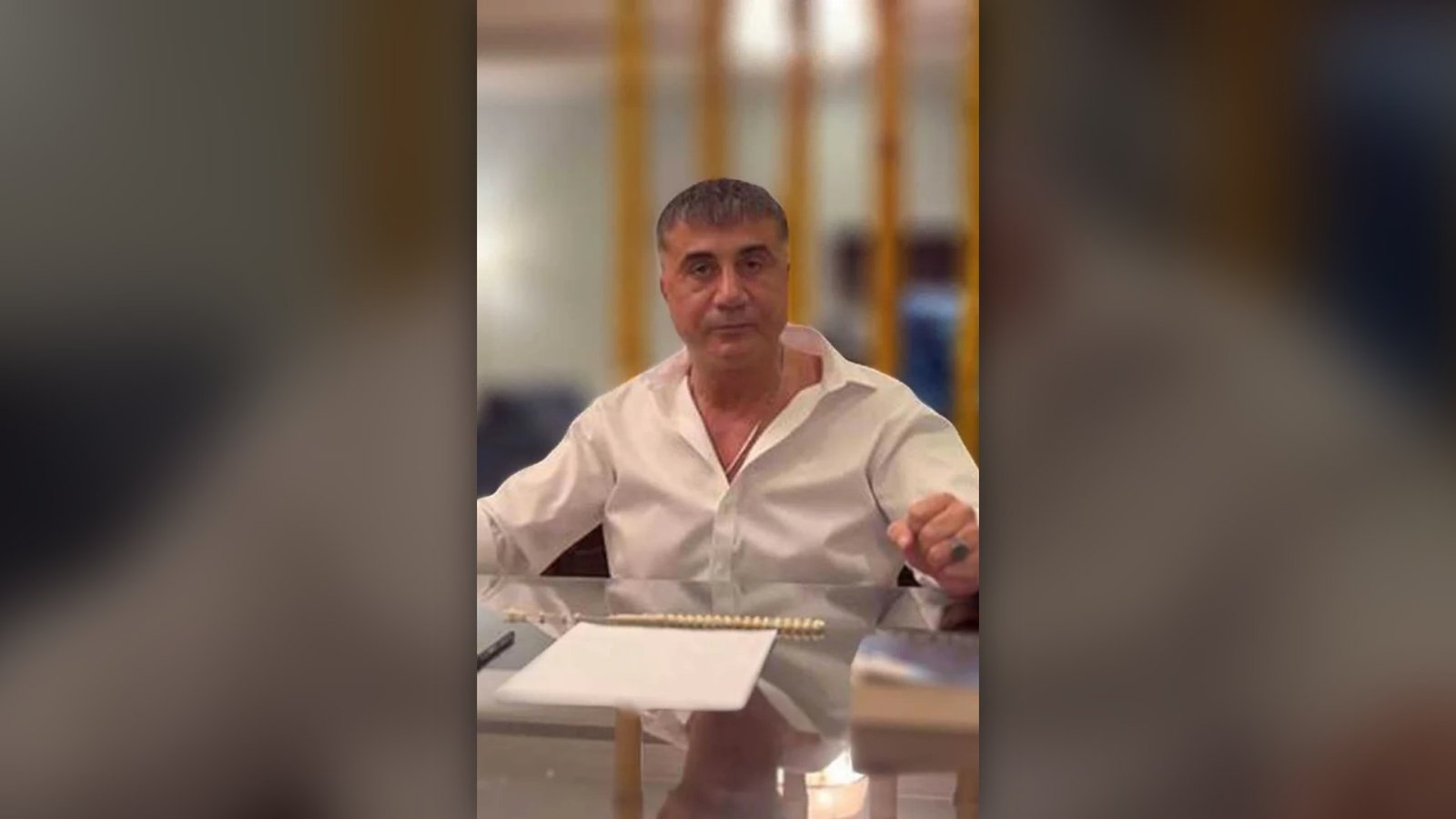
Hundreds have been tried on charges of “attempting to overthrow the government”, yet the charge has never been brought against a crime boss. The author looks at Sedat Peker’s statements from this ironic angle.
To date, hundreds of cases have been brought on charges of founding, leading or being a member of a terrorist organisation and of “attempting to overthrow the government” (a coup) by or as a member of such an organisation. But no case has ever been brought alleging a coup attempt by an organised crime group or its leader. Yet under the legal system still in force in Turkey, this is possible. It is only a matter of time before Sedat Peker faces such a charge over the statements he makes on his social media accounts.
Almost every opposition writer and politician repeats the same refrain: “In a normal country, in a democratic state governed by the rule of law, the government would change after Sedat Peker’s statements, or at least the judiciary would act.” So far this assumption has gone nowhere. But Peker keeps making new statements. With them he does not head straight for the target; each time he circles around “a purpose”. Is he waging his struggle with his personal skills and the archive he has amassed, or is he working with information and documents supplied by others? We do not know for sure, but presumably everyone has a guess. There is no consistency between public speculation about Peker’s ultimate goal and what he himself declares. The process he began with statements targeting Interior Minister Süleyman Soylu has reached a point where interesting information has spilled out and the trail extends to others around Erdoğan.
Is Whatever Peker Says True?
There is a settled perception among the public that what Sedat Peker says is true. Each time he speaks giving dates, places and witnesses and using oaths. So far no one has come forward to convince his viewers that his claims are false.
Erdoğan does not touch Peker. When Peker began publishing his first videos, he also said he would publish a video settling accounts with his “brother Tayyip”. That video never appeared. Did Peker get what he wanted from Erdoğan? Or was he given a promise? For now we do not know this either.
Nor have we heard of any case opened against Peker over his statements so far. At least I am not aware of one. The AKP camp must be treating Peker somewhat as the “village idiot”. Even so, Peker immediately puts in their place those who raise a voice against him.
The information spilled so far looks set to mean no more than signs of a coming storm. For Sedat Peker has still not laid out in sequence what he knows about the unsolved murders, nor opened the lid on the 15 July file, nor disclosed information and documents about the dealings and crimes of Erdoğan and other AKP/MHP figures in the past (with or without Peker, it makes no difference).
“I’m Not Making It Up, I’m Putting It in Context”
We have reached a point where almost everyone has started saying “whatever Sedat Peker says is true”. Even if he lies, tells half the story, speaks with manipulative information or is used in perception operations, we face the danger of “whatever he says is true”. This danger is a deep and dangerous wound of today’s world, which Ralph Keyes describes in detail in his book “The Post-Truth Era”, a world where data built from lies and manipulative information are accepted as true. In the face of this situation, which can also be summed up in the phrase “I’m not making it up, I’m putting it in context”, every assessment and comment made without grasping every dimension of the truth risks leading us to wrong conclusions. For those who want to hear only the words they like rather than the truth, of course, there seems to be no danger.
We must approach with caution every political actor who is generous in handing out roles such as victim, hero and traitor, and their rhetoric. At this point it does not seem very meaningful to me to ask why the rhetoric of an actor who has not answered before the law for the crimes he committed, or at least confessed them openly and in full, is not effective enough, or why it has not seriously shaken the country’s political and economic management.
Now to the Question of Coup Plotting…
- that turned the Gezi protests into coup cases,
- that labelled the corruption evidence recorded during the 17/25 December process a coup,
- that, when it emerged that trucks stopped in Adana in 2014 were carrying weapons to terrorist organisations in Syria, saw this as a move to bring down the government,
- that produced a coup scenario from military high school students being taken to the Bosphorus Bridge
a government like this could easily slip into a coup psychosis over Sedat Peker’s revelations too. It must have accumulated enough material to do so. By pointing not only to his latest revelations but also to the crimes Peker committed in the past in his capacity as a “businessman” and the people he was linked to, he can be made the target of many charges.
I do not know whether there are examples in the world, but if Peker succeeds, it will be the first time in Turkey that a mafia leader has brought about a change of government. Time will tell whether to call it a coup or not.
If Peker does not succeed, he will still have achieved a first in Turkey and will go down in the records as the first mafia leader to attempt to overthrow the government.
I suspect the important point here is who will strike the first blow. If bringing down the government is among their aims, will Sedat Peker and those backing him be struck by Erdoğan before they get the chance? Or will Erdoğan miscalculate at a breaking point where he says “they wouldn’t dare go that far” and lose power?
Monthly · free
Compass of the Month
PUGAT’s monthly newsletter.
Read next

What is PUGAT? A non-profit community publishing independent analysis from Europe on security, migration and society in Turkish, German and English.
Go to the homepage
