

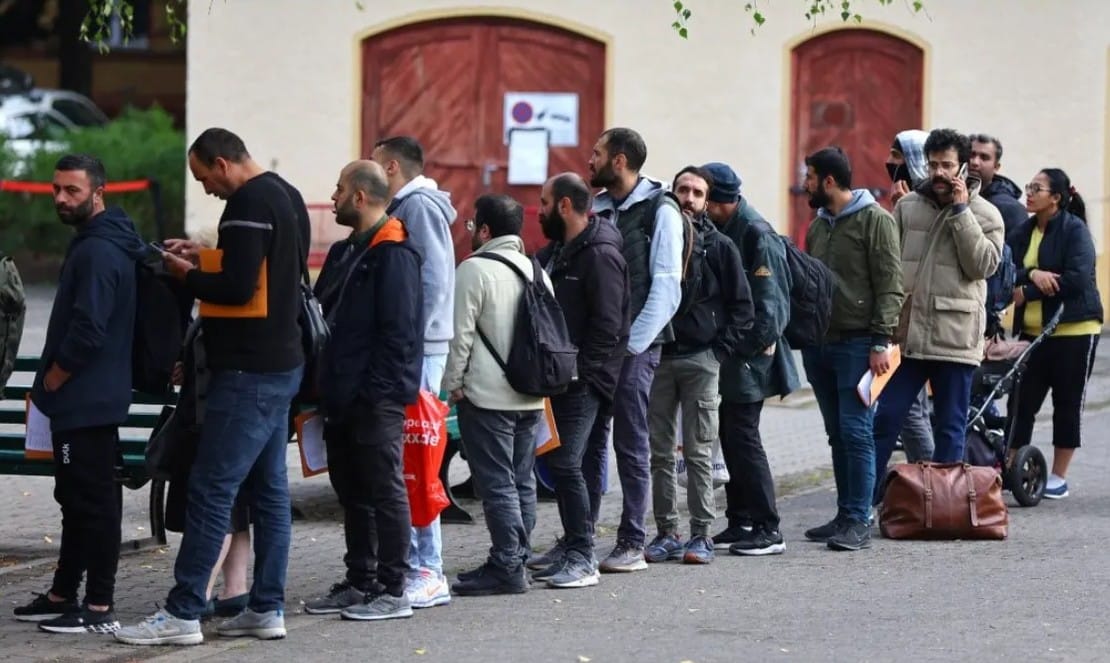
The asylum process begins with a single sentence spoken at the border or to an official authority. Lodging the application, biometric registration, the Dublin rules and safe-country lists shape the course of the first weeks.
Application and Initial Registration Stage
I. Lodging the Application
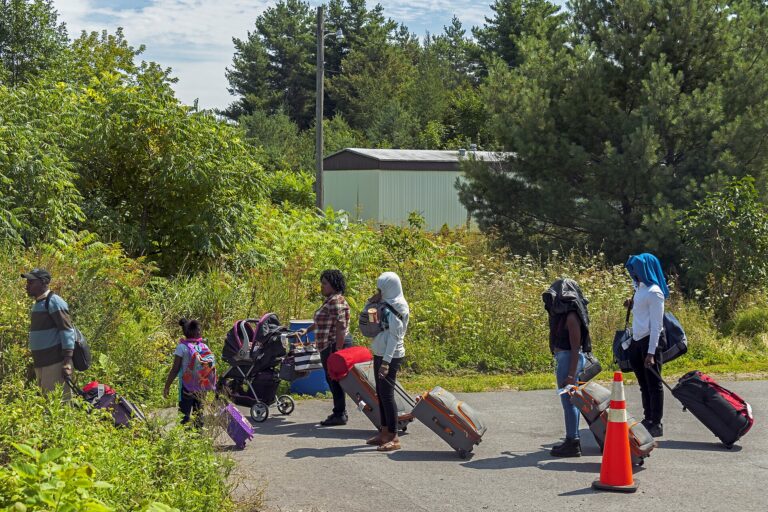
An asylum seeker looking for international protection (asylum seeker) starts the process the moment they set foot in the sovereign territory of the destination country (a land border, an airport, territorial waters or an administrative centre inside the country) by declaring to the authorities their intention to seek asylum (expression of intention). Under the EU acquis, applications may be made at border crossings or handled through the competent administrative units inside the country.
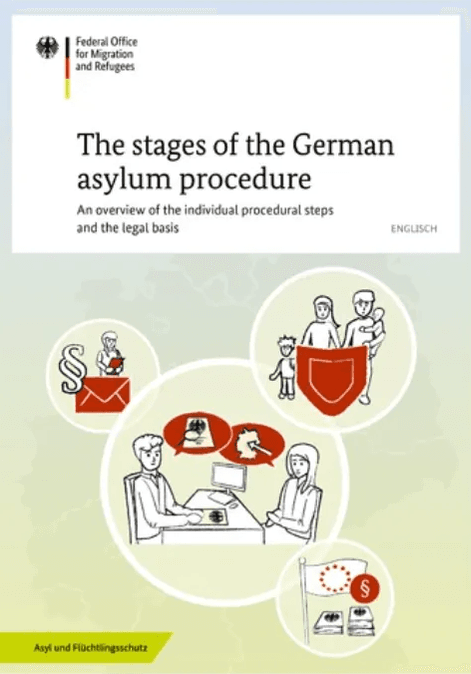
- Germany: Asylum seekers declare their intention to seek asylum when they come into contact with the federal police (Bundespolizei) at the border or with any public authority inside the country. They are immediately referred to an initial reception centre (Erstaufnahmeeinrichtung). There the formal asylum application (förmlicher Asylantrag) is registered with the BAMF (Federal Office for Migration and Refugees, Bundesamt für Migration und Flüchtlinge). Where the application is not made at the border, there is a legal obligation to report to the competent authorities (police, foreigners’ authority or reception centre) without delay after entry, in order to avoid legal sanctions.
- The Netherlands: In the Netherlands, where the asylum procedure is run centrally, all first applications are gathered at the central registration centre (Aanmeldcentrum) in Ter Apel, in the north-east of the country. After entering the system, applicants are given a rest and preparation period of several days (rust- en voorbereidingstermijn) so that they can prepare practically and legally; the formal interview schedule then begins.
- Belgium: Applications are made directly to the Immigration Office, which reports to the Ministry of the Interior (Office des Étrangers / Dienst Vreemdelingenzaken). Once this office has established identity and initiated the interviews, coordination of asylum seekers’ accommodation, food and social needs is handed over to the federal agency Fedasil (Federal Agency for the Reception of Asylum Seekers).
II. Registration and Biometric Data
The first phase of the asylum procedure is the recording of biometric data, a universal standard. The identity details declared by the person, high-resolution photographs and fingerprints are entered into EURODAC (European Asylum Dactyloscopy), the central database shared across the EU. The check establishes whether the asylum seeker has previously applied for international protection in another member state, has crossed the EU’s borders irregularly or has a record of entry on a visa.
At this stage it is critical for migration advisers and lawyers to guide their clients correctly. Asylum seekers need to be fully informed about how EURODAC works. Because the system is digitally integrated, it is impossible for someone with a fingerprint record in another member state to conceal it, and any attempt to do so directly damages their “credibility” (credibility) in the eyes of the authorities.
Once initial registration is complete, the asylum seeker is issued a temporary identity document granting the right to stay in the country until their legal status is clarified.
- The German example: This document is called the “proof of arrival” (Ankunftsnachweis). In this interim period before protection is granted, it gives asylum seekers access to minimum social rights and basic healthcare (in Germany under the AsylbLG, the Asylum Seekers’ Benefits Act).
Critical Risk Analysis: During initial registration, asylum seekers may give contradictory, incomplete or inaccurate statements on official forms or in preliminary interviews because of severe post-traumatic stress disorder (PTSD), physical exhaustion or serious language barriers. There is a high risk that inaccurate data recorded at this stage will later be used against them in the main interviews as “inconsistent statements”. It is therefore vital that applicants gain access, already at this stage, to professional interpreting and voluntary psychosocial support through non-governmental organisations (NGOs).
III. Determining the Responsible Country (Dublin Regulation)
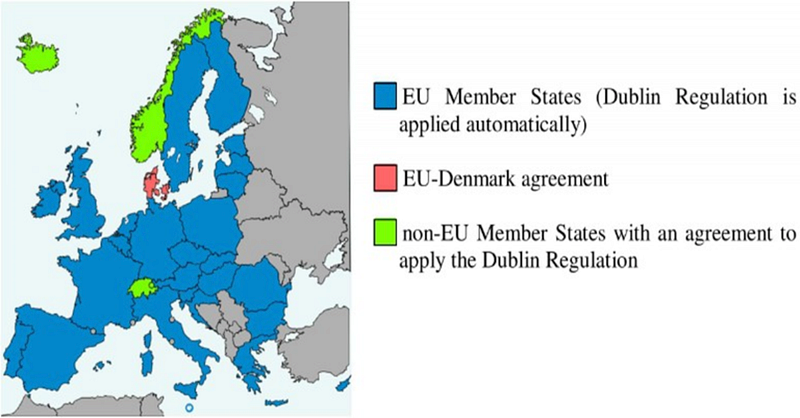
The Dublin III Regulation (Dublin III Regulation; since 12 June 2026 replaced by the Asylum and Migration Management Regulation, AMMR, under the EU Pact on Migration and Asylum, which largely keeps the logic for determining the responsible country), one of the cornerstones of EU asylum law, aims to prevent multiple applications in several member states (asylum shopping) and to ensure that each application is examined by a single responsible country only. As soon as the EURODAC check shows a visa, entry or fingerprint record in another member state, the authorities of the country where the person is located start the procedure declining responsibility and move to hand the case over to that country.
Legal practitioners and advisers have a duty to explain fully to their clients the nature of the Dublin procedure, the legal consequences of transfer decisions and the remedies available.
Field Note and Reality Check: The transit countries on the EU’s external borders, such as Greece, Italy and Spain, struggle to bear the geographical obligations of the Dublin Regulation (the country-of-first-entry criterion). At times these countries do not carry out systematic EURODAC registration or cannot meet take-back requests because of structural capacity shortages. This de facto situation and these structural flaws in EU border management directly affect how Dublin procedures work in practice.
The Dublin Regulation is not an absolute rule; it contains strong humanitarian exceptions (humanitarian clauses). Documenting these exceptions professionally can stop a transfer:
- Family Unity Criterion (Family Unity): If a member of the asylum seeker’s nuclear family (spouse, minor children), or a relative of an unaccompanied child, is present in another member state as a lawful asylum seeker or refugee, the family criterion takes precedence in the hierarchy and the person is transferred to that country.
- Systemic Flaws and Human Rights Violations (Systemic Flaws): Under the case law of the European Court of Human Rights (ECtHR) and the Court of Justice of the European Union (CJEU), if the asylum system in the country of destination suffers structural collapse, ill-treatment or inhumane reception conditions (e.g. certain periods in Greece or Italy), the transfer is legally halted under Article 3 ECHR (prohibition of torture and ill-treatment).
- Serious Health Problems (Medical Grounds): Where severe, acute or life-threatening physical or psychiatric conditions that prevent the person from travelling (advanced pregnancy, intensive cancer treatment, severe depression with suicidal tendencies, etc.) are documented by official medical reports, the transfer is cancelled or postponed.
- Expiry of Responsibility (Expiring of Responsibility / Time Limits): Under the Dublin Regulation there are strict time limits for one country to ask another member state to take charge of an asylum seeker and, once accepted, to carry out the transfer. If the transfer is not actually carried out within 6 months of the acceptance decision, responsibility passes automatically to the country where the person is. If the person has absconded or gone into hiding (absconding), this period could be extended to 18 months under Dublin III; under the AMMR it can, under certain conditions, be extended to up to three years.
To illustrate with an example: take a pregnant asylum seeker apprehended by the police in France who has an Italian record in EURODAC. When the French authorities start the Dublin procedure to send her to Italy, her migration lawyer can submit to the file the stage of the pregnancy, the risk situation and international reports showing that Italian reception centres do not meet minimum standards for pregnant women (the legal arguments), and ask the administrative court to suspend the transfer (interim measures).
Instead of following hearsay and unlawful advice (“escape to another country, cover your tracks”, etc.), asylum seekers who learn about these legal rights in the Dublin procedure and formally document their humanitarian grounds with the guidance of a specialist lawyer will avoid irreparable losses of rights.
IV. Safe Country Lists
In international asylum law, states pursue two basic list policies to speed up administrative procedures: Safe Country of Origin (Safe Country of Origin) and Safe Third Country (Safe Third Country). Applications from nationals of safe countries of origin are often examined in accelerated (border) procedures (accelerated procedures) and are rejected at a high rate as “manifestly unfounded” (manifestly unfounded); the safe third country concept, by contrast, can lead to an application being declared inadmissible (inadmissible) without any examination of the merits.
However, under the settled case law of the Court of Justice of the European Union (CJEU), the fact that a country is generally considered safe does not remove the individual risk of persecution faced by its nationals. The authorities must in every case carry out a full individual risk assessment (individualised assessment).
Germany’s List of Safe Countries of Origin (Sichere Herkunftsstaaten): Under German federal law, the countries of origin currently considered safe are:
- Member States of the European Union
- Albania, Bosnia and Herzegovina, Kosovo, North Macedonia, Montenegro, Serbia (Western Balkans)
- Georgia, Moldova
- Ghana, Senegal
Turkey’s Position: Turkey is not on Germany’s national list of “sichere Herkunftsstaaten”. However, the EU-level list of safe countries of origin (Regulation (EU) 2026/464), applied since 12 June 2026, also treats EU candidate countries as safe countries of origin. The rule does not apply only where there is armed conflict in the country, where the EU has adopted restrictive measures against it concerning fundamental rights and freedoms, or where the EU-wide protection rate for its nationals exceeds 20 per cent. Because the EU-wide recognition rate for Turkish nationals fell from 54 per cent in 2019 to 13 per cent in 2025, Turkey has been treated as falling under this list since June 2026. The rate rose to 18 per cent in the first half of 2026; if the 20 per cent threshold is exceeded the exception may apply, and the European Commission monitors whether the exceptions apply. In practice, applications from Turkey are examined in the accelerated procedure (in certain cases in the border procedure). This does not, however, mean automatic rejection: every application must still be examined individually, and applicants can rebut the presumption by showing that Turkey is not safe in their particular case. In that assessment the BAMF and the administrative courts must take into account human-rights practice in the country, problems with judicial independence and the risk of arbitrary prosecution.
The Netherlands’ Safe Countries Policy: The Dutch Immigration and Naturalisation Service (IND) also applies an official list of safe countries of origin (veilige landen van herkomst); Turkey is not on this national list. For the debate on the list, see Vluchtelingenwerk Nederland.
The IND’s national list does not include Turkey; however, the EU-level list described above is also binding on the Netherlands. Applications are examined on the merits and individually, on the basis of each asylum seeker’s particular circumstances and political or social risk profile.
NOTE: In the legal defence of an asylum seeker who is a national of a country considered safe (for example Georgia, or Turkey, which has fallen under the EU list since June 2026), the adviser or lawyer must highlight the client’s specific situation, as against general country reports. By placing on file the client’s opposition political activities, ethnic or religious minority identity, sexual orientation, membership of a professional group directly affected by the post-15 July processes (judges, prosecutors, academics, etc.) or a history of torture or ill-treatment supported by forensic reports, it must be shown that the state is not “safe” for that individual and the legal presumption must be rebutted.
V. Readmission Agreements and Third-Country Issues
In recent years the EU has been taking steps towards sending asylum seekers to safe third countries they came from or passed through. Examples include the former UK–Rwanda plan, Italy’s asylum camps in Albania and the EU’s border-control agreements with Tunisia. Policies of moving asylum procedures entirely outside Europe (offshore processing / outsourcing of asylum) and plans to set up return centres (return hubs) are being intensely debated at political level. Asylum seekers and migration experts should be prepared for these global developments. If the EU sets up so-called “return hubs” in Africa (the plans Dobrindt has referred to), this will fundamentally change the asylum system.
A hypothetical example: if Germany wanted to send a Nigerian who is not registered in Italy to Tunisia, on the grounds that Tunisia is a safe third country, the legal remedies against this must be known. Fortunately this agenda has not yet fully taken shape, but asylum seekers and anyone professionally involved in migration should still follow the debates at EU level (the new Pact, etc.) closely.
- EU–Turkey Statement (18 March 2016): It essentially provided for the return to Turkey of Syrians and other nationals who had reached the Greek islands irregularly (in practice implementation remained very limited because of legal obstacles and political processes). Although the risk of being sent directly to a third country is currently very low for people who seek asylum in EU countries directly from Turkey, it is important for asylum seekers to know about the possibility of being sent to a third country (the Safe Third Country concept) and the legal means of challenging it.
International Legal Norm: For an asylum seeker to be sent to a third country (for example a North African country they passed through), the authorities must concretely prove that it is a genuine “safe third country” (Safe Third Country) that provides protection to the standards of the 1951 Geneva Convention, fully respects the principle of non-refoulement (non-refoulement) and where the asylum seeker’s life or freedom will not be under threat. A transfer carried out without these criteria being met would be a direct violation of the peremptory rules of international law and of refugee rights. Asylum seekers and migration law professionals should therefore follow closely the current debates on the EU asylum pact and the legal remedies available.
In part 2 of our series we will look in detail at the most critical turning point for the future of an asylum application, the “Initial Examination and Interview (Personal Hearing)”, together with the “Decision Stage” and some interview techniques and defence strategies.
Sources
- BAMF – Asylum procedure (German) bamf.de
- IND – Asylum procedure (Dutch) ind.nl
- Fedasil (Belgium) fedasil.be
- European Commission – Pact on Migration and Asylum home-affairs.ec.europa.eu
- EU – Regulation (EU) 2026/464 (EU list of safe countries of origin) eur-lex.europa.eu
- EUAA – Implementation of safe country concepts (July 2026) euaa.europa.eu
Monthly · free
Compass of the Month
Once a month: five points from Europe’s security and migration agenda and the month’s PUGAT articles, in your inbox.
Newsletter sign-up opens soon.
Read next
What is PUGAT? A non-profit community publishing independent analysis from Europe on security, migration and society in Turkish, German and English.
Go to the homepage
